p.16 抽出テキスト
These guidelines have the potential to improve peri- and postoperative outcomes and highlight the existence of a clear opportunity for improving the quality of care. Following the publication of these updated guidelines on NCS, their effects on outcomes should be monitored. The objective evaluations of the quality of the assessments and the outcomes are described in quality indicators (Section 13).

2.5 The outcomes we want to prevent

The recommendations in these guidelines are intended to prevent peri-operative CV morbidity and mortality, for example: perioperative myocardial infarction/injury (PMI), stent thrombosis, acute heart failure (HF), haemodynamically relevant arrhythmias, pulmonary embolism (PE), ischaemic stroke, and death. It is also important to prevent bleeding complications, especially associated with antithrombotic treatment, since bleeding is associated with an increased risk of MI and death.6,11–13

3 Clinical risk evaluation

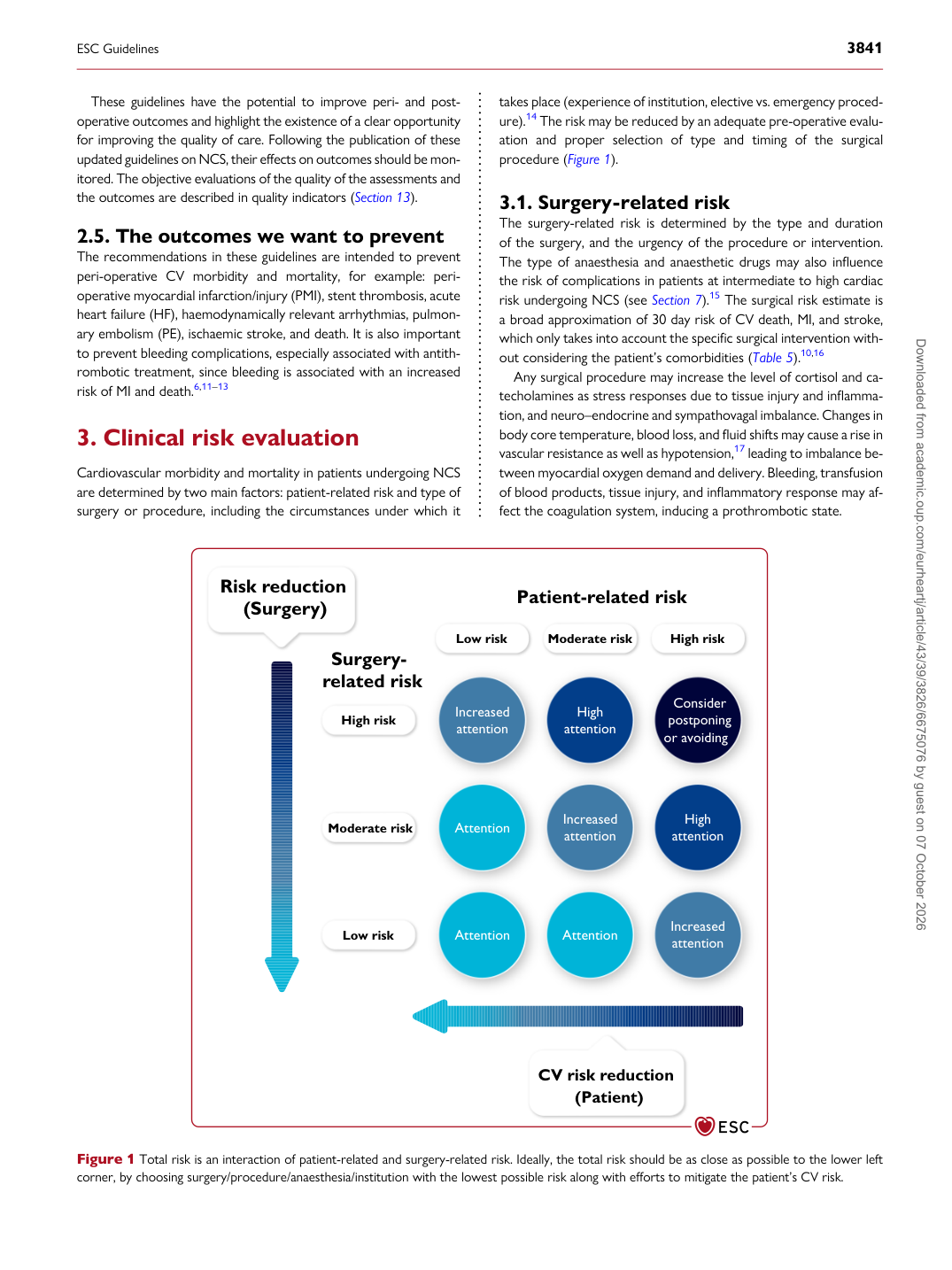
Cardiovascular morbidity and mortality in patients undergoing NCS are determined by two main factors: patient-related risk and type of surgery or procedure, including the circumstances under which it takes place (experience of institution, elective vs. emergency procedure).14 The risk may be reduced by an adequate pre-operative evaluation and proper selection of type and timing of the surgical procedure (Figure 1).

3.1 Surgery-related risk

The surgery-related risk is determined by the type and duration of the surgery, and the urgency of the procedure or intervention. The type of anaesthesia and anaesthetic drugs may also influence the risk of complications in patients at intermediate to high cardiac risk undergoing NCS (see Section 7).15 The surgical risk estimate is a broad approximation of 30 day risk of CV death, MI, and stroke, which only takes into account the specific surgical intervention without considering the patient’s comorbidities (Table 5).10,16 Any surgical procedure may increase the level of cortisol and catecholamines as stress responses due to tissue injury and inflammation, and neuro–endocrine and sympathovagal imbalance. Changes in body core temperature, blood loss, and fluid shifts may cause a rise in vascular resistance as well as hypotension,17 leading to imbalance between myocardial oxygen demand and delivery. Bleeding, transfusion of blood products, tissue injury, and inflammatory response may affect the coagulation system, inducing a prothrombotic state.

Consider postponing or avoiding

High attention

Increased attention

Increased

attention Attention

Increased attention

Attention

High risk Moderate risk Low risk

CV risk reduction

(Patient)

Surgeryrelated risk

Patient-related risk Risk reduction

(Surgery)

High risk

Moderate risk

Low risk High attention

Attention

Figure 1 Total risk is an interaction of patient-related and surgery-related risk. Ideally, the total risk should be as close as possible to the lower left corner, by choosing surgery/procedure/anaesthesia/institution with the lowest possible risk along with efforts to mitigate the patient’s CV risk.

ESC Guidelines                                                                                                                                                                                     3841

Downloaded from academic.oup.com/eurheartj/article/43/39/3826/6675076 by guest on 07 October 2026