p.92 抽出テキスト
close CTRCD monitoring during cancer treatment with the higher cut-off NP levels for pregnancy. The topic of CVD during pregnancy has been extensively reviewed in the 2018 ESC Guidelines for the management of CVD during pregnancy.741 Here we focus on specific recommendations in pregnant women with cancer receiving anthracycline chemotherapy.

9.2.1 Left ventricular dysfunction and heart failure

Medical history evaluating signs and symptoms of HF should be performed at every clinical visit of pregnant women with cancer receiving anthracycline chemotherapy. More frequent CV evaluations with TTE during treatments with potential CTRCD risk should be advised (e.g. every 4–8 weeks or every two cycles for a 3-weekly anthracycline chemotherapy cycle). The management of clinical HF or asymptomatic LVD during pregnancy is fully described in the 2018 ESC Guidelines for the management of CVD during pregnancy.741

9.2.2 Venous thromboembolism and pulmonary

embolism Pregnant patients with cancer have an increased risk of developing VTE, especially when hospitalized.767–769 Identified risks for VTE in pregnant patients include having a history of BC or previous chemotherapy in the past 6 months.

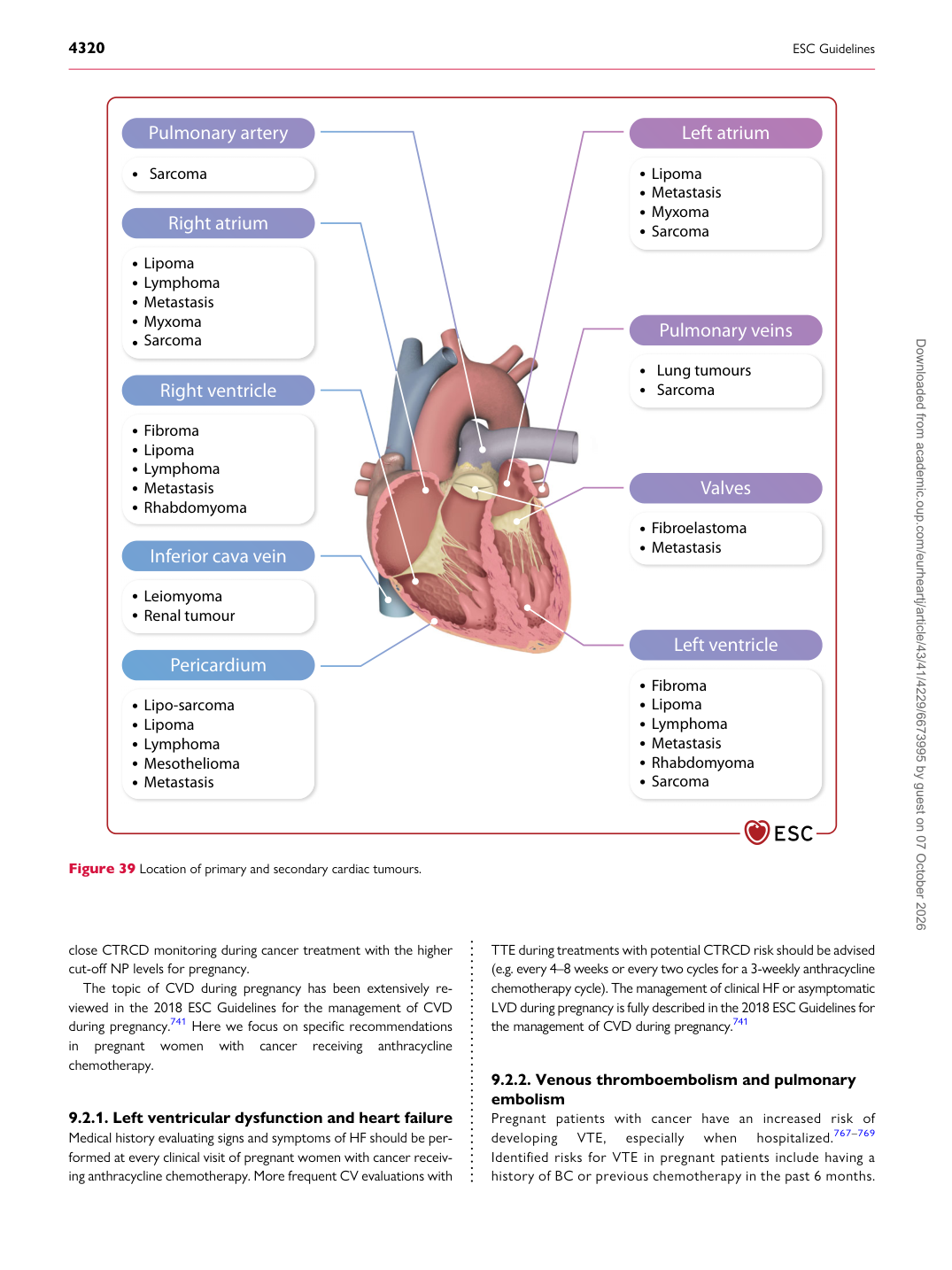
Lipoma Metastasis Myxoma Sarcoma

Left atrium

Lung tumours Sarcoma

Pulmonary veins

Fibroelastoma Metastasis

Valves

Left ventricle

Fibroma Lipoma Lymphoma Metastasis Rhabdomyoma Sarcoma

Leiomyoma Renal tumour

Inferior cava vein

Right atrium

Lipoma Lymphoma Metastasis Myxoma Sarcoma

Right ventricle

Fibroma Lipoma Lymphoma Metastasis Rhabdomyoma

Pericardium

Lipo-sarcoma Lipoma Lymphoma Mesothelioma Metastasis

Sarcoma

Pulmonary artery

Figure 39 Location of primary and secondary cardiac tumours. Downloaded from academic.oup.com/eurheartj/article/43/41/4229/6673995 by guest on 07 October 2026