p.87 抽出テキスト
8.2 Myocardial dysfunction and heart

failure HF treatment in CS should follow the current 2021 ESC Guidelines for the diagnosis and treatment of acute and chronic HF.14 Treatment with ACE-I/ARB and/or beta-blockers is recommended for both symptomatic and asymptomatic CS who have LVEF , 50% detected on CV assessment.14,61,208,675 In CS with mild asymptomatic CTRCD detected on CV assessment (LVEF . 50% but new fall in GLS and/or cardiac serum biomarker increase), treatment with ACE-I/ARB and/or beta-blockers may be considered.

Renal artery ultrasound should be considered in patients with a history of abdominal and pelvic radiation who present with worsening renal function and/or systemic hypertension. IIa C © ESC 2022

BP, blood pressure; CAD, coronary artery disease; CMR, cardiac magnetic resonance; CS, cancer survivors; CT, computed tomography; CTR-CVT, cancer therapy-related cardiovascular toxicity; CV, cardiovascular; CVD, cardiovascular disease; CVRF, cardiovascular risk factors; ECG, electrocardiogram; HbA1c, glycated haemoglobin; MHD, mean heart dose; NP, natriuretic peptides; RT, radiotherapy. aClass of recommendation. bLevel of evidence. cClinical review, BP, lipid profile, HbA1c. dRT risk categorization based on MHD is recommended over categorization based on prescribed dose (≥35 Gy to a volume exposing the heart if MHD is not available). eRestratification includes evaluation of new or pre-existing CVRF and CVD (including CTR-CVT). fSee Table 12. gStress echocardiography, cardiac CT, stress CMR, single-photon emission CT stress test, according to local protocol.234

Long-term surveillance in asymptomatic CS

High and very high

risk

Moderate

risk

Low risk

Class 1 Class 1Ia Class 1Ib

TTE every 2 years in adults who are childhood

and adolescent CS

TTE at years 1, 3, and 5 after cardiotoxic cancer therapy and every 5 years thereafter in adult CS

Annual CV risk

assessmenta

CV toxicity risk re-stratificationc

at 5 years

Patient education and CVRF optimization

Cardiology referralb if new CV symptoms develop TTE every 5 years in adults who are childhood

and adolescent CS

TTE every 5 years in

adult CS

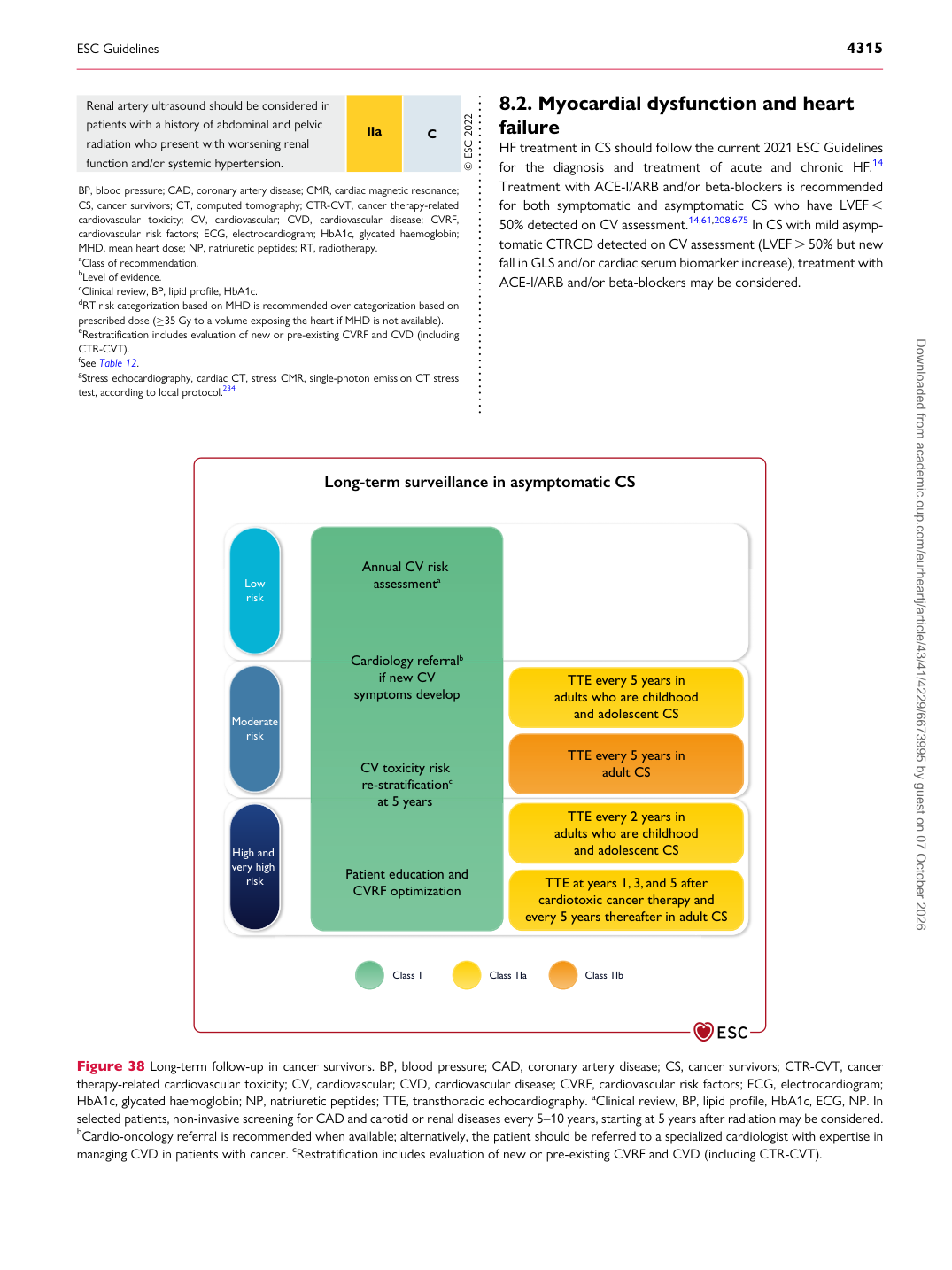
Figure 38 Long-term follow-up in cancer survivors. BP, blood pressure; CAD, coronary artery disease; CS, cancer survivors; CTR-CVT, cancer therapy-related cardiovascular toxicity; CV, cardiovascular; CVD, cardiovascular disease; CVRF, cardiovascular risk factors; ECG, electrocardiogram; HbA1c, glycated haemoglobin; NP, natriuretic peptides; TTE, transthoracic echocardiography. aClinical review, BP, lipid profile, HbA1c, ECG, NP. In selected patients, non-invasive screening for CAD and carotid or renal diseases every 5–10 years, starting at 5 years after radiation may be considered. bCardio-oncology referral is recommended when available; alternatively, the patient should be referred to a specialized cardiologist with expertise in managing CVD in patients with cancer. cRestratification includes evaluation of new or pre-existing CVRF and CVD (including CTR-CVT). Downloaded from academic.oup.com/eurheartj/article/43/41/4229/6673995 by guest on 07 October 2026