p.82 抽出テキスト
asymptomatic moderate-risk patients (according to CV toxicity baseline risk stratification), echocardiography and cardiac serum biomarkers should be considered within 12 months after completion of cancer therapy.53,54,59,61,68,148,208 In asymptomatic low-risk patients (according to CV toxicity baseline risk stratification), echocardiography and cardiac serum biomarkers may be considered within 12 months after completion of cancer therapy.634 All patients started on CV therapies (ACE-I/ARB/angiotensin receptor-neprilysin inhibitors, beta-blockers, mineralocorticoid receptor antagonists, sodium-glucose co-transporter 2 inhibitors, antihypertensive medications, antiarrhythmic medications, antiplatelet therapies, statins) for any CTR-CVT (especially CTRCD) should have a clinical assessment, ECG, echocardiography, and cardiac serum biomarkers (if LV systolic dysfunction/HF is a potential risk) at 3, 6, and 12 months after completing cancer treatment. A MDT-based approach to palliative and end-of-life care for patients with cancer with HF or other CTR-CVT should be focused on symptom relief according to general ESC Guidelines. 7.3 Management of cancer

therapy-related cardiac dysfunction at the end-of-therapy assessment During this end-of-treatment assessment, a review of cardioprotective medications initiated during cancer therapy to treat CTRCD is recommended (Figure 37). In selected patients with asymptomatic mild or moderate CTRCD who have fully recovered with normal TTE and cardiac serum biomarkers, a trial of weaning off CV medication should be considered after MDT discussion. This is most common after asymptomatic mild or moderate CTRCD secondary to trastuzumab, particularly in younger otherwise healthy HER2+ BC survivors with no exposure to anthracycline chemotherapy. Further assessment of cardiac function with TTE and cardiac serum biomarkers is recommended following withdrawal of CV medication in patients with previous CTRCD to ensure cardiac function remains normal. Continuing long-term CV medication is generally recommended in patients with moderate and severe symptomatic or severe asymptomatic CTRCD due to the high rate of recurrent HF. Long-term treatment is also recommended in CS with mild or moderate CTRCD who fail to recover normal LV function at their end-of-therapy assessment (Figure 37).

7.4 Cardiopulmonary exercise testing

and fitness during the end-of-therapy assessment CRF impairment is a strong predictor of patient outcome following cancer treatment and an intervention target in CS. Low CRF is associated with poor quality of life, increased morbidity, reduced exercise cardiac function and worse CVD risk profile, and is a robust independent predictor of all-cause, cancer-related, and CVD-related mortality in CS.119,120 Recent evidence suggests the risk of CVD-related mortality in CS decreases by 14% per 1 metabolic equivalent (3.5 mL O2/kg/min) increase in CRF.120 CPET may be considered for CS with exertional limitation, who may have substantial benefit from cardiac rehabilitation. Eligible patients include those treated with higher doses of anthracycline chemotherapy and/or RT to a volume including the heart, high CV toxicity risk at baseline, patients who developed CTRCD during cancer therapy, and those identified with new abnormalities in LV function at their end-of-therapy assessment.11 CPET can be an objective tool in the diagnosis of decreased physical capacity and identify CV vs. non-CV causes.635

7.5 The role of cardiac rehabilitation

Exercise is a potent multitargeted therapy that prevents and treats multiple competing mechanisms of CTR-CVT in CS, including CRF impairment,636 CV injury, and pre-existing and new CVRF.137 Prescribing exercise facilitates the delivery of therapeutic exercise that is individualized to a person’s fitness level and systematically progressed to optimize physiological adaptation.637 Current evidence demonstrates that supervised exercise therapy (including high-intensity interval training [HIIT]) is safe and well tolerated,638 attenuates CTR-CVT risk, and improves CRF. Furthermore, HIIT reduces CVRF460 and CV risk639 in patients

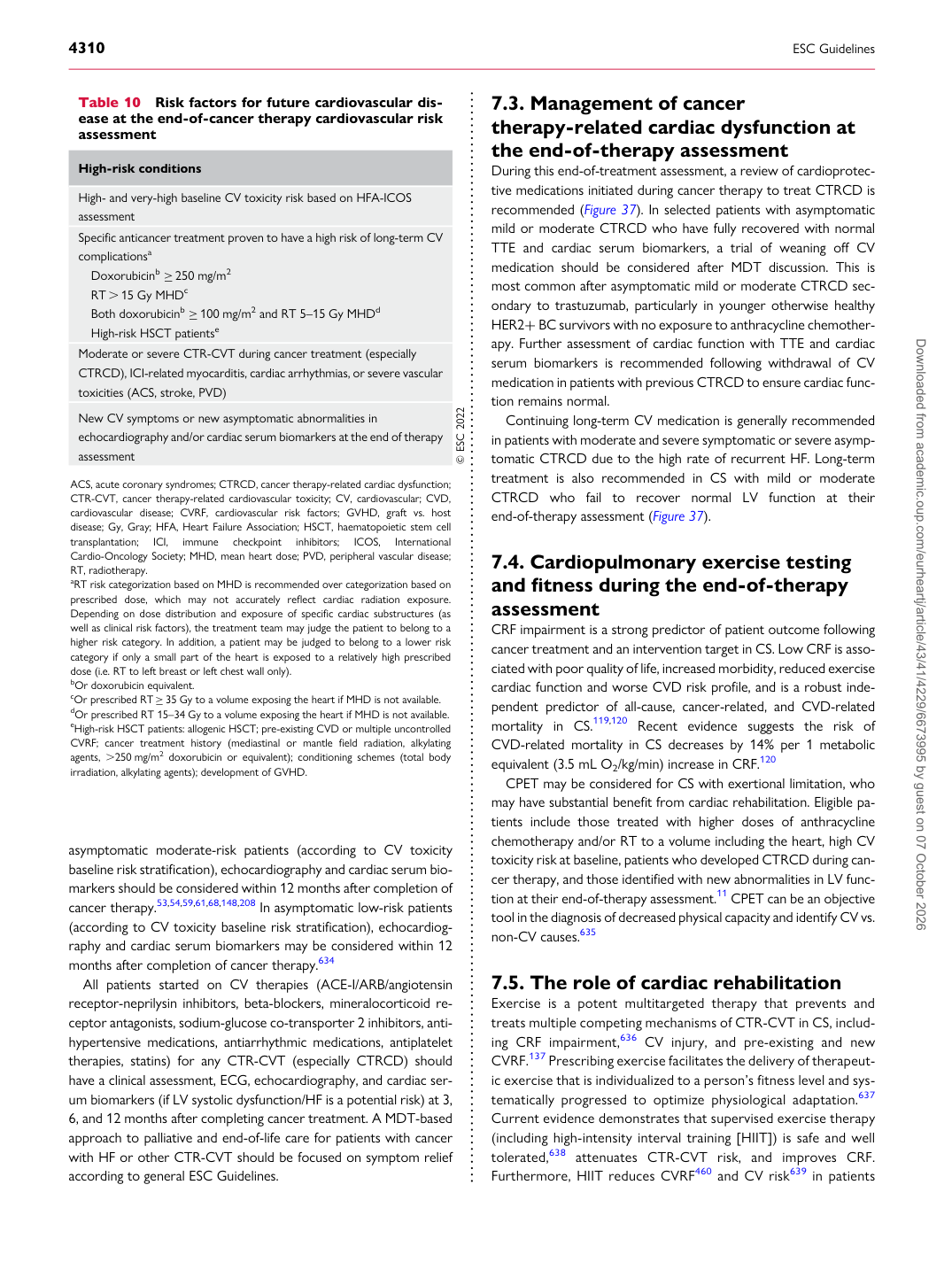
Table 10 Risk factors for future cardiovascular disease at the end-of-cancer therapy cardiovascular risk assessment

High-risk conditions

High- and very-high baseline CV toxicity risk based on HFA-ICOS assessment Specific anticancer treatment proven to have a high risk of long-term CV complicationsa

Doxorubicinb ≥250 mg/m2 RT . 15 Gy MHDc Both doxorubicinb ≥100 mg/m2 and RT 5–15 Gy MHDd High-risk HSCT patientse Moderate or severe CTR-CVT during cancer treatment (especially CTRCD), ICI-related myocarditis, cardiac arrhythmias, or severe vascular toxicities (ACS, stroke, PVD) New CV symptoms or new asymptomatic abnormalities in echocardiography and/or cardiac serum biomarkers at the end of therapy assessment © ESC 2022

ACS, acute coronary syndromes; CTRCD, cancer therapy-related cardiac dysfunction; CTR-CVT, cancer therapy-related cardiovascular toxicity; CV, cardiovascular; CVD, cardiovascular disease; CVRF, cardiovascular risk factors; GVHD, graft vs. host disease; Gy, Gray; HFA, Heart Failure Association; HSCT, haematopoietic stem cell transplantation; ICI, immune checkpoint inhibitors; ICOS, International Cardio-Oncology Society; MHD, mean heart dose; PVD, peripheral vascular disease; RT, radiotherapy. aRT risk categorization based on MHD is recommended over categorization based on prescribed dose, which may not accurately reflect cardiac radiation exposure. Depending on dose distribution and exposure of specific cardiac substructures (as well as clinical risk factors), the treatment team may judge the patient to belong to a higher risk category. In addition, a patient may be judged to belong to a lower risk category if only a small part of the heart is exposed to a relatively high prescribed dose (i.e. RT to left breast or left chest wall only). bOr doxorubicin equivalent. cOr prescribed RT ≥35 Gy to a volume exposing the heart if MHD is not available. dOr prescribed RT 15–34 Gy to a volume exposing the heart if MHD is not available. eHigh-risk HSCT patients: allogenic HSCT; pre-existing CVD or multiple uncontrolled CVRF; cancer treatment history (mediastinal or mantle field radiation, alkylating agents, .250 mg/m2 doxorubicin or equivalent); conditioning schemes (total body irradiation, alkylating agents); development of GVHD. Downloaded from academic.oup.com/eurheartj/article/43/41/4229/6673995 by guest on 07 October 2026