p.8 抽出テキスト
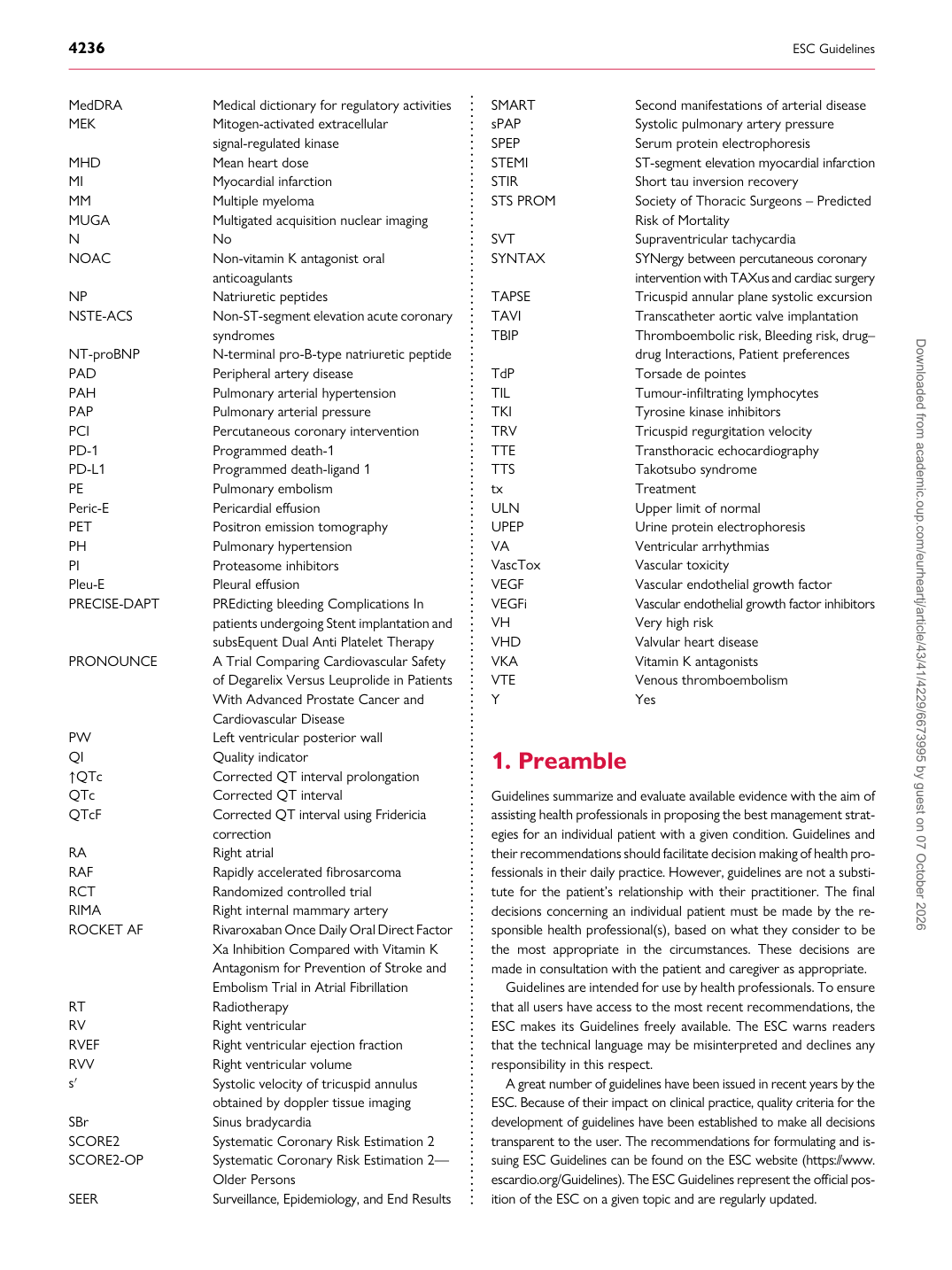
MedDRA Medical dictionary for regulatory activities MEK Mitogen-activated extracellular signal-regulated kinase MHD Mean heart dose MI Myocardial infarction MM Multiple myeloma MUGA Multigated acquisition nuclear imaging N No NOAC Non-vitamin K antagonist oral anticoagulants NP Natriuretic peptides NSTE-ACS Non-ST-segment elevation acute coronary syndromes NT-proBNP N-terminal pro-B-type natriuretic peptide PAD Peripheral artery disease PAH Pulmonary arterial hypertension PAP Pulmonary arterial pressure PCI Percutaneous coronary intervention PD-1 Programmed death-1 PD-L1 Programmed death-ligand 1 PE Pulmonary embolism Peric-E Pericardial effusion PET Positron emission tomography PH Pulmonary hypertension PI Proteasome inhibitors Pleu-E Pleural effusion PRECISE-DAPT PREdicting bleeding Complications In patients undergoing Stent implantation and subsEquent Dual Anti Platelet Therapy PRONOUNCE A Trial Comparing Cardiovascular Safety of Degarelix Versus Leuprolide in Patients With Advanced Prostate Cancer and Cardiovascular Disease PW Left ventricular posterior wall QI Quality indicator ↑QTc Corrected QT interval prolongation QTc Corrected QT interval QTcF Corrected QT interval using Fridericia correction RA Right atrial RAF Rapidly accelerated fibrosarcoma RCT Randomized controlled trial RIMA Right internal mammary artery ROCKET AF Rivaroxaban Once Daily Oral Direct Factor Xa Inhibition Compared with Vitamin K Antagonism for Prevention of Stroke and Embolism Trial in Atrial Fibrillation RT Radiotherapy RV Right ventricular RVEF Right ventricular ejection fraction RVV Right ventricular volume s′ Systolic velocity of tricuspid annulus obtained by doppler tissue imaging SBr Sinus bradycardia SCORE2 Systematic Coronary Risk Estimation 2 SCORE2-OP Systematic Coronary Risk Estimation 2— Older Persons SEER Surveillance, Epidemiology, and End Results SMART Second manifestations of arterial disease sPAP Systolic pulmonary artery pressure SPEP Serum protein electrophoresis STEMI ST-segment elevation myocardial infarction STIR Short tau inversion recovery STS PROM Society of Thoracic Surgeons – Predicted Risk of Mortality SVT Supraventricular tachycardia SYNTAX SYNergy between percutaneous coronary intervention with TAXus and cardiac surgery TAPSE Tricuspid annular plane systolic excursion TAVI Transcatheter aortic valve implantation TBIP Thromboembolic risk, Bleeding risk, drug– drug Interactions, Patient preferences TdP Torsade de pointes TIL Tumour-infiltrating lymphocytes TKI Tyrosine kinase inhibitors TRV Tricuspid regurgitation velocity TTE Transthoracic echocardiography TTS Takotsubo syndrome tx Treatment ULN Upper limit of normal UPEP Urine protein electrophoresis VA Ventricular arrhythmias VascTox Vascular toxicity VEGF Vascular endothelial growth factor VEGFi Vascular endothelial growth factor inhibitors VH Very high risk VHD Valvular heart disease VKA Vitamin K antagonists VTE Venous thromboembolism Y Yes

1 Preamble

Guidelines summarize and evaluate available evidence with the aim of assisting health professionals in proposing the best management strategies for an individual patient with a given condition. Guidelines and their recommendations should facilitate decision making of health professionals in their daily practice. However, guidelines are not a substitute for the patient’s relationship with their practitioner. The final decisions concerning an individual patient must be made by the responsible health professional(s), based on what they consider to be the most appropriate in the circumstances. These decisions are made in consultation with the patient and caregiver as appropriate. Guidelines are intended for use by health professionals. To ensure that all users have access to the most recent recommendations, the ESC makes its Guidelines freely available. The ESC warns readers that the technical language may be misinterpreted and declines any responsibility in this respect. A great number of guidelines have been issued in recent years by the ESC. Because of their impact on clinical practice, quality criteria for the development of guidelines have been established to make all decisions transparent to the user. The recommendations for formulating and issuing ESC Guidelines can be found on the ESC website (https://www. escardio.org/Guidelines). The ESC Guidelines represent the official position of the ESC on a given topic and are regularly updated. Downloaded from academic.oup.com/eurheartj/article/43/41/4229/6673995 by guest on 07 October 2026