p.77 抽出テキスト
for detecting intracardiac thrombi and late gadolinium enhancement (LGE) CMR with the long inversion time technique is currently considered the gold standard.570,571

6.6.4 Anticoagulation therapy

Patients with cancer frequently have both an increased thrombotic risk and an increased bleeding risk associated with certain cancer locations (e.g. GI, intracranial), thrombocytopaenia, and other coagulation defects (secondary to bone marrow invasion, cancer therapies, or cancer itself) and associated comorbidities (e.g. renal or hepatic dysfunction, GI toxicities). Several anticancer agents are further characterized by drug–drug interactions with anticoagulants. All these factors may render anticoagulation in cancer quite challenging. A proposed approach to anticoagulation therapy in cancer-associated venous thrombosis, based on the TBIP acronym (Thromboembolic risk, Bleeding risk, drug–drug Interactions, Patient preferences), is outlined in Figure 36.527

6.6.4.1 Treatment and secondary prevention of venous

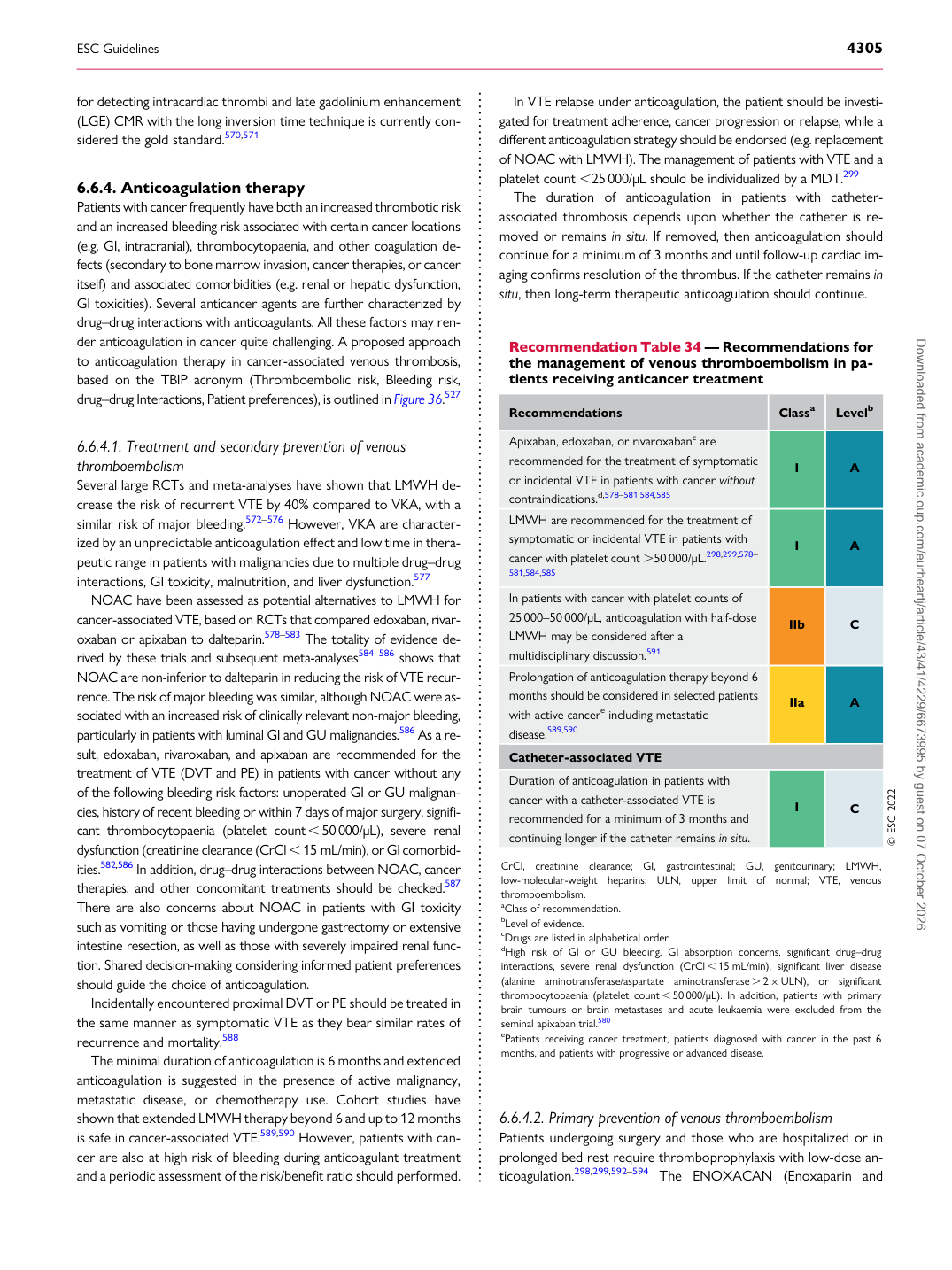
thromboembolism Several large RCTs and meta-analyses have shown that LMWH decrease the risk of recurrent VTE by 40% compared to VKA, with a similar risk of major bleeding.572–576 However, VKA are characterized by an unpredictable anticoagulation effect and low time in therapeutic range in patients with malignancies due to multiple drug–drug interactions, GI toxicity, malnutrition, and liver dysfunction.577 NOAC have been assessed as potential alternatives to LMWH for cancer-associated VTE, based on RCTs that compared edoxaban, rivaroxaban or apixaban to dalteparin.578–583 The totality of evidence derived by these trials and subsequent meta-analyses584–586 shows that NOAC are non-inferior to dalteparin in reducing the risk of VTE recurrence. The risk of major bleeding was similar, although NOAC were associated with an increased risk of clinically relevant non-major bleeding, particularly in patients with luminal GI and GU malignancies.586 As a result, edoxaban, rivaroxaban, and apixaban are recommended for the treatment of VTE (DVT and PE) in patients with cancer without any of the following bleeding risk factors: unoperated GI or GU malignancies, history of recent bleeding or within 7 days of major surgery, significant thrombocytopaenia (platelet count, 50000/μL), severe renal dysfunction (creatinine clearance (CrCl, 15 mL/min), or GI comorbidities.582,586 In addition, drug–drug interactions between NOAC, cancer therapies, and other concomitant treatments should be checked.587 There are also concerns about NOAC in patients with GI toxicity such as vomiting or those having undergone gastrectomy or extensive intestine resection, as well as those with severely impaired renal function. Shared decision-making considering informed patient preferences should guide the choice of anticoagulation. Incidentally encountered proximal DVT or PE should be treated in the same manner as symptomatic VTE as they bear similar rates of recurrence and mortality.588 The minimal duration of anticoagulation is 6 months and extended anticoagulation is suggested in the presence of active malignancy, metastatic disease, or chemotherapy use. Cohort studies have shown that extended LMWH therapy beyond 6 and up to 12 months is safe in cancer-associated VTE.589,590 However, patients with cancer are also at high risk of bleeding during anticoagulant treatment and a periodic assessment of the risk/benefit ratio should performed. In VTE relapse under anticoagulation, the patient should be investigated for treatment adherence, cancer progression or relapse, while a different anticoagulation strategy should be endorsed (e.g. replacement of NOAC with LMWH). The management of patients with VTE and a platelet count ,25000/μL should be individualized by a MDT.299

The duration of anticoagulation in patients with catheterassociated thrombosis depends upon whether the catheter is removed or remains in situ. If removed, then anticoagulation should continue for a minimum of 3 months and until follow-up cardiac imaging confirms resolution of the thrombus. If the catheter remains in situ, then long-term therapeutic anticoagulation should continue.

6.6.4.2 Primary prevention of venous thromboembolism

Patients undergoing surgery and those who are hospitalized or in prolonged bed rest require thromboprophylaxis with low-dose anticoagulation.298,299,592–594 The ENOXACAN (Enoxaparin and

Recommendation Table 34 — Recommendations for the management of venous thromboembolism in patients receiving anticancer treatment

Recommendations Classa Levelb Apixaban, edoxaban, or rivaroxabanc are recommended for the treatment of symptomatic or incidental VTE in patients with cancer without contraindications.d,578–581,584,585 I A LMWH are recommended for the treatment of symptomatic or incidental VTE in patients with cancer with platelet count .50 000/μL.298,299,578– 581,584,585 I A

In patients with cancer with platelet counts of 25 000–50 000/μL, anticoagulation with half-dose LMWH may be considered after a multidisciplinary discussion.591 IIb C Prolongation of anticoagulation therapy beyond 6 months should be considered in selected patients with active cancere including metastatic disease.589,590 IIa A Catheter-associated VTE Duration of anticoagulation in patients with cancer with a catheter-associated VTE is recommended for a minimum of 3 months and continuing longer if the catheter remains in situ. I C © ESC 2022

CrCl, creatinine clearance; GI, gastrointestinal; GU, genitourinary; LMWH, low-molecular-weight heparins; ULN, upper limit of normal; VTE, venous thromboembolism. aClass of recommendation. bLevel of evidence. cDrugs are listed in alphabetical order dHigh risk of GI or GU bleeding, GI absorption concerns, significant drug–drug interactions, severe renal dysfunction (CrCl , 15 mL/min), significant liver disease (alanine aminotransferase/aspartate aminotransferase . 2 × ULN), or significant thrombocytopaenia (platelet count , 50 000/μL). In addition, patients with primary brain tumours or brain metastases and acute leukaemia were excluded from the seminal apixaban trial.580 ePatients receiving cancer treatment, patients diagnosed with cancer in the past 6 months, and patients with progressive or advanced disease. Downloaded from academic.oup.com/eurheartj/article/43/41/4229/6673995 by guest on 07 October 2026