p.70 抽出テキスト
6.4.2 Long corrected QT interval and ventricular

arrhythmias VA are not common during cancer, although their incidence increases in patients with advanced cancer and CV comorbidities.49,259,516,542 Mechanisms proposed to explain cancer therapy-induced VA include: (1) direct effects of cancer drugs on the activity/expression of ionic channels that regulate the ventricular action potential,4,369,442,516,542,543 and (2) a permanent arrhythmogenic substrate created by cancer and systemic inflammation caused by cancer, pre-existing CV comorbidities, and/or a new CTR-CVT.4,9,259,369,442,516,542,543 Treatment of cancer therapy-induced VA should follow general clinical guidelines.22,442,544 In patients with asymptomatic selfterminating VA, drug discontinuation is not required unless they have additional CVRF or persistent ECG abnormalities.270 Symptomatic VA require cancer drug dose reduction or discontinuation and patients should be referred to the cardiologist for evaluation and treatment.4,442 Recurrent symptomatic life-threatening VA require urgent intervention.4,270,442,544 The administration of class IA, IC, and III antiarrhythmic drugs is limited by the risk of drug–drug interactions and QTc prolongation. Beta-blockers and class IB drugs are less likely to cause drug interactions or QTc prolongation. Beta-blockers are the preferred choice if the cancer drug is also associated with CTRCD. Amiodarone is the antiarrhythmic drug of choice in patients with structural heart disease and haemodynamic instability.

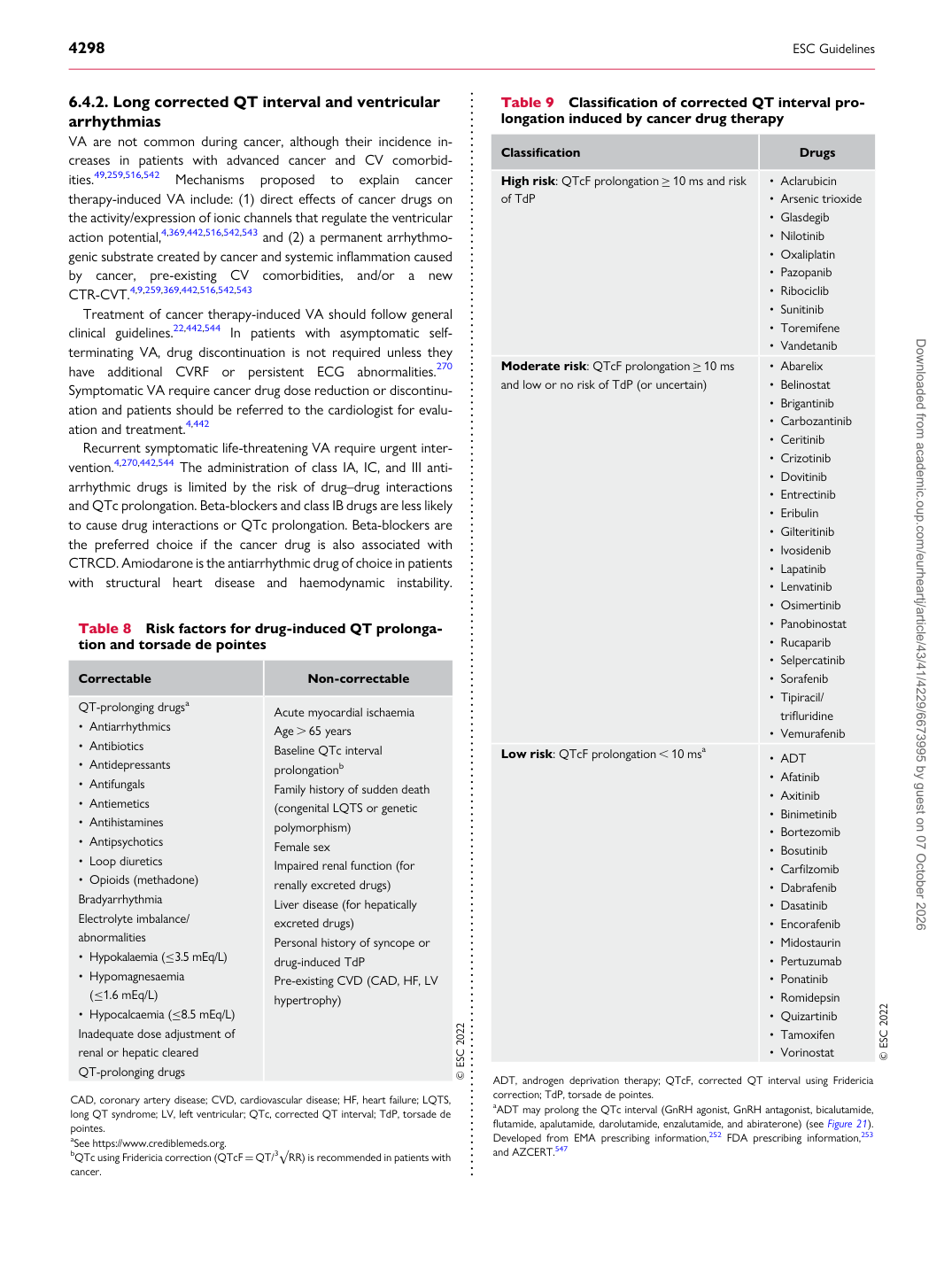
Table 8 Risk factors for drug-induced QT prolongation and torsade de pointes

Correctable Non-correctable QT-prolonging drugsa • Antiarrhythmics • Antibiotics • Antidepressants • Antifungals • Antiemetics • Antihistamines • Antipsychotics • Loop diuretics • Opioids (methadone) Bradyarrhythmia Electrolyte imbalance/ abnormalities • Hypokalaemia (≤3.5 mEq/L) • Hypomagnesaemia (≤1.6 mEq/L) • Hypocalcaemia (≤8.5 mEq/L) Inadequate dose adjustment of renal or hepatic cleared QT-prolonging drugs Acute myocardial ischaemia

Age . 65 years Baseline QTc interval prolongationb Family history of sudden death (congenital LQTS or genetic polymorphism) Female sex Impaired renal function (for renally excreted drugs) Liver disease (for hepatically excreted drugs) Personal history of syncope or drug-induced TdP Pre-existing CVD (CAD, HF, LV hypertrophy)

© ESC 2022

CAD, coronary artery disease; CVD, cardiovascular disease; HF, heart failure; LQTS, long QT syndrome; LV, left ventricular; QTc, corrected QT interval; TdP, torsade de pointes. aSee https://www.crediblemeds.org. bQTc using Fridericia correction (QTcF = QT/3√RR) is recommended in patients with cancer. Table 9 Classification of corrected QT interval prolongation induced by cancer drug therapy

Classification Drugs

High risk: QTcF prolongation ≥10 ms and risk of TdP • Aclarubicin • Arsenic trioxide • Glasdegib • Nilotinib • Oxaliplatin • Pazopanib • Ribociclib • Sunitinib • Toremifene • Vandetanib Moderate risk: QTcF prolongation ≥10 ms and low or no risk of TdP (or uncertain) • Abarelix • Belinostat • Brigantinib • Carbozantinib • Ceritinib • Crizotinib • Dovitinib • Entrectinib • Eribulin • Gilteritinib • Ivosidenib • Lapatinib • Lenvatinib • Osimertinib • Panobinostat • Rucaparib • Selpercatinib • Sorafenib • Tipiracil/ trifluridine • Vemurafenib Low risk: QTcF prolongation , 10 msa • ADT • Afatinib • Axitinib • Binimetinib • Bortezomib • Bosutinib • Carfilzomib • Dabrafenib • Dasatinib • Encorafenib • Midostaurin • Pertuzumab • Ponatinib • Romidepsin • Quizartinib • Tamoxifen • Vorinostat © ESC 2022

ADT, androgen deprivation therapy; QTcF, corrected QT interval using Fridericia correction; TdP, torsade de pointes. aADT may prolong the QTc interval (GnRH agonist, GnRH antagonist, bicalutamide, flutamide, apalutamide, darolutamide, enzalutamide, and abiraterone) (see Figure 21). Developed from EMA prescribing information,252 FDA prescribing information,253 and AZCERT.547 Downloaded from academic.oup.com/eurheartj/article/43/41/4229/6673995 by guest on 07 October 2026