p.67 抽出テキスト
patients receiving myelosuppressive chemotherapy or with recent active bleeding). However, LMWH efficacy for stroke or systemic embolism prevention in AF has not been established and their use is only based on their proven efficacy and safety in VTE. The use of a NOAC for AF has not been evaluated in a dedicated RCT in patients with cancer. However, secondary analyses of seminal NOAC trials using direct factor Xa inhibitors (ROCKET AF [Rivaroxaban Once Daily Oral Direct Factor Xa Inhibition Compared with Vitamin K Antagonism for Prevention of Stroke and Embolism Trial in Atrial Fibrillation], ARISTOTLE [Apixaban for Reduction in Stroke and Other Thromboembolic Events in Atrial Fibrillation], ENGAGE AF-TIMI 48 [Effective Anticoagulation with Factor Xa Next Generation in Atrial Fibrillation–Thrombolysis in Myocardial Infarction 48]) and observational data suggest better safety and at least similar effectiveness of the NOAC when compared with VKA in patients with AF and active cancer.531–538 NOAC use in cancer is limited by drug–drug interactions,508 severe renal dysfunction, increased risk of bleeding in patients with unoperated or residual GI or genitourinary (GU) malignancies, or impaired GI absorption.

Left atrial appendage (LAA) occluder devices are used in very selected patients with cancer in clinical practice. The potential

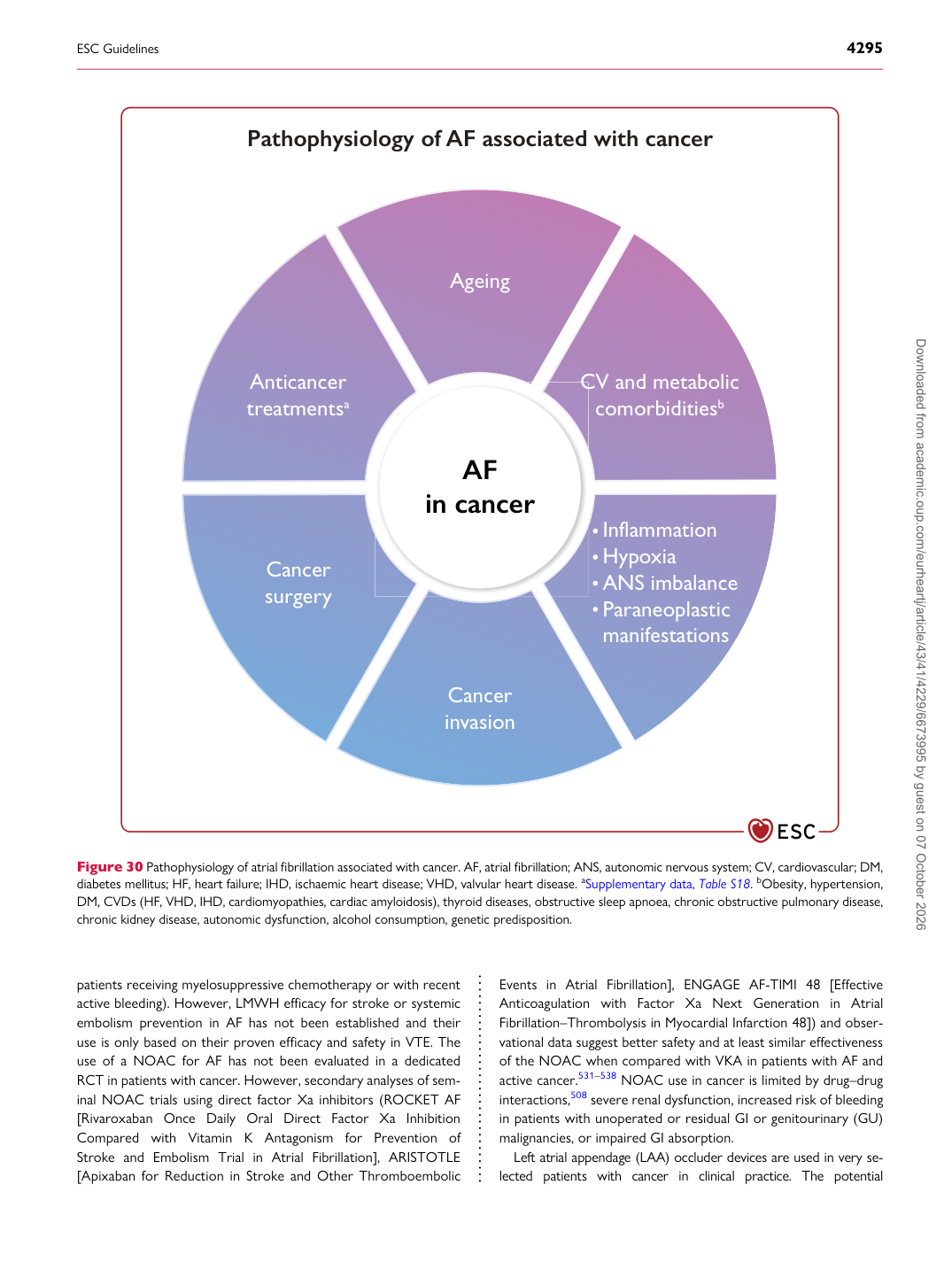
Pathophysiology of AF associated with cancer

AF in cancer

Ageing

CV and metabolic

comorbiditiesb Anticancer treatmentsa

Cancer invasion

Cancer surgery Inflammation Hypoxia ANS imbalance Paraneoplastic manifestations

Figure 30 Pathophysiology of atrial fibrillation associated with cancer. AF, atrial fibrillation; ANS, autonomic nervous system; CV, cardiovascular; DM, diabetes mellitus; HF, heart failure; IHD, ischaemic heart disease; VHD, valvular heart disease. aSupplementary data, Table S18. bObesity, hypertension, DM, CVDs (HF, VHD, IHD, cardiomyopathies, cardiac amyloidosis), thyroid diseases, obstructive sleep apnoea, chronic obstructive pulmonary disease, chronic kidney disease, autonomic dysfunction, alcohol consumption, genetic predisposition. Downloaded from academic.oup.com/eurheartj/article/43/41/4229/6673995 by guest on 07 October 2026