p.59 抽出テキスト
or non-fulminant, including symptomatic but haemodynamically and electrically stable patients and incidental cases diagnosed at the same time as other immune-related adverse events) to guide the management pathway (Figure 28).331 Interruption of ICI treatment is recommended in all cases of suspected ICI-associated myocarditis (any patient developing new cardiac symptoms, new cardiac arrhythmias, new heart blocks, or new troponin increase who has received an ICI therapy in the past 12 weeks) while investigations are performed. Once the abnormal findings have resolved, a MDT discussion is recommended to determine the risk/benefit to permanent stopping vs. resuming ICI treatment in patients with suspected but not confirmed myocarditis. Cessation of ICI treatment is recommended in patients with cancer with fulminant or non-fulminant ICI-associated myocarditis and the patient should be admitted to hospital and a level 2 or 3 bed with continuous ECG monitoring is required. CV complications should be treated as per specific ESC Guidelines (HF,14 tachyarrhythmias,441,442 AV block,443 or pericardial effusion444).

Treatment of both non-fulminant and fulminant ICI-associated myocarditis with methylprednisolone 500–1000 mg i.v. bolus once daily for the first 3–5 days should be started as soon as possible, once the diagnosis is considered likely, to reduce MACE including mortality.386,436 If clinical improvement is observed (cTn reduced by .50% from peak level within 24–72 h and any LVD, AV block, and arrhythmias resolved), switching to oral prednisolone is

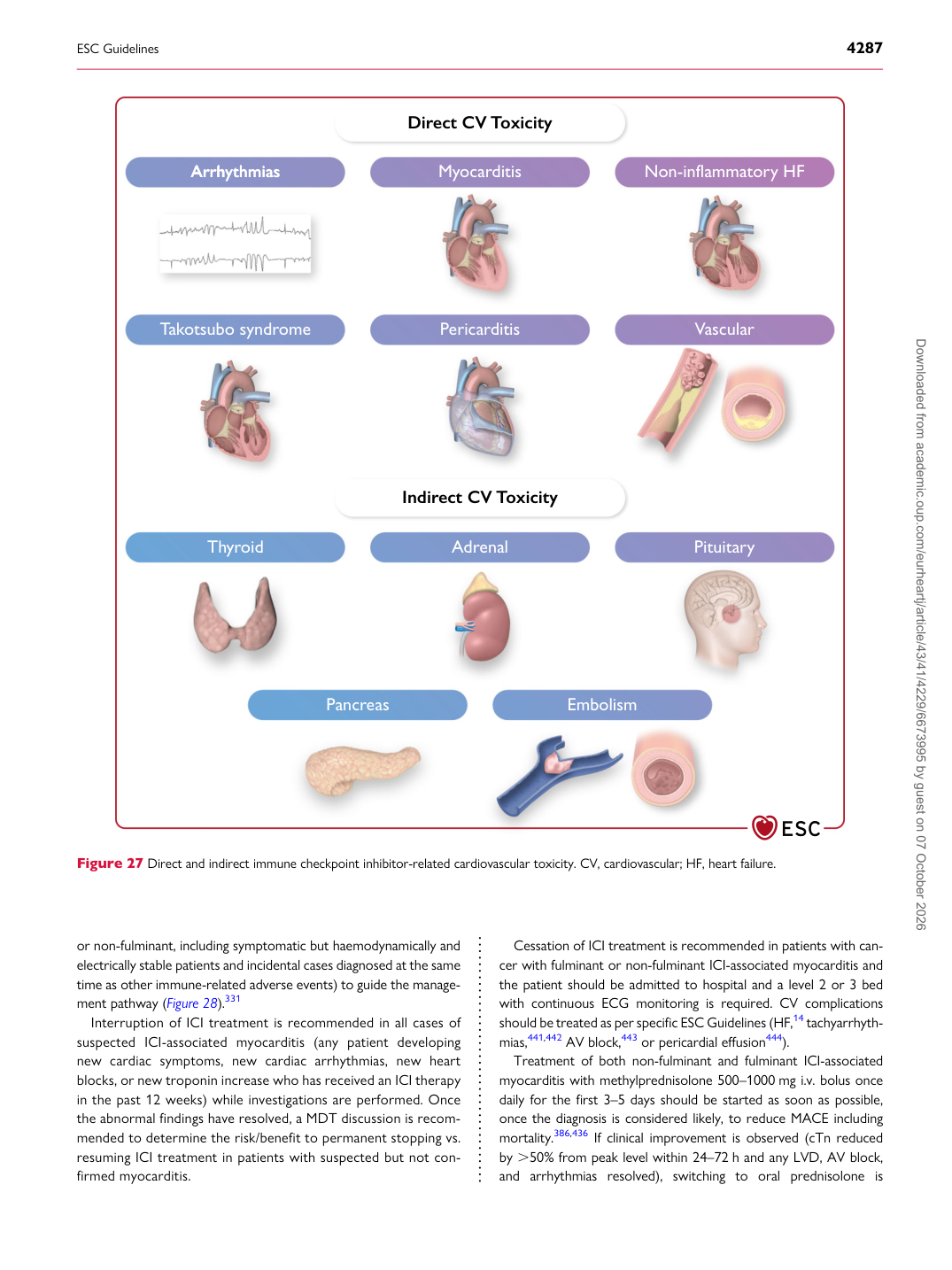
Direct CV Toxicity

Arrhythmias Arrhythmias Myocarditis Non-inflammatory HF

Takotsubo syndrome Pericarditis Vascular

Indirect CV Toxicity

Thyroid Adrenal Pituitary

Pancreas Embolism

Figure 27 Direct and indirect immune checkpoint inhibitor-related cardiovascular toxicity. CV, cardiovascular; HF, heart failure. Downloaded from academic.oup.com/eurheartj/article/43/41/4229/6673995 by guest on 07 October 2026