p.54 抽出テキスト
5.5.18 Other cancer treatments

Several other cancer therapies may also induce clinically relevant CV events. Cyclophosphamide, cisplatin, ifosfamide, and taxanes (paclitaxel and docetaxel) can induce myocardial dysfunction and HF.4 Cyclophosphamide CV toxicity is primarily seen in patients receiving high doses (.140 mg/kg) before HSCT and typically occurs within days of drug administration.410 Platinum-containing chemotherapy (cisplatin, carboplatin, oxaliplatin) may cause vascular disease (vasospasm, MI, and venous and arterial thrombosis). These may occur during treatment and also contribute to increased long-term risk of CAD in survivors. Patients with testicular cancer treated with cisplatin have a higher risk for vascular disease at long-term follow-up.421 The risk of the individual patient is still hard to predict, but lifestyle interventions, a high degree of clinical suspicion in patients who experience chest pain, and close CVRF monitoring is recommended during and after therapy.422 Cisplatin422 infrequently causes HF; however, because it requires the administration of a high i.v. volume to avoid renal toxicity, patients with pre-existing CVD may develop symptomatic HF. Arsenic trioxide is used to treat some leukaemias and myelomas. Arsenic trioxide frequently prolongs the QT interval (26–93% of patients), and life-threatening ventricular tachyarrhythmias have been reported.45,259 QTc prolongation was observed 1–5 weeks after arsenic trioxide infusion and then returned towards baseline by the end of 8 weeks. Patients receiving treatment with arsenic trioxide should be monitored weekly with ECG during the first 8 weeks of therapy. Electrolyte monitoring is also required as arsenic trioxide may induce hypokalaemia, hypomagnesaemia, and renal dysfunction. Risk factors for QT prolongation should be controlled before, during, and after cancer treatment (Section 6.4.2). Several FMS-like tyrosine kinase 3 (FLT3) inhibitors (first-generation: midostaurin; second-generation: gilteritinib) have been tested for the treatment of acute myeloid leukaemias. Gilterinib-induced differentiation syndrome (fever, dyspnoea, pleuropericardial effusion, pulmonary oedema, peripheral oedema, hypotension, renal dysfunction, and rash) requires early corticosteroid therapy and haemodynamic monitoring until resolution of symptoms. Midostaurin and gilterinib may prolong QTc interval and close electrolyte surveillance and minimizing drug–drug interactions are required (see Section 6.4.2; Table 9; Supplementary data, Tables S15 and S16).423

6 Diagnosis and management of

acute and subacute cardiovascular toxicity in patients receiving anticancer treatment

A coordinated MDT is recommended to discuss patients with cancer who develop acute CV complications of their cancer treatment.5 Referral to a specialized cardio-oncology service is recommended for patients with cancer who present with new CTR-CVT during and after cancer treatment.12 The prevention and management of CVD in patients with cancer should generally follow published ESC Guidelines for specific CVD. This chapter provides guidance on the management of CTR-CVT that occur during cancer treatment, and highlights where management differs for patients with cancer compared with those without. The decision to initiate CV treatment (medication, devices) needs to include consideration of a range of factors including both cancer and CV symptom burden, cancer prognosis, ongoing cancer treatment requirements including alternative options, possible adverse drug reactions, drug–drug interactions, and patient preferences. An extensive list of drug–drug interactions is provided in Supplementary data, Tables S15–S17.

6.1 Cancer therapy-related cardiac

dysfunction 6.1.1. Anthracycline chemotherapy-related cardiac dysfunction CTRCD during anthracycline chemotherapy may present clinically or be detected in asymptomatic patients during surveillance (Figure 10; Table 3).4 The diagnosis of anthracycline chemotherapy-related cardiac dysfunction includes new CV symptoms, new abnormalities in cardiac function on CV imaging, and/or new increases in cardiac biomarkers (Table 3). A MDT discussion is recommended to consider the risk/benefit ratio of continuing anthracycline chemotherapy in patients who develop new CTRCD. Discontinuation of anthracycline chemotherapy is recommended in patients with cancer who develop severe symptomatic CTRCD.22 There are rare exceptions where rechallenge with further anthracycline chemotherapy may be considered after a MDT discussion, using prevention strategies described below and under close monitoring with each cycle of anthracycline chemotherapy. Temporary interruption of anthracycline chemotherapy is recommended in patients who develop moderate symptomatic CTRCD, and in patients who develop moderate or severe asymptomatic CTRCD. A MDT approach regarding interruption vs. continuation of anthracycline chemotherapy is recommended in patients who develop mild symptomatic CTRCD. Guideline-based HF therapy is recommended in patients who develop symptomatic CTRCD or asymptomatic moderate or severe CTRCD during anthracycline chemotherapy. The use of an ACE-I/ ARB or angiotensin receptor–neprilysin inhibitor, a beta-blocker, a sodium–glucose co-transporter 2 inhibitor, and a mineralocorticoid receptor antagonist is recommended unless the drugs are contraindicated or not tolerated. Up-titration to target doses as described in the 2021 ESC Guidelines for the diagnosis and treatment of acute and chronic HF is recommended.14 ACE-I, ARB, and/or beta-blockers

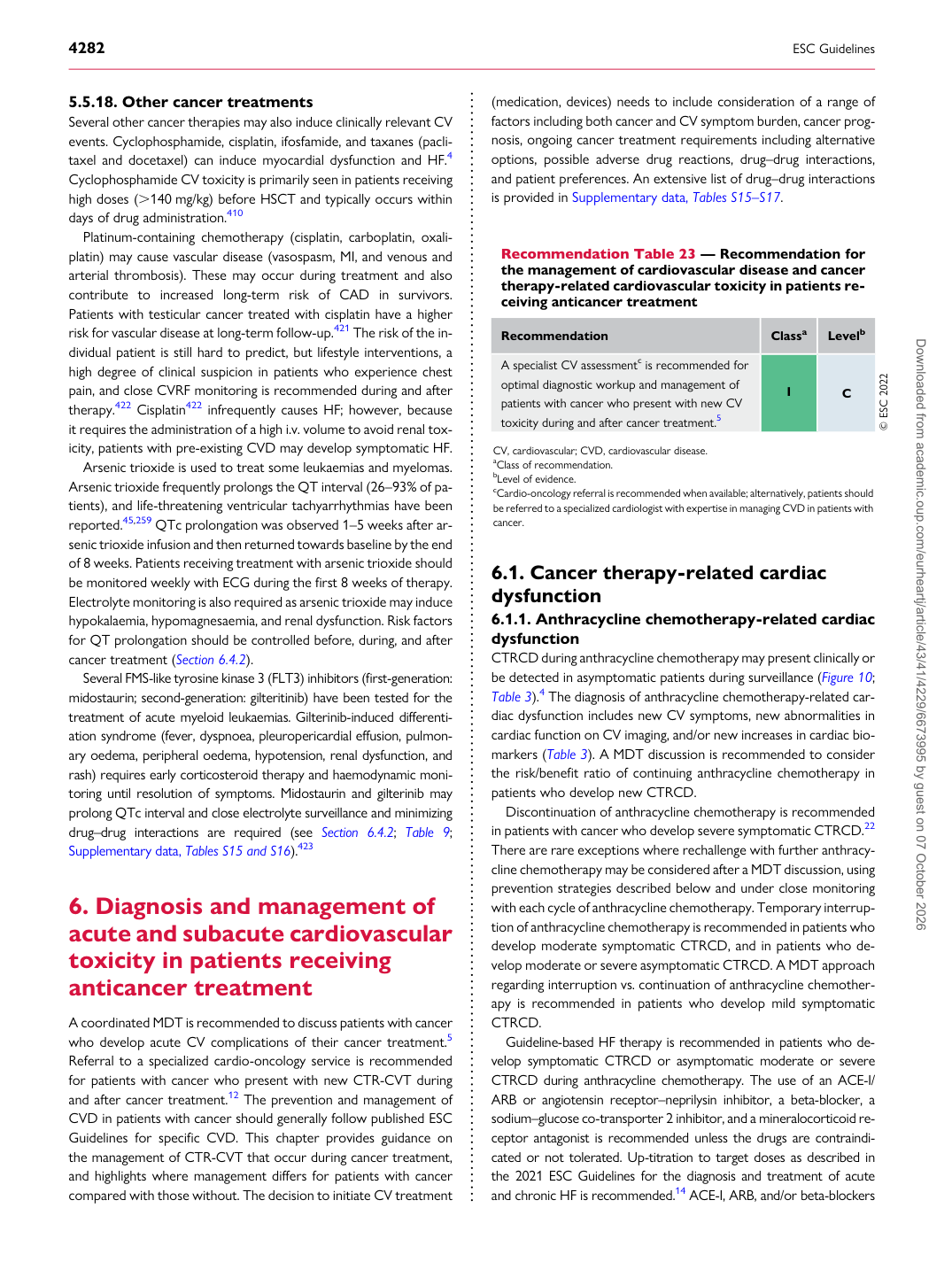
Recommendation Table 23 — Recommendation for the management of cardiovascular disease and cancer therapy-related cardiovascular toxicity in patients receiving anticancer treatment

Recommendation Classa Levelb A specialist CV assessmentc is recommended for optimal diagnostic workup and management of patients with cancer who present with new CV toxicity during and after cancer treatment.5 I C © ESC 2022

CV, cardiovascular; CVD, cardiovascular disease. aClass of recommendation. bLevel of evidence. cCardio-oncology referral is recommended when available; alternatively, patients should be referred to a specialized cardiologist with expertise in managing CVD in patients with cancer. Downloaded from academic.oup.com/eurheartj/article/43/41/4229/6673995 by guest on 07 October 2026