p.47 抽出テキスト
Goserelin

GnRH agonist

GnRH antagonist

Histrelin

Degarelix

Relugolix

Leuprorelin

Bicalutamide

Flutamide

Nilutamide

Apalutamide

Abirateroneb

Darolutamide

Enzalutamide

Triptorelin HTN HG/DM HF IHD/MI AF

Androgen deprivation therapy-related cardiovascular toxicities

1st generation antiandrogens

2nd generation androgen deprivation therapy

Androgen metabolism inhibitor

Very common: ≥10% incidence

Common: 1% to <10% incidence Uncommon: 0.1% to < 1% incidence

Rare: <0.1% incidence QTca

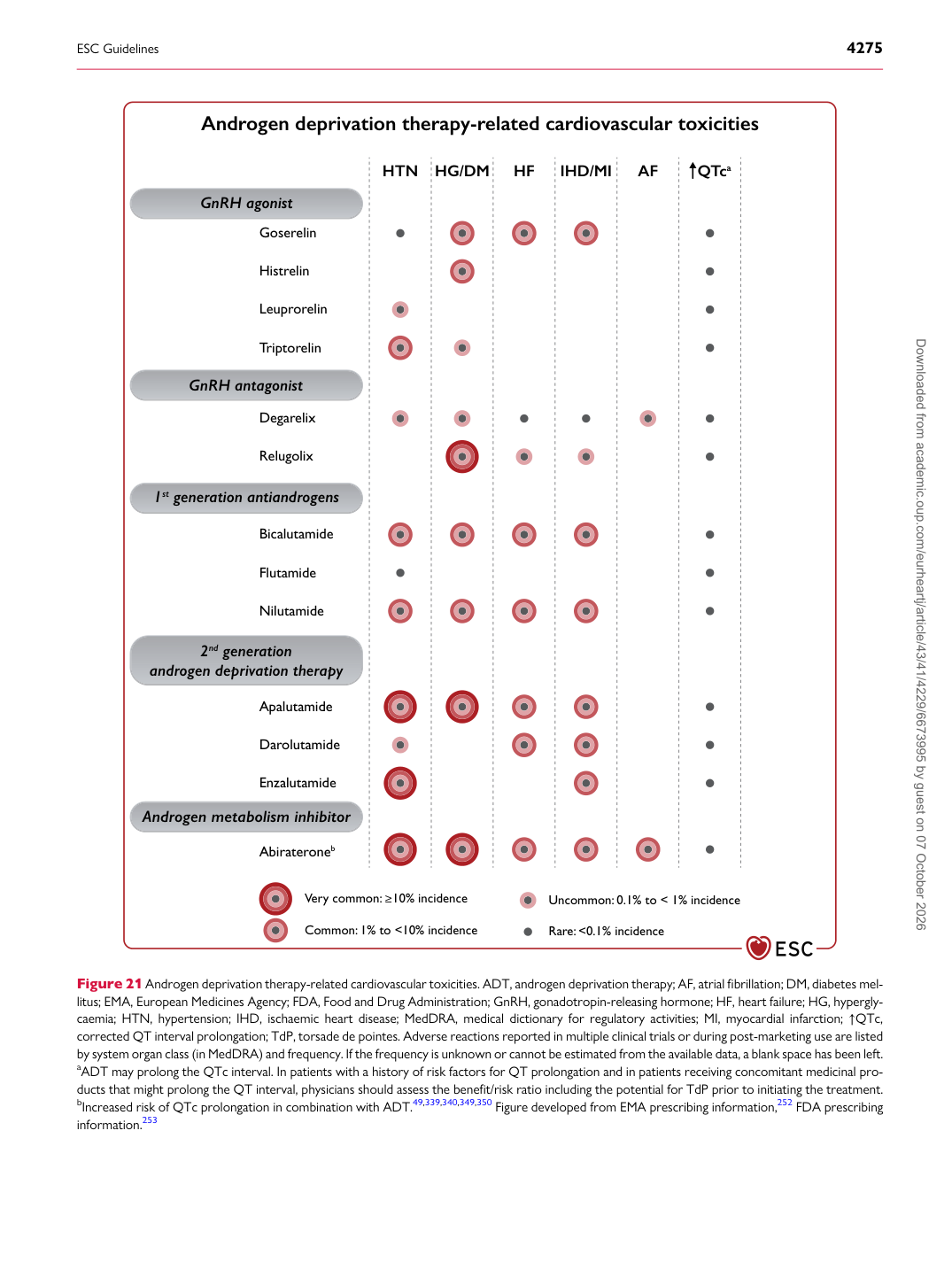
Figure 21 Androgen deprivation therapy-related cardiovascular toxicities. ADT, androgen deprivation therapy; AF, atrial fibrillation; DM, diabetes mellitus; EMA, European Medicines Agency; FDA, Food and Drug Administration; GnRH, gonadotropin-releasing hormone; HF, heart failure; HG, hyperglycaemia; HTN, hypertension; IHD, ischaemic heart disease; MedDRA, medical dictionary for regulatory activities; MI, myocardial infarction; ↑QTc, corrected QT interval prolongation; TdP, torsade de pointes. Adverse reactions reported in multiple clinical trials or during post-marketing use are listed by system organ class (in MedDRA) and frequency. If the frequency is unknown or cannot be estimated from the available data, a blank space has been left. aADT may prolong the QTc interval. In patients with a history of risk factors for QT prolongation and in patients receiving concomitant medicinal products that might prolong the QT interval, physicians should assess the benefit/risk ratio including the potential for TdP prior to initiating the treatment. bIncreased risk of QTc prolongation in combination with ADT.49,339,340,349,350 Figure developed from EMA prescribing information,252 FDA prescribing information.253 Downloaded from academic.oup.com/eurheartj/article/43/41/4229/6673995 by guest on 07 October 2026