p.40 抽出テキスト
5.5.7 Multiple myeloma therapies

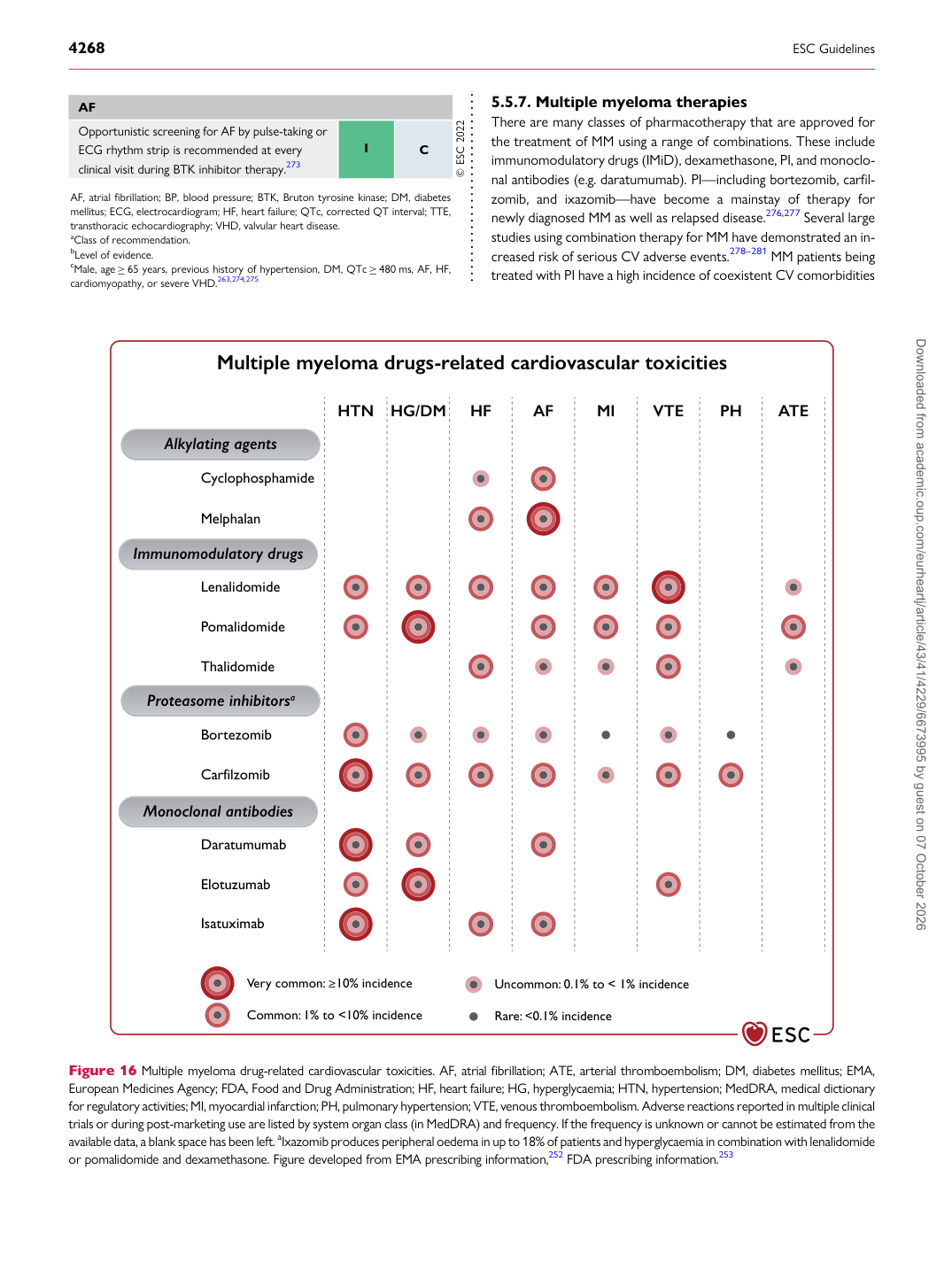
There are many classes of pharmacotherapy that are approved for the treatment of MM using a range of combinations. These include immunomodulatory drugs (IMiD), dexamethasone, PI, and monoclonal antibodies (e.g. daratumumab). PI—including bortezomib, carfilzomib, and ixazomib—have become a mainstay of therapy for newly diagnosed MM as well as relapsed disease.276,277 Several large studies using combination therapy for MM have demonstrated an increased risk of serious CV adverse events.278–281 MM patients being treated with PI have a high incidence of coexistent CV comorbidities

AF Opportunistic screening for AF by pulse-taking or ECG rhythm strip is recommended at every clinical visit during BTK inhibitor therapy.273 I C © ESC 2022

AF, atrial fibrillation; BP, blood pressure; BTK, Bruton tyrosine kinase; DM, diabetes mellitus; ECG, electrocardiogram; HF, heart failure; QTc, corrected QT interval; TTE, transthoracic echocardiography; VHD, valvular heart disease. aClass of recommendation. bLevel of evidence. cMale, age ≥65 years, previous history of hypertension, DM, QTc ≥480 ms, AF, HF, cardiomyopathy, or severe VHD.263,274,275

Cyclophosphamide

Melphalan

Lenalidomide

Pomalidomide

Alkylating agents

Bortezomib

Carfilzomib

Proteasome inhibitorsa

Immunomodulatory drugs

Thalidomide

Daratumumab

Elotuzumab

Monoclonal antibodies

Isatuximab HTN HF AF HG/DM MI VTE PH ATE

Multiple myeloma drugs-related cardiovascular toxicities

Very common: ≥10% incidence

Common: 1% to <10% incidence Uncommon: 0.1% to < 1% incidence

Rare: <0.1% incidence

Figure 16 Multiple myeloma drug-related cardiovascular toxicities. AF, atrial fibrillation; ATE, arterial thromboembolism; DM, diabetes mellitus; EMA, European Medicines Agency; FDA, Food and Drug Administration; HF, heart failure; HG, hyperglycaemia; HTN, hypertension; MedDRA, medical dictionary for regulatory activities; MI, myocardial infarction; PH, pulmonary hypertension; VTE, venous thromboembolism. Adverse reactions reported in multiple clinical trials or during post-marketing use are listed by system organ class (in MedDRA) and frequency. If the frequency is unknown or cannot be estimated from the available data, a blank space has been left. aIxazomib produces peripheral oedema in up to 18% of patients and hyperglycaemia in combination with lenalidomide or pomalidomide and dexamethasone. Figure developed from EMA prescribing information,252 FDA prescribing information.253 Downloaded from academic.oup.com/eurheartj/article/43/41/4229/6673995 by guest on 07 October 2026