p.35 抽出テキスト
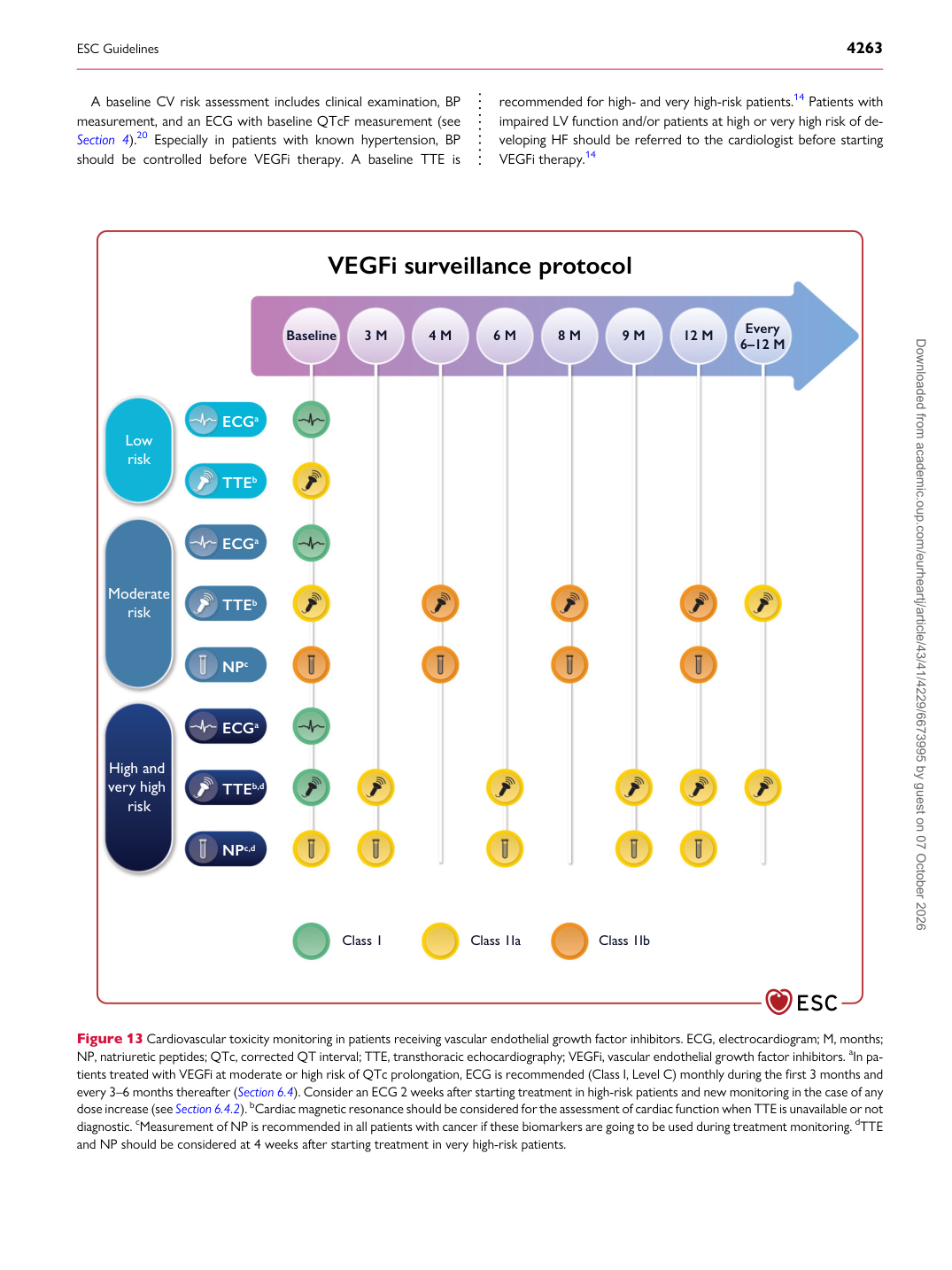
A baseline CV risk assessment includes clinical examination, BP measurement, and an ECG with baseline QTcF measurement (see Section 4).20 Especially in patients with known hypertension, BP should be controlled before VEGFi therapy. A baseline TTE is recommended for high- and very high-risk patients.14 Patients with impaired LV function and/or patients at high or very high risk of developing HF should be referred to the cardiologist before starting VEGFi therapy.14

ECGa

ECGa

TTEb 6 M 8 M 9 M 12 M Every 6–12 M 3 M 4 M

NPc,d

ECGa

NPc

TTEb VEGFi surveillance protocol

High and very high

risk

Moderate

risk

Low risk

TTEb,d Baseline

Class 1 Class 1Ia Class 1Ib

Figure 13 Cardiovascular toxicity monitoring in patients receiving vascular endothelial growth factor inhibitors. ECG, electrocardiogram; M, months; NP, natriuretic peptides; QTc, corrected QT interval; TTE, transthoracic echocardiography; VEGFi, vascular endothelial growth factor inhibitors. aIn patients treated with VEGFi at moderate or high risk of QTc prolongation, ECG is recommended (Class I, Level C) monthly during the first 3 months and every 3–6 months thereafter (Section 6.4). Consider an ECG 2 weeks after starting treatment in high-risk patients and new monitoring in the case of any dose increase (see Section 6.4.2). bCardiac magnetic resonance should be considered for the assessment of cardiac function when TTE is unavailable or not diagnostic. cMeasurement of NP is recommended in all patients with cancer if these biomarkers are going to be used during treatment monitoring. dTTE and NP should be considered at 4 weeks after starting treatment in very high-risk patients. Downloaded from academic.oup.com/eurheartj/article/43/41/4229/6673995 by guest on 07 October 2026