p.34 抽出テキスト
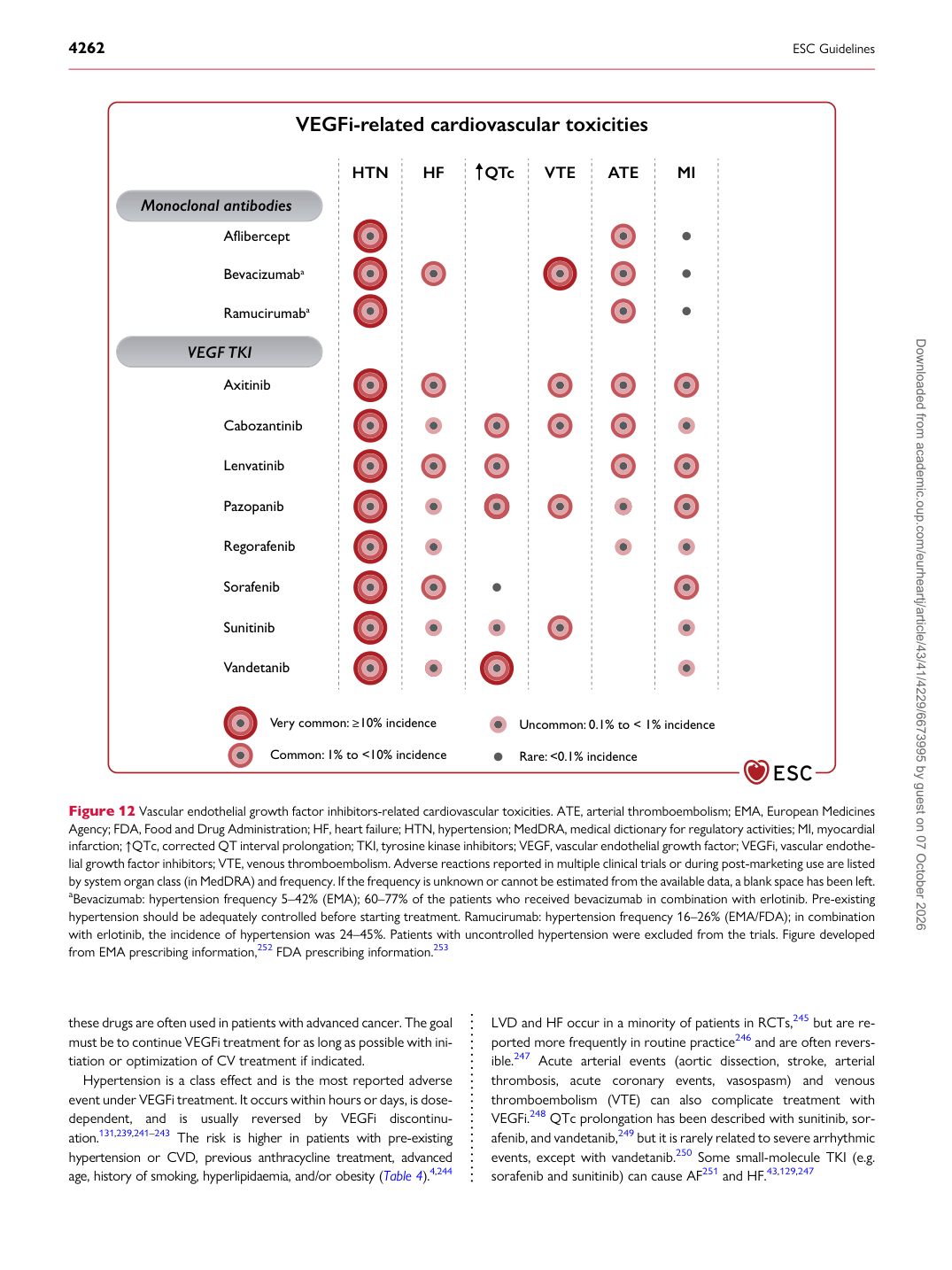
these drugs are often used in patients with advanced cancer. The goal must be to continue VEGFi treatment for as long as possible with initiation or optimization of CV treatment if indicated. Hypertension is a class effect and is the most reported adverse event under VEGFi treatment. It occurs within hours or days, is dosedependent, and is usually reversed by VEGFi discontinuation.131,239,241–243 The risk is higher in patients with pre-existing hypertension or CVD, previous anthracycline treatment, advanced age, history of smoking, hyperlipidaemia, and/or obesity (Table 4).4,244 LVD and HF occur in a minority of patients in RCTs,245 but are reported more frequently in routine practice246 and are often reversible.247 Acute arterial events (aortic dissection, stroke, arterial thrombosis, acute coronary events, vasospasm) and venous thromboembolism (VTE) can also complicate treatment with VEGFi.248 QTc prolongation has been described with sunitinib, sorafenib, and vandetanib,249 but it is rarely related to severe arrhythmic events, except with vandetanib.250 Some small-molecule TKI (e.g. sorafenib and sunitinib) can cause AF251 and HF.43,129,247

Aflibercept

Monoclonal antibodies

VEGF TKI

Bevacizumaba

Ramucirumaba

Axitinib

Cabozantinib

Lenvatinib

Pazopanib

Regorafenib

Sorafenib

Sunitinib

Vandetanib HTN HF VTE ATE MI

VEGFi-related cardiovascular toxicities

Very common: ≥10% incidence

Common: 1% to <10% incidence Uncommon: 0.1% to < 1% incidence

Rare: <0.1% incidence

QTc

Figure 12 Vascular endothelial growth factor inhibitors-related cardiovascular toxicities. ATE, arterial thromboembolism; EMA, European Medicines Agency; FDA, Food and Drug Administration; HF, heart failure; HTN, hypertension; MedDRA, medical dictionary for regulatory activities; MI, myocardial infarction; ↑QTc, corrected QT interval prolongation; TKI, tyrosine kinase inhibitors; VEGF, vascular endothelial growth factor; VEGFi, vascular endothelial growth factor inhibitors; VTE, venous thromboembolism. Adverse reactions reported in multiple clinical trials or during post-marketing use are listed by system organ class (in MedDRA) and frequency. If the frequency is unknown or cannot be estimated from the available data, a blank space has been left. aBevacizumab: hypertension frequency 5–42% (EMA); 60–77% of the patients who received bevacizumab in combination with erlotinib. Pre-existing hypertension should be adequately controlled before starting treatment. Ramucirumab: hypertension frequency 16–26% (EMA/FDA); in combination with erlotinib, the incidence of hypertension was 24–45%. Patients with uncontrolled hypertension were excluded from the trials. Figure developed from EMA prescribing information,252 FDA prescribing information.253 Downloaded from academic.oup.com/eurheartj/article/43/41/4229/6673995 by guest on 07 October 2026