p.27 抽出テキスト
counteract anticancer treatment side effects and different types of training can be prescribed during cancer therapy according to a patient’s individual characteristics.133 A healthy lifestyle decreases the risks of cancer, CVD, and transition from diagnosed cancer to subsequent CVD.134,135 Poor CRF is associated with a higher prevalence of acute and chronic CTR-CVT and exercise positively impacts CRF during chemotherapy, although in a recent meta-analysis, the ability of exercise to prevent CTRCD is unclear.136,137 CVRF must be corrected with intensive treatment of arterial hypertension,138 DM,139 and

Management of CVD and CVRF

according to ESC Guidelines Primary vs secondary prevention

Minimize the use of cardiotoxic drugs

ACE-I/ARB and beta-blockers

Dexrazoxane/liposomal anthracyclines

(patients treated with anthracyclines)

Statins

Primary and secondary cancer-therapy related CV toxicity prevention strategies

In patients at high and very high

risk of CTRCD

1°prevention Baseline CV risk

assessment

2°prevention

1st cancer requiring cardiotoxic cancer therapy 2nd cancer requiring cardiotoxic cancer therapy CVD CTR-CVT Class IIa Class I

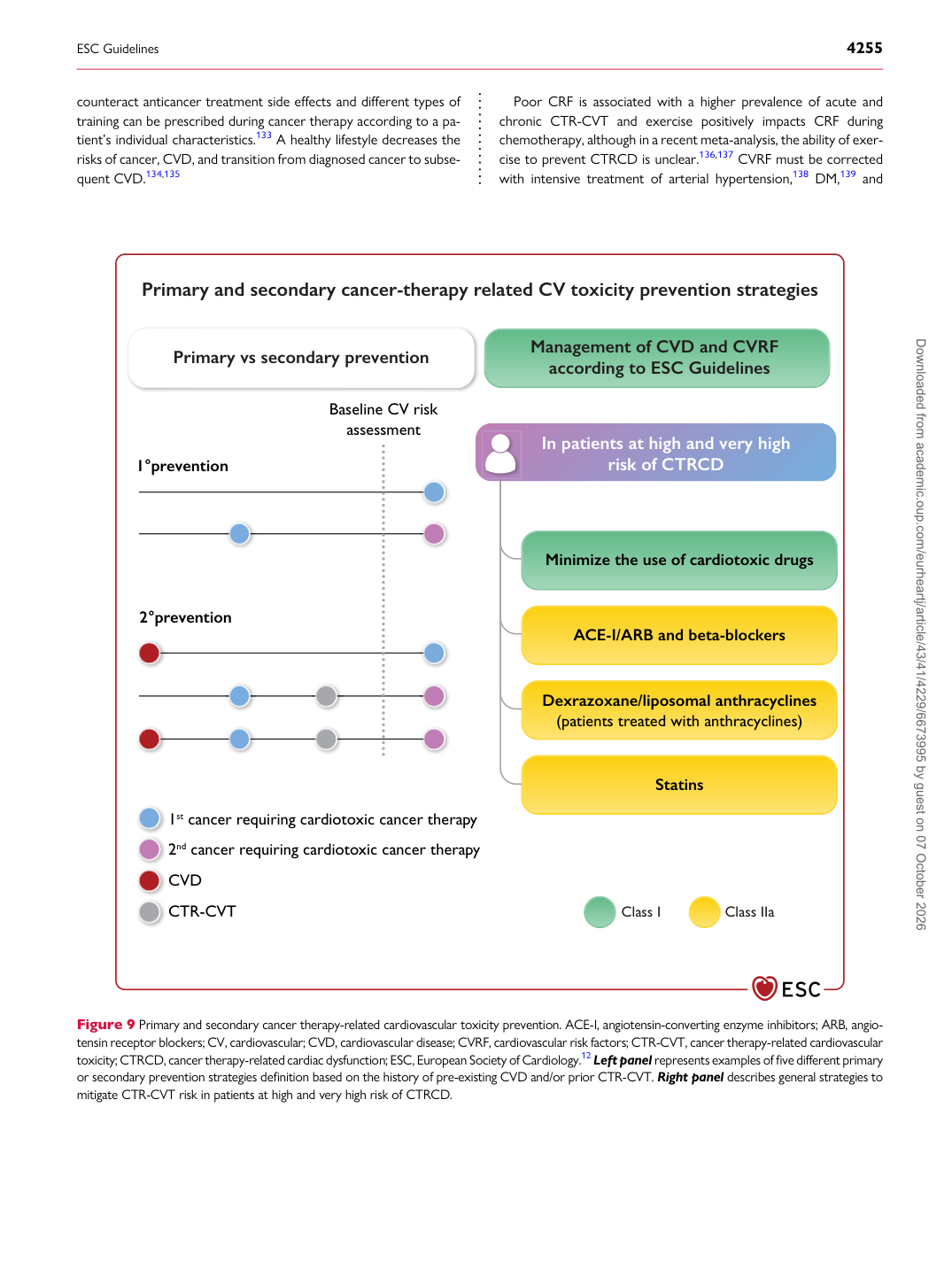
Figure 9 Primary and secondary cancer therapy-related cardiovascular toxicity prevention. ACE-I, angiotensin-converting enzyme inhibitors; ARB, angiotensin receptor blockers; CV, cardiovascular; CVD, cardiovascular disease; CVRF, cardiovascular risk factors; CTR-CVT, cancer therapy-related cardiovascular toxicity; CTRCD, cancer therapy-related cardiac dysfunction; ESC, European Society of Cardiology.12 Left panel represents examples of five different primary or secondary prevention strategies definition based on the history of pre-existing CVD and/or prior CTR-CVT. Right panel describes general strategies to mitigate CTR-CVT risk in patients at high and very high risk of CTRCD. Downloaded from academic.oup.com/eurheartj/article/43/41/4229/6673995 by guest on 07 October 2026