p.14 抽出テキスト
3 Cancer therapy-related

cardiovascular toxicity definitions

Several terminologies and definitions have previously been proposed to describe the spectrum of CTR-CVT, leading to inconsistencies in diagnosis and management. The need to harmonize these definitions has frequently been stated and recognized, and resulted in the recent international definitions of CTR-CVT1 supported by this guideline (Table 3; Supplementary data, Table S1). This document will focus on consensus definitions for cardiomyopathy and heart failure (HF), myocarditis, vascular toxicities, hypertension, cardiac arrhythmias, and corrected QT interval (QTc) prolongation. The definitions of other CTR-CVT, including pericardial and valvular heart diseases (VHDs), are the same as those used for the general cardiology population. For cardiac injury, cardiomyopathy, and HF, the descriptive term cancer therapy-related cardiac dysfunction (CTRCD) is recommended as it captures the broad spectrum of possible presentations and the aetiological link with the broad scope of various cancer therapies, including chemotherapy, targeted agents, immune therapies, and radiation therapy.

High

Intermediate

Low Severe and very severe

Moderate

Mild

Likelihood of

CTR-CVT Clinical severity of CTR-CVT

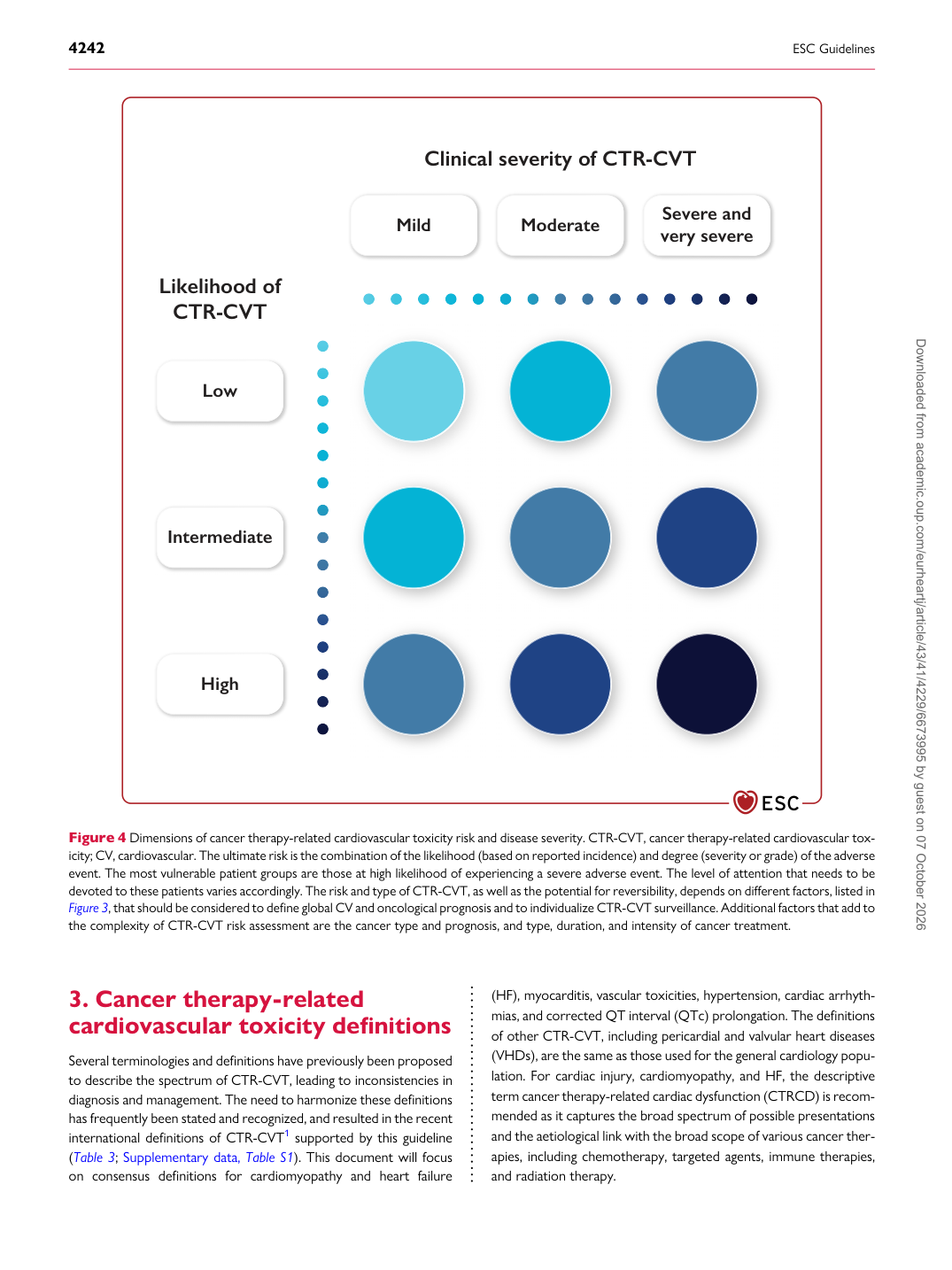
Figure 4 Dimensions of cancer therapy-related cardiovascular toxicity risk and disease severity. CTR-CVT, cancer therapy-related cardiovascular toxicity; CV, cardiovascular. The ultimate risk is the combination of the likelihood (based on reported incidence) and degree (severity or grade) of the adverse event. The most vulnerable patient groups are those at high likelihood of experiencing a severe adverse event. The level of attention that needs to be devoted to these patients varies accordingly. The risk and type of CTR-CVT, as well as the potential for reversibility, depends on different factors, listed in Figure 3, that should be considered to define global CV and oncological prognosis and to individualize CTR-CVT surveillance. Additional factors that add to the complexity of CTR-CVT risk assessment are the cancer type and prognosis, and type, duration, and intensity of cancer treatment. Downloaded from academic.oup.com/eurheartj/article/43/41/4229/6673995 by guest on 07 October 2026