p.13 抽出テキスト
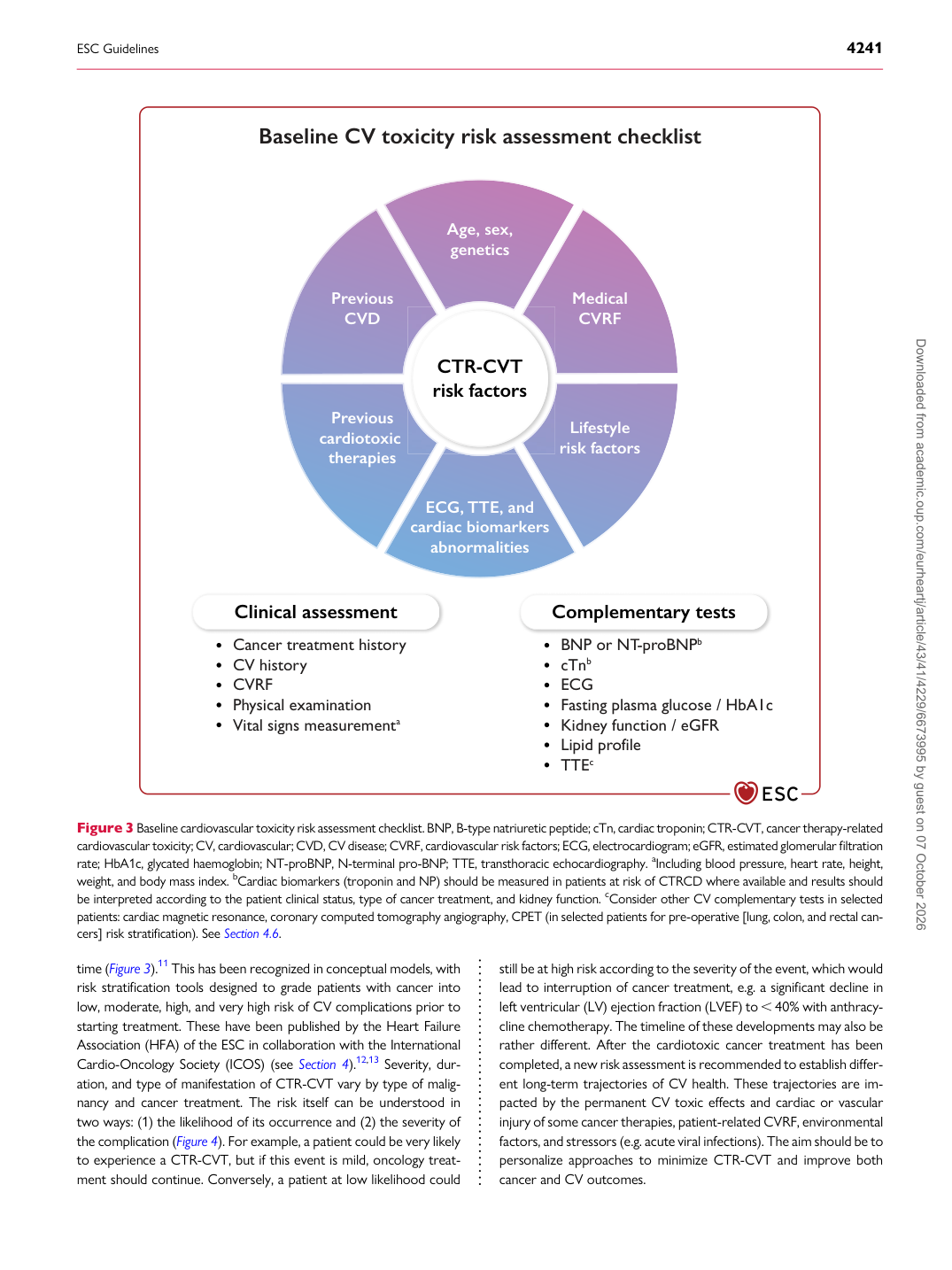
time (Figure 3).11 This has been recognized in conceptual models, with risk stratification tools designed to grade patients with cancer into low, moderate, high, and very high risk of CV complications prior to starting treatment. These have been published by the Heart Failure Association (HFA) of the ESC in collaboration with the International Cardio-Oncology Society (ICOS) (see Section 4).12,13 Severity, duration, and type of manifestation of CTR-CVT vary by type of malignancy and cancer treatment. The risk itself can be understood in two ways: (1) the likelihood of its occurrence and (2) the severity of the complication (Figure 4). For example, a patient could be very likely to experience a CTR-CVT, but if this event is mild, oncology treatment should continue. Conversely, a patient at low likelihood could still be at high risk according to the severity of the event, which would lead to interruption of cancer treatment, e.g. a significant decline in left ventricular (LV) ejection fraction (LVEF) to , 40% with anthracycline chemotherapy. The timeline of these developments may also be rather different. After the cardiotoxic cancer treatment has been completed, a new risk assessment is recommended to establish different long-term trajectories of CV health. These trajectories are impacted by the permanent CV toxic effects and cardiac or vascular injury of some cancer therapies, patient-related CVRF, environmental factors, and stressors (e.g. acute viral infections). The aim should be to personalize approaches to minimize CTR-CVT and improve both cancer and CV outcomes.

Baseline CV toxicity risk assessment checklist

Cancer treatment history CV history CVRF Physical examination Vital signs measurementa BNP or NT-p T roBNPb

cTnb ECG Fasting plasma glucose / HbA1c Kidney function / eGFR Lipid profile TTEc

Clinical assessment Complementary tests

CTR-CVT risk factors Medical

CVRF Previous

CVD

Lifestyle risk factors

ECG, TTE, and cardiac biomarkers

abnormalities

Previous cardiotoxic

therapies Age, sex,

genetics

Figure 3 Baseline cardiovascular toxicity risk assessment checklist. BNP, B-type natriuretic peptide; cTn, cardiac troponin; CTR-CVT, cancer therapy-related cardiovascular toxicity; CV, cardiovascular; CVD, CV disease; CVRF, cardiovascular risk factors; ECG, electrocardiogram; eGFR, estimated glomerular filtration rate; HbA1c, glycated haemoglobin; NT-proBNP, N-terminal pro-BNP; TTE, transthoracic echocardiography. aIncluding blood pressure, heart rate, height, weight, and body mass index. bCardiac biomarkers (troponin and NP) should be measured in patients at risk of CTRCD where available and results should be interpreted according to the patient clinical status, type of cancer treatment, and kidney function. cConsider other CV complementary tests in selected patients: cardiac magnetic resonance, coronary computed tomography angiography, CPET (in selected patients for pre-operative [lung, colon, and rectal cancers] risk stratification). See Section 4.6. Downloaded from academic.oup.com/eurheartj/article/43/41/4229/6673995 by guest on 07 October 2026