p.12 抽出テキスト
CVD perspective) and the most effective (from an oncological perspective) cancer treatment. Adjudication of CV events occurring in patients on active therapy is another important aspect of cardio-oncology practice.1,3 This is in addition to recommendations on best treatment and management practices. This includes the full scope of CV therapies, including healthy lifestyle promotion and pharmacological, device, and surgical treatments.4,9,10

The principle underlying the dynamic course of CTR-CVT development in patients with cancer is that the absolute risk depends on their baseline risk and changes with exposure to cardiotoxic therapies over

New cancer

diagnosis During cancer

treatmenta First year after cancer treatmentb Long term

follow-up

Cardio-Oncology Care Pathways

Class 1 Class 1Ia Class 1Ib

Baseline CV toxicity risk assessmentc Informing, advising, and supporting patients to promote a healthy lifestyle

Management of CVRF and CVD according to ESC Guidelines

Low risk patients Annual CVRF

assessmente

Reassessment if new CV

signs/symptoms

Standard surveillance Assessment at 1 year

after completion of

cancer therapy

Moderate risk

patients Annual CVRF assessmente CV toxicity re-stratification

at 5 years

TTE every 5 years Cardiology referrald

Assessment at 1 year after completion of

cancer therapy

High and very high risk

patients Annual CVRF

assessmente

TTE at years 1, 3, 5 and

every 5 years

Cardiology referrald

CVD prevention Assessment at 3 months and 1 year after completion of

cancer therapy

Cardiology referrald if new CV signs/symptoms or CTR-CVT develop

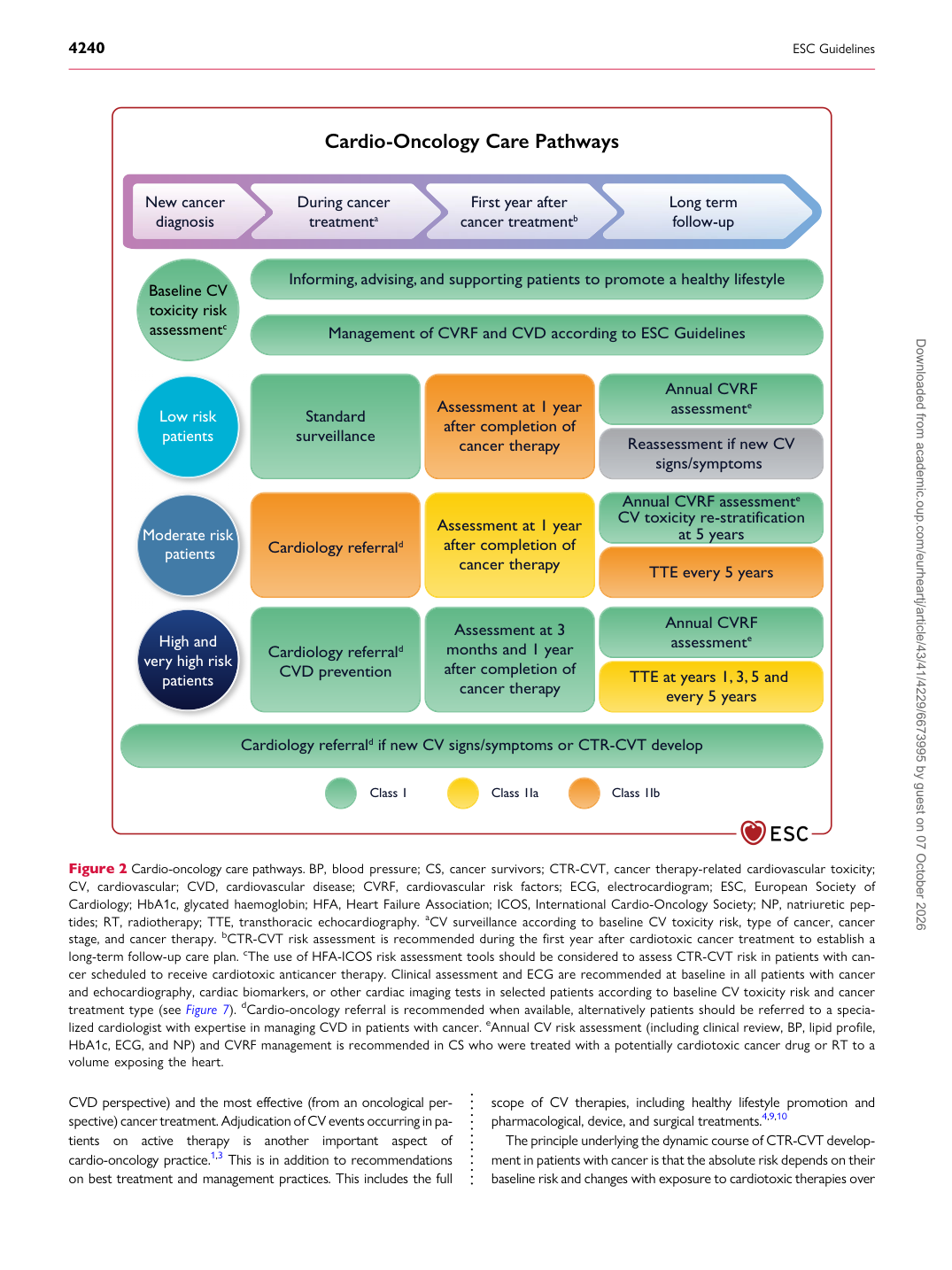
Figure 2 Cardio-oncology care pathways. BP, blood pressure; CS, cancer survivors; CTR-CVT, cancer therapy-related cardiovascular toxicity; CV, cardiovascular; CVD, cardiovascular disease; CVRF, cardiovascular risk factors; ECG, electrocardiogram; ESC, European Society of Cardiology; HbA1c, glycated haemoglobin; HFA, Heart Failure Association; ICOS, International Cardio-Oncology Society; NP, natriuretic peptides; RT, radiotherapy; TTE, transthoracic echocardiography. aCV surveillance according to baseline CV toxicity risk, type of cancer, cancer stage, and cancer therapy. bCTR-CVT risk assessment is recommended during the first year after cardiotoxic cancer treatment to establish a long-term follow-up care plan. cThe use of HFA-ICOS risk assessment tools should be considered to assess CTR-CVT risk in patients with cancer scheduled to receive cardiotoxic anticancer therapy. Clinical assessment and ECG are recommended at baseline in all patients with cancer and echocardiography, cardiac biomarkers, or other cardiac imaging tests in selected patients according to baseline CV toxicity risk and cancer treatment type (see Figure 7). dCardio-oncology referral is recommended when available, alternatively patients should be referred to a specialized cardiologist with expertise in managing CVD in patients with cancer. eAnnual CV risk assessment (including clinical review, BP, lipid profile, HbA1c, ECG, and NP) and CVRF management is recommended in CS who were treated with a potentially cardiotoxic cancer drug or RT to a volume exposing the heart. Downloaded from academic.oup.com/eurheartj/article/43/41/4229/6673995 by guest on 07 October 2026