p.110 抽出テキスト
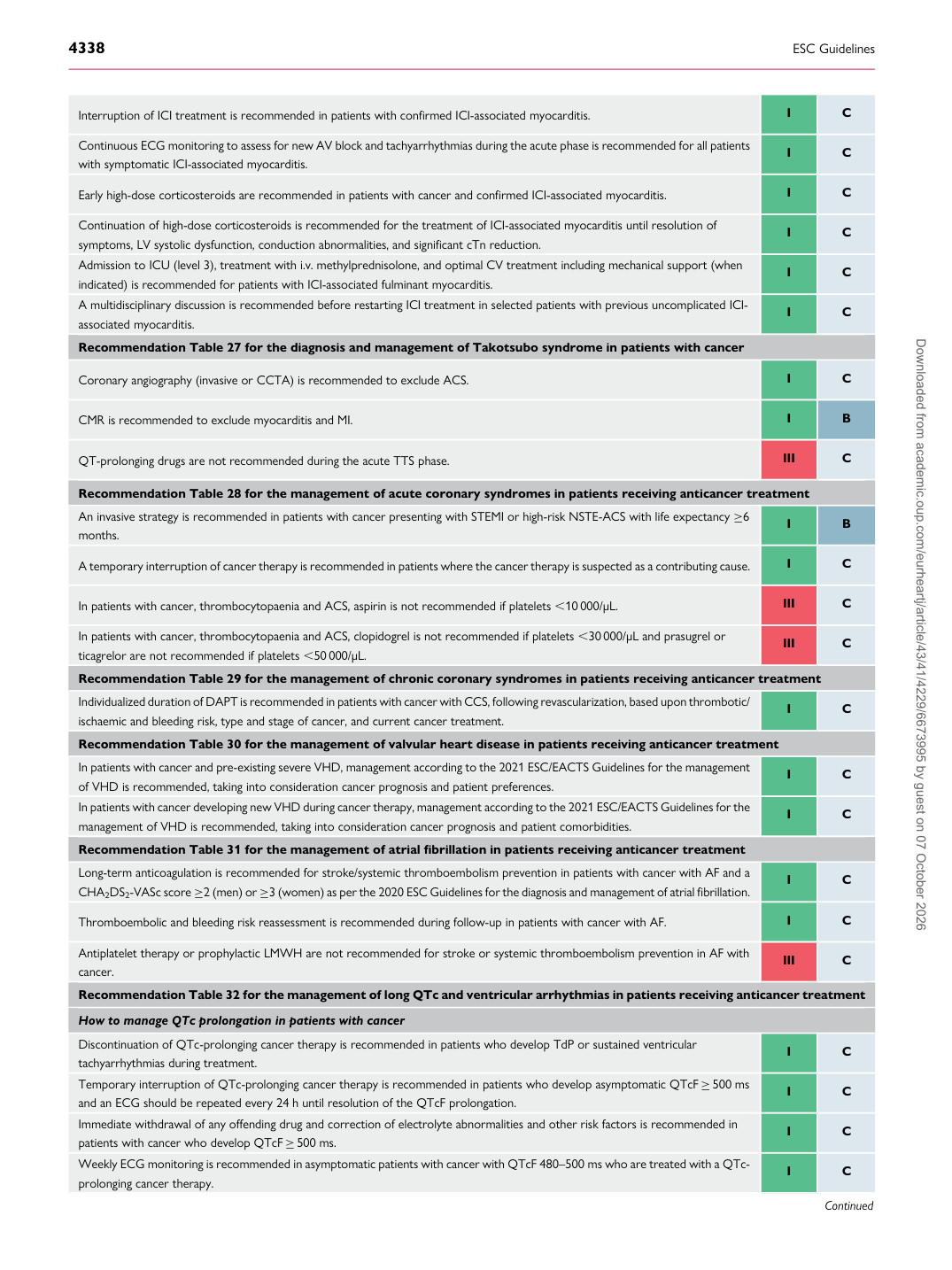
Interruption of ICI treatment is recommended in patients with confirmed ICI-associated myocarditis. I C

Continuous ECG monitoring to assess for new AV block and tachyarrhythmias during the acute phase is recommended for all patients with symptomatic ICI-associated myocarditis. I C

Early high-dose corticosteroids are recommended in patients with cancer and confirmed ICI-associated myocarditis. I C

Continuation of high-dose corticosteroids is recommended for the treatment of ICI-associated myocarditis until resolution of symptoms, LV systolic dysfunction, conduction abnormalities, and significant cTn reduction. I C Admission to ICU (level 3), treatment with i.v. methylprednisolone, and optimal CV treatment including mechanical support (when indicated) is recommended for patients with ICI-associated fulminant myocarditis. I C A multidisciplinary discussion is recommended before restarting ICI treatment in selected patients with previous uncomplicated ICIassociated myocarditis. I C Recommendation Table 27 for the diagnosis and management of Takotsubo syndrome in patients with cancer

Coronary angiography (invasive or CCTA) is recommended to exclude ACS. I C

CMR is recommended to exclude myocarditis and MI. I B

QT-prolonging drugs are not recommended during the acute TTS phase. III C

Recommendation Table 28 for the management of acute coronary syndromes in patients receiving anticancer treatment An invasive strategy is recommended in patients with cancer presenting with STEMI or high-risk NSTE-ACS with life expectancy ≥6 months. I B

A temporary interruption of cancer therapy is recommended in patients where the cancer therapy is suspected as a contributing cause. I C

In patients with cancer, thrombocytopaenia and ACS, aspirin is not recommended if platelets ,10 000/μL. III C

In patients with cancer, thrombocytopaenia and ACS, clopidogrel is not recommended if platelets ,30 000/μL and prasugrel or ticagrelor are not recommended if platelets ,50 000/μL. III C Recommendation Table 29 for the management of chronic coronary syndromes in patients receiving anticancer treatment Individualized duration of DAPT is recommended in patients with cancer with CCS, following revascularization, based upon thrombotic/ ischaemic and bleeding risk, type and stage of cancer, and current cancer treatment. I C Recommendation Table 30 for the management of valvular heart disease in patients receiving anticancer treatment In patients with cancer and pre-existing severe VHD, management according to the 2021 ESC/EACTS Guidelines for the management of VHD is recommended, taking into consideration cancer prognosis and patient preferences. I C In patients with cancer developing new VHD during cancer therapy, management according to the 2021 ESC/EACTS Guidelines for the management of VHD is recommended, taking into consideration cancer prognosis and patient comorbidities. I C Recommendation Table 31 for the management of atrial fibrillation in patients receiving anticancer treatment Long-term anticoagulation is recommended for stroke/systemic thromboembolism prevention in patients with cancer with AF and a CHA2DS2-VASc score ≥2 (men) or ≥3 (women) as per the 2020 ESC Guidelines for the diagnosis and management of atrial fibrillation. I C Thromboembolic and bleeding risk reassessment is recommended during follow-up in patients with cancer with AF. I C

Antiplatelet therapy or prophylactic LMWH are not recommended for stroke or systemic thromboembolism prevention in AF with cancer. III C Recommendation Table 32 for the management of long QTc and ventricular arrhythmias in patients receiving anticancer treatment How to manage QTc prolongation in patients with cancer Discontinuation of QTc-prolonging cancer therapy is recommended in patients who develop TdP or sustained ventricular tachyarrhythmias during treatment. I C Temporary interruption of QTc-prolonging cancer therapy is recommended in patients who develop asymptomatic QTcF ≥500 ms and an ECG should be repeated every 24 h until resolution of the QTcF prolongation. I C Immediate withdrawal of any offending drug and correction of electrolyte abnormalities and other risk factors is recommended in patients with cancer who develop QTcF ≥500 ms. I C Weekly ECG monitoring is recommended in asymptomatic patients with cancer with QTcF 480–500 ms who are treated with a QTcprolonging cancer therapy. I C

Continued Downloaded from academic.oup.com/eurheartj/article/43/41/4229/6673995 by guest on 07 October 2026