p.105 抽出テキスト
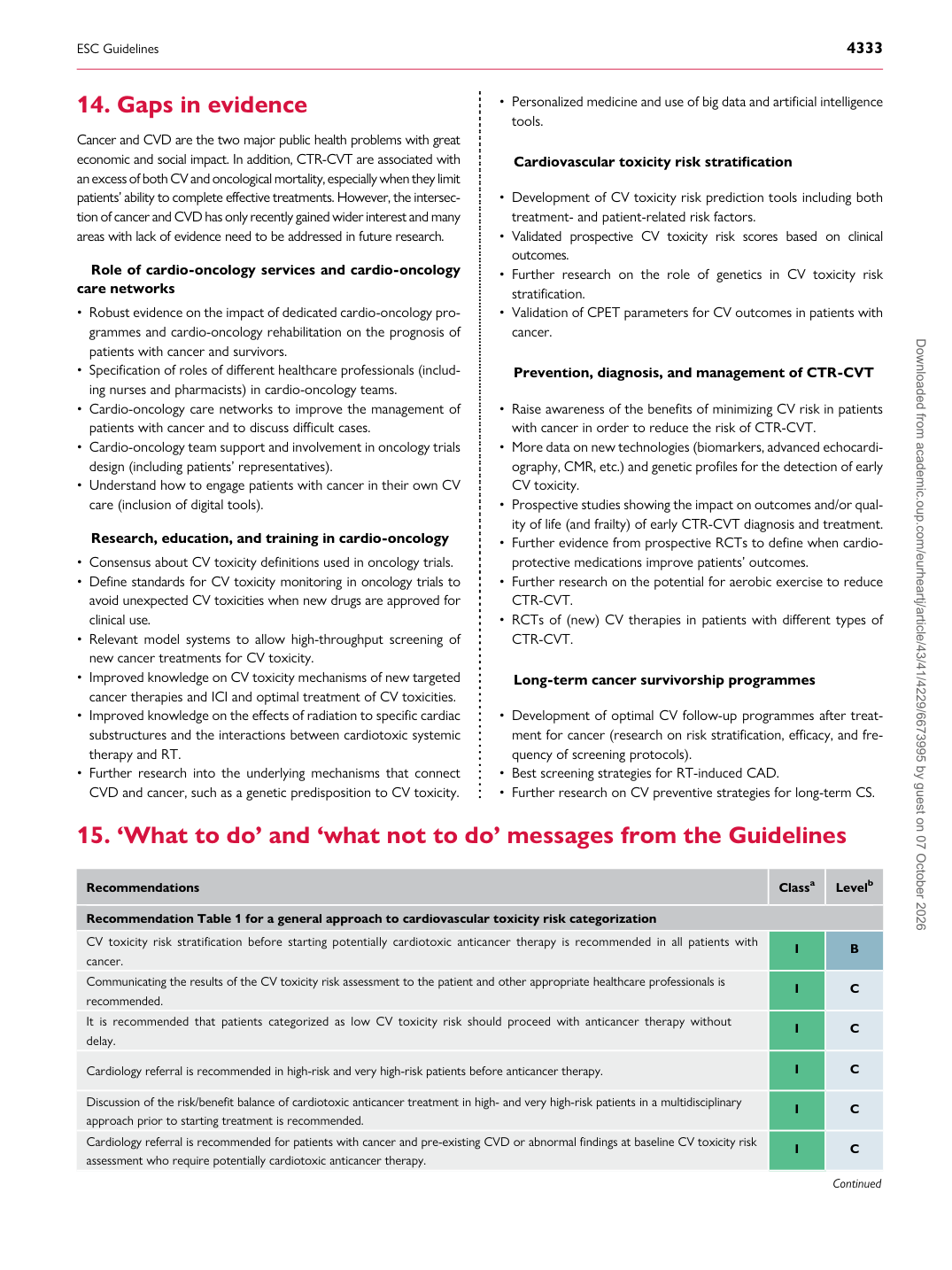
14 Gaps in evidence

Cancer and CVD are the two major public health problems with great economic and social impact. In addition, CTR-CVT are associated with anexcessofbothCVandoncologicalmortality,especiallywhenthey limit patients’ ability to complete effective treatments. However, the intersection of cancer and CVD has only recently gained wider interest and many areas with lack of evidence need to be addressed in future research.

Role of cardio-oncology services and cardio-oncology care networks • Robust evidence on the impact of dedicated cardio-oncology programmes and cardio-oncology rehabilitation on the prognosis of patients with cancer and survivors. • Specification of roles of different healthcare professionals (including nurses and pharmacists) in cardio-oncology teams. • Cardio-oncology care networks to improve the management of patients with cancer and to discuss difficult cases. • Cardio-oncology team support and involvement in oncology trials design (including patients’ representatives). • Understand how to engage patients with cancer in their own CV care (inclusion of digital tools).

Research, education, and training in cardio-oncology • Consensus about CV toxicity definitions used in oncology trials. • Define standards for CV toxicity monitoring in oncology trials to avoid unexpected CV toxicities when new drugs are approved for clinical use. • Relevant model systems to allow high-throughput screening of new cancer treatments for CV toxicity. • Improved knowledge on CV toxicity mechanisms of new targeted cancer therapies and ICI and optimal treatment of CV toxicities. • Improved knowledge on the effects of radiation to specific cardiac substructures and the interactions between cardiotoxic systemic therapy and RT. • Further research into the underlying mechanisms that connect CVD and cancer, such as a genetic predisposition to CV toxicity. • Personalized medicine and use of big data and artificial intelligence tools.

Cardiovascular toxicity risk stratification

• Development of CV toxicity risk prediction tools including both treatment- and patient-related risk factors. • Validated prospective CV toxicity risk scores based on clinical outcomes. • Further research on the role of genetics in CV toxicity risk stratification. • Validation of CPET parameters for CV outcomes in patients with cancer.

Prevention, diagnosis, and management of CTR-CVT

• Raise awareness of the benefits of minimizing CV risk in patients with cancer in order to reduce the risk of CTR-CVT. • More data on new technologies (biomarkers, advanced echocardiography, CMR, etc.) and genetic profiles for the detection of early CV toxicity. • Prospective studies showing the impact on outcomes and/or quality of life (and frailty) of early CTR-CVT diagnosis and treatment. • Further evidence from prospective RCTs to define when cardioprotective medications improve patients’ outcomes. • Further research on the potential for aerobic exercise to reduce CTR-CVT. • RCTs of (new) CV therapies in patients with different types of CTR-CVT.

Long-term cancer survivorship programmes

• Development of optimal CV follow-up programmes after treatment for cancer (research on risk stratification, efficacy, and frequency of screening protocols). • Best screening strategies for RT-induced CAD. • Further research on CV preventive strategies for long-term CS.

15 ‘What to do’ and ‘what not to do’ messages from the Guidelines

Recommendations Classa Levelb

Recommendation Table 1 for a general approach to cardiovascular toxicity risk categorization CV toxicity risk stratification before starting potentially cardiotoxic anticancer therapy is recommended in all patients with cancer. I B Communicating the results of the CV toxicity risk assessment to the patient and other appropriate healthcare professionals is recommended. I C It is recommended that patients categorized as low CV toxicity risk should proceed with anticancer therapy without delay. I C

Cardiology referral is recommended in high-risk and very high-risk patients before anticancer therapy. I C

Discussion of the risk/benefit balance of cardiotoxic anticancer treatment in high- and very high-risk patients in a multidisciplinary approach prior to starting treatment is recommended. I C Cardiology referral is recommended for patients with cancer and pre-existing CVD or abnormal findings at baseline CV toxicity risk assessment who require potentially cardiotoxic anticancer therapy. I C

Continued Downloaded from academic.oup.com/eurheartj/article/43/41/4229/6673995 by guest on 07 October 2026