p.102 抽出テキスト
10. Patient information, communication, and self-management

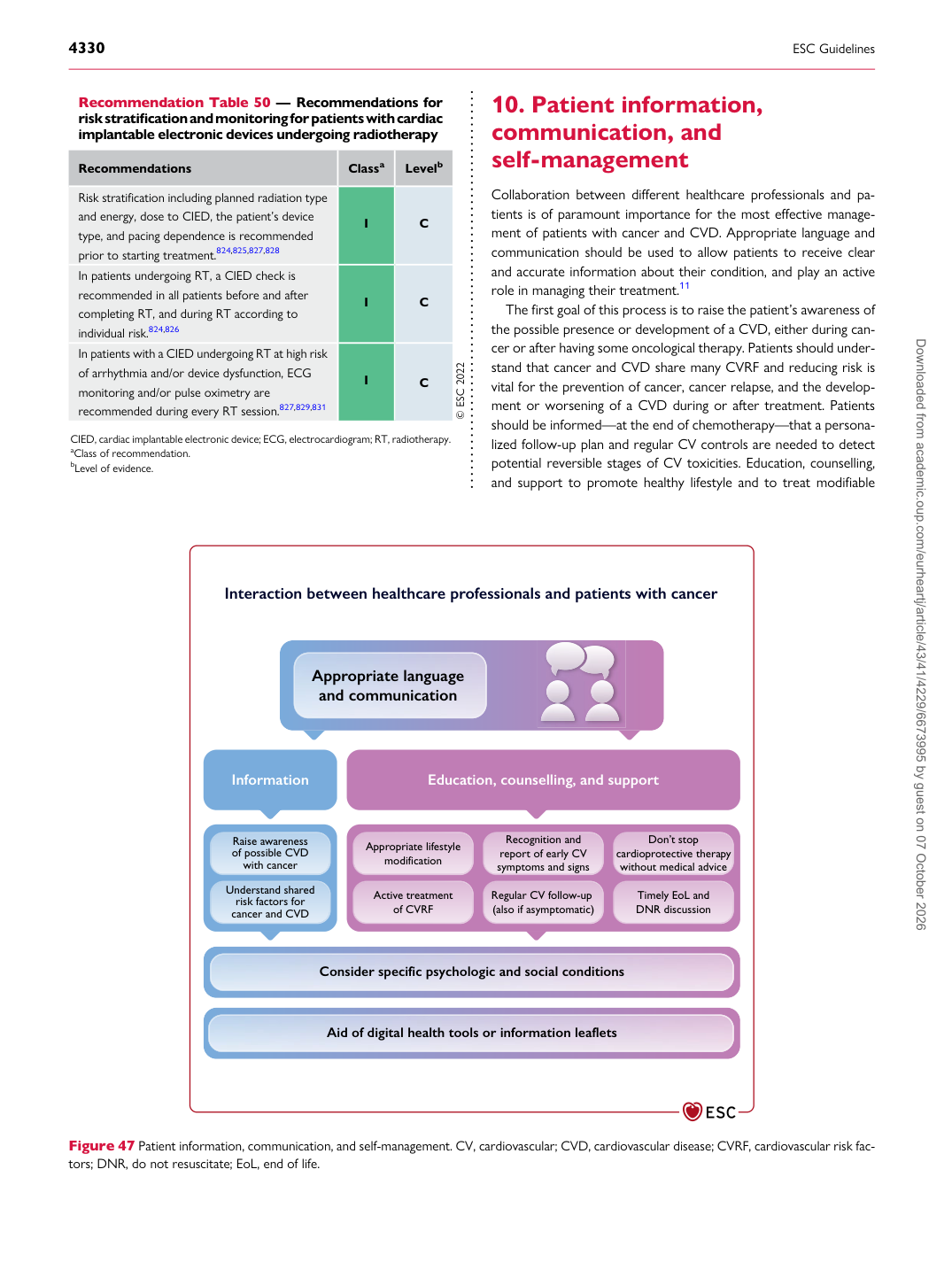
Collaboration between different healthcare professionals and patients is of paramount importance for the most effective management of patients with cancer and CVD. Appropriate language and communication should be used to allow patients to receive clear and accurate information about their condition, and play an active role in managing their treatment.11 The first goal of this process is to raise the patient’s awareness of the possible presence or development of a CVD, either during cancer or after having some oncological therapy. Patients should understand that cancer and CVD share many CVRF and reducing risk is vital for the prevention of cancer, cancer relapse, and the development or worsening of a CVD during or after treatment. Patients should be informed—at the end of chemotherapy—that a personalized follow-up plan and regular CV controls are needed to detect potential reversible stages of CV toxicities. Education, counselling, and support to promote healthy lifestyle and to treat modifiable

Recommendation Table 50 — Recommendations for riskstratificationandmonitoringforpatientswithcardiac implantable electronic devices undergoing radiotherapy

Recommendations Classa Levelb

Risk stratification including planned radiation type and energy, dose to CIED, the patient’s device type, and pacing dependence is recommended prior to starting treatment.824,825,827,828 I C In patients undergoing RT, a CIED check is recommended in all patients before and after completing RT, and during RT according to individual risk.824,826 I C In patients with a CIED undergoing RT at high risk of arrhythmia and/or device dysfunction, ECG monitoring and/or pulse oximetry are recommended during every RT session.827,829,831 I C © ESC 2022

CIED, cardiac implantable electronic device; ECG, electrocardiogram; RT, radiotherapy. aClass of recommendation. bLevel of evidence.

Interaction between healthcare professionals and patients with cancer

Information

Raise awareness of possible CVD

with cancer

Understand shared risk factors for cancer and CVD Appropriate lifestyle

modification

Active treatment

of CVRF Recognition and report of early CV symptoms and signs

Regular CV follow-up (also if asymptomatic) Don’t stop cardioprotective therapy

without medical advice

Timely EoL and DNR discussion

Education, counselling, and support

Consider specific psychologic and social conditions

Aid of digital health tools or information leaflets

Appropriate language and communication

Figure 47 Patient information, communication, and self-management. CV, cardiovascular; CVD, cardiovascular disease; CVRF, cardiovascular risk factors; DNR, do not resuscitate; EoL, end of life. Downloaded from academic.oup.com/eurheartj/article/43/41/4229/6673995 by guest on 07 October 2026