p.51 抽出テキスト
16 To Do and Not To Do

Recommendations Classa Levelb

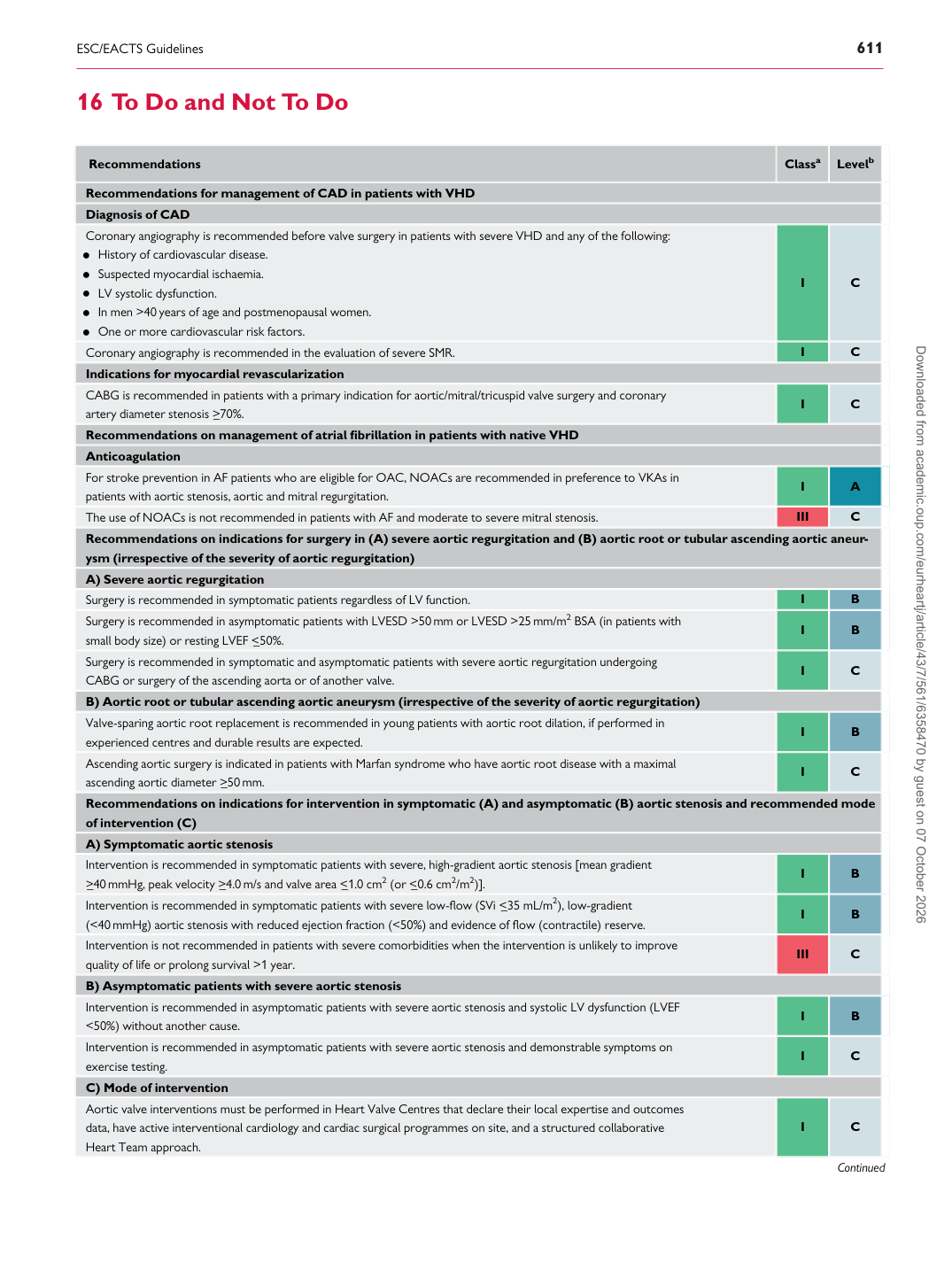
Recommendations for management of CAD in patients with VHD Diagnosis of CAD Coronary angiography is recommended before valve surgery in patients with severe VHD and any of the following: • History of cardiovascular disease. • Suspected myocardial ischaemia. • LV systolic dysfunction. • In men >40 years of age and postmenopausal women. • One or more cardiovascular risk factors. I C Coronary angiography is recommended in the evaluation of severe SMR. I C Indications for myocardial revascularization CABG is recommended in patients with a primary indication for aortic/mitral/tricuspid valve surgery and coronary artery diameter stenosis >_70%. I C Recommendations on management of atrial fibrillation in patients with native VHD Anticoagulation For stroke prevention in AF patients who are eligible for OAC, NOACs are recommended in preference to VKAs in patients with aortic stenosis, aortic and mitral regurgitation. I A The use of NOACs is not recommended in patients with AF and moderate to severe mitral stenosis. III C Recommendations on indications for surgery in (A) severe aortic regurgitation and (B) aortic root or tubular ascending aortic aneurysm (irrespective of the severity of aortic regurgitation) A) Severe aortic regurgitation Surgery is recommended in symptomatic patients regardless of LV function. I B Surgery is recommended in asymptomatic patients with LVESD >50 mm or LVESD >25 mm/m2 BSA (in patients with small body size) or resting LVEF <_50%. I B Surgery is recommended in symptomatic and asymptomatic patients with severe aortic regurgitation undergoing CABG or surgery of the ascending aorta or of another valve. I C B) Aortic root or tubular ascending aortic aneurysm (irrespective of the severity of aortic regurgitation) Valve-sparing aortic root replacement is recommended in young patients with aortic root dilation, if performed in experienced centres and durable results are expected. I B Ascending aortic surgery is indicated in patients with Marfan syndrome who have aortic root disease with a maximal ascending aortic diameter >_50 mm. I C Recommendations on indications for intervention in symptomatic (A) and asymptomatic (B) aortic stenosis and recommended mode of intervention (C) A) Symptomatic aortic stenosis Intervention is recommended in symptomatic patients with severe, high-gradient aortic stenosis [mean gradient >_40 mmHg, peak velocity >_4.0 m/s and valve area <_1.0 cm2 (or <_0.6 cm2/m2)]. I B Intervention is recommended in symptomatic patients with severe low-flow (SVi <_35 mL/m2), low-gradient (<40 mmHg) aortic stenosis with reduced ejection fraction (<50%) and evidence of flow (contractile) reserve. I B Intervention is not recommended in patients with severe comorbidities when the intervention is unlikely to improve quality of life or prolong survival >1 year. III C B) Asymptomatic patients with severe aortic stenosis Intervention is recommended in asymptomatic patients with severe aortic stenosis and systolic LV dysfunction (LVEF <50%) without another cause. I B Intervention is recommended in asymptomatic patients with severe aortic stenosis and demonstrable symptoms on exercise testing. I C C) Mode of intervention Aortic valve interventions must be performed in Heart Valve Centres that declare their local expertise and outcomes data, have active interventional cardiology and cardiac surgical programmes on site, and a structured collaborative Heart Team approach. I C

Continued Downloaded from academic.oup.com/eurheartj/article/43/7/561/6358470 by guest on 07 October 2026