p.44 抽出テキスト
........................................................... Transcatheter bioprostheses: In the POPular TAVI trial (cohort B), the incidence of bleeding over a period of 1 month or 1 year was lower with OAC than with OAC plus clopidogrel.501 OAC alone was non-inferior to OAC plus clopidogrel with respect to ischaemic events, but the non-inferiority margin was large. An observational study suggested that there is a higher risk of ischaemic events at 1 year with NOACs compared with VKAs, after adjustment for potential confounders.502 Randomized trials comparing NOACs vs. VKAs are ongoing (NCT02943785, NCT02664649). Data on the management of antithrombotic therapy after transcatheter mitral or tricuspid valve implantation are scant.498

11.3.3 Valve repair Observational data suggest comparable risk of thromboembolism with ASA or VKAs following mitral valve repair,503 but randomized data are lacking. The high incidence of new-onset AF and its recurrence, the thrombogenic tendency of the non-endothelialized repair components, and a relatively high rate of patients who are resistant to ASA establish VKAs as a preferable option for the initial period (e.g. 3 months). However, the potential for bleeding complications in the postoperative phase dictates careful patient selection.

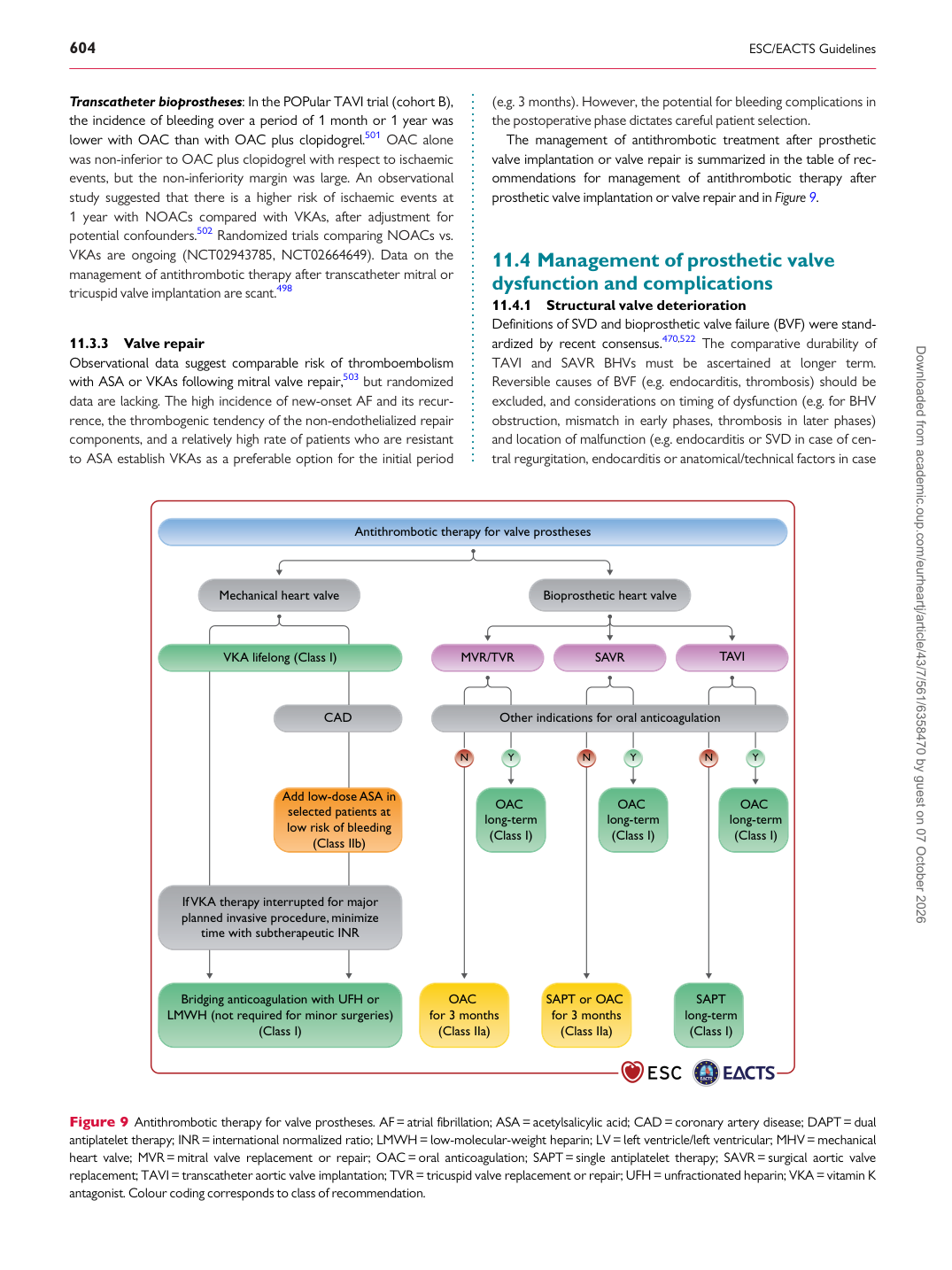
The management of antithrombotic treatment after prosthetic valve implantation or valve repair is summarized in the table of recommendations for management of antithrombotic therapy after prosthetic valve implantation or valve repair and in Figure 9.

11.4 Management of prosthetic valve

dysfunction and complications 11.4.1 Structural valve deterioration Definitions of SVD and bioprosthetic valve failure (BVF) were standardized by recent consensus.470,522 The comparative durability of TAVI and SAVR BHVs must be ascertained at longer term. Reversible causes of BVF (e.g. endocarditis, thrombosis) should be excluded, and considerations on timing of dysfunction (e.g. for BHV obstruction, mismatch in early phases, thrombosis in later phases) and location of malfunction (e.g. endocarditis or SVD in case of central regurgitation, endocarditis or anatomical/technical factors in case

Antithrombotic therapy for valve prostheses

Mechanical heart valve Bioprosthetic heart valve

Bridging anticoagulation with UFH or LMWH (not required for minor surgeries)

(Class I)

IfVKA therapy interrupted for major planned invasive procedure, minimize

time with subtherapeutic INR

Add low-dose ASA in selected patients at low risk of bleeding

(Class IIb)

CAD

VKA lifelong (Class I) MVR/TVR SAVR TAVI

Other indications for oral anticoagulation

OAC long-term (Class I)

SAPT long-term (Class I)

OAC long-term (Class I)

OAC long-term (Class I)

SAPT or OAC for 3 months

(Class IIa)

OAC for 3 months

(Class IIa)

Y N Y N Y N

Figure 9 Antithrombotic therapy for valve prostheses. AF= atrial fibrillation; ASA = acetylsalicylic acid; CAD = coronary artery disease; DAPT= dual antiplatelet therapy; INR = international normalized ratio; LMWH = low-molecular-weight heparin; LV= left ventricle/left ventricular; MHV= mechanical heart valve; MVR= mitral valve replacement or repair; OAC = oral anticoagulation; SAPT= single antiplatelet therapy; SAVR = surgical aortic valve replacement; TAVI= transcatheter aortic valve implantation; TVR= tricuspid valve replacement or repair; UFH = unfractionated heparin; VKA = vitamin K antagonist. Colour coding corresponds to class of recommendation. Downloaded from academic.oup.com/eurheartj/article/43/7/561/6358470 by guest on 07 October 2026