p.35 抽出テキスト
................................. 7.1.3 Medical therapy Diuretics, beta-blockers, digoxin, non-dihydropyridine calcium channel blockers and ivabradine can improve symptoms. Anticoagulation with vitamin K antagonist (VKA) with a target international normalized ratio (INR) between 2 and 3 is indicated in patients with AF. Patients with moderate-to-severe mitral stenosis and AF should be kept on VKA and not receive NOACs. Currently there is no solid evidence to support the use of NOACs in this setting370 and a randomized clinical trial is underway (INVICTUS VKA NCT 02832544). Neither cardioversion nor catheter pulmonary vein isolation are indicated before intervention in patients with significant mitral stenosis, as they do not durably restore sinus rhythm. If AF is of recent onset and the LA is only moderately enlarged, cardioversion should be performed soon after successful intervention, it should also be considered in patients with less than severe mitral stenosis. Amiodarone is most effective in maintaining the sinus rhythm after cardioversion. In patients in sinus rhythm, OAC is recommended when there has been a history of systemic embolism or a thrombus is present in the LA and should also be considered when TOE shows dense spontaneous echocardiographic contrast or an enlarged LA (M-mode diameter >50 mm or LA volume >60 mL/m2).

Symptoms

High risk of embolism

or haemodynamic decompensationa Contraindication

to PMC

Management of clinically significant rheumatic mitral stenosis (MVA ≤ 1.5 cm2)

Y

Favourable anatomical characteristicsc

Contraindication to or unfavourable characteristics for PMC

Symptoms

Exercise testing

N

N N Y

Contraindication

or high risk for surgery Y

N

Y

Y

Follow up PMC Surgeryd PMCb Surgery Surgery

N

Favourable clinical characteristicsc

N

Y N Y

Y

N

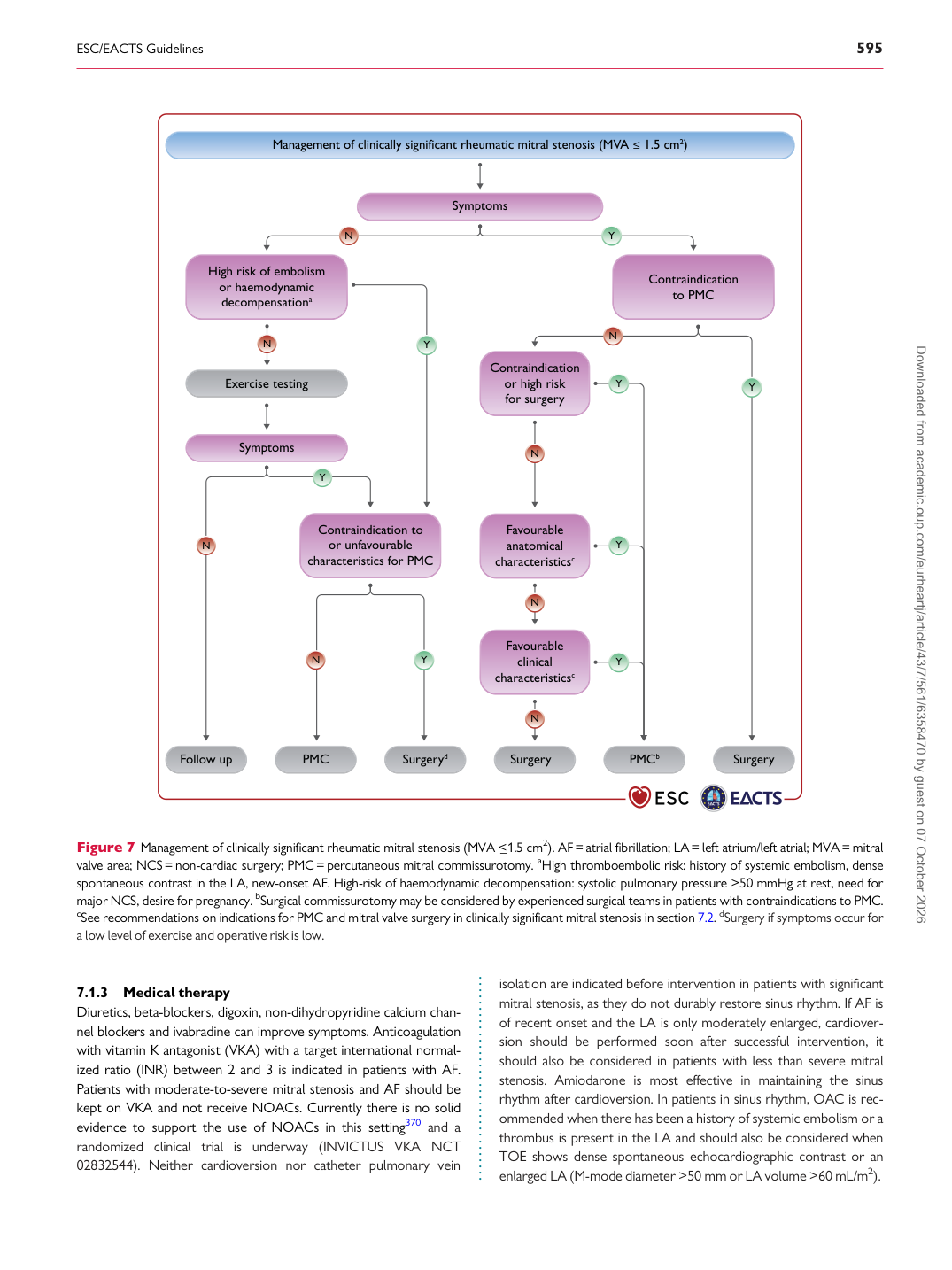
Figure 7 Management of clinically significant rheumatic mitral stenosis (MVA <_1.5 cm2). AF= atrial fibrillation; LA= left atrium/left atrial; MVA = mitral valve area; NCS= non-cardiac surgery; PMC = percutaneous mitral commissurotomy. aHigh thromboembolic risk: history of systemic embolism, dense spontaneous contrast in the LA, new-onset AF. High-risk of haemodynamic decompensation: systolic pulmonary pressure >50 mmHg at rest, need for major NCS, desire for pregnancy. bSurgical commissurotomy may be considered by experienced surgical teams in patients with contraindications to PMC. cSee recommendations on indications for PMC and mitral valve surgery in clinically significant mitral stenosis in section 7.2. dSurgery if symptoms occur for a low level of exercise and operative risk is low. Downloaded from academic.oup.com/eurheartj/article/43/7/561/6358470 by guest on 07 October 2026