p.14 抽出テキスト
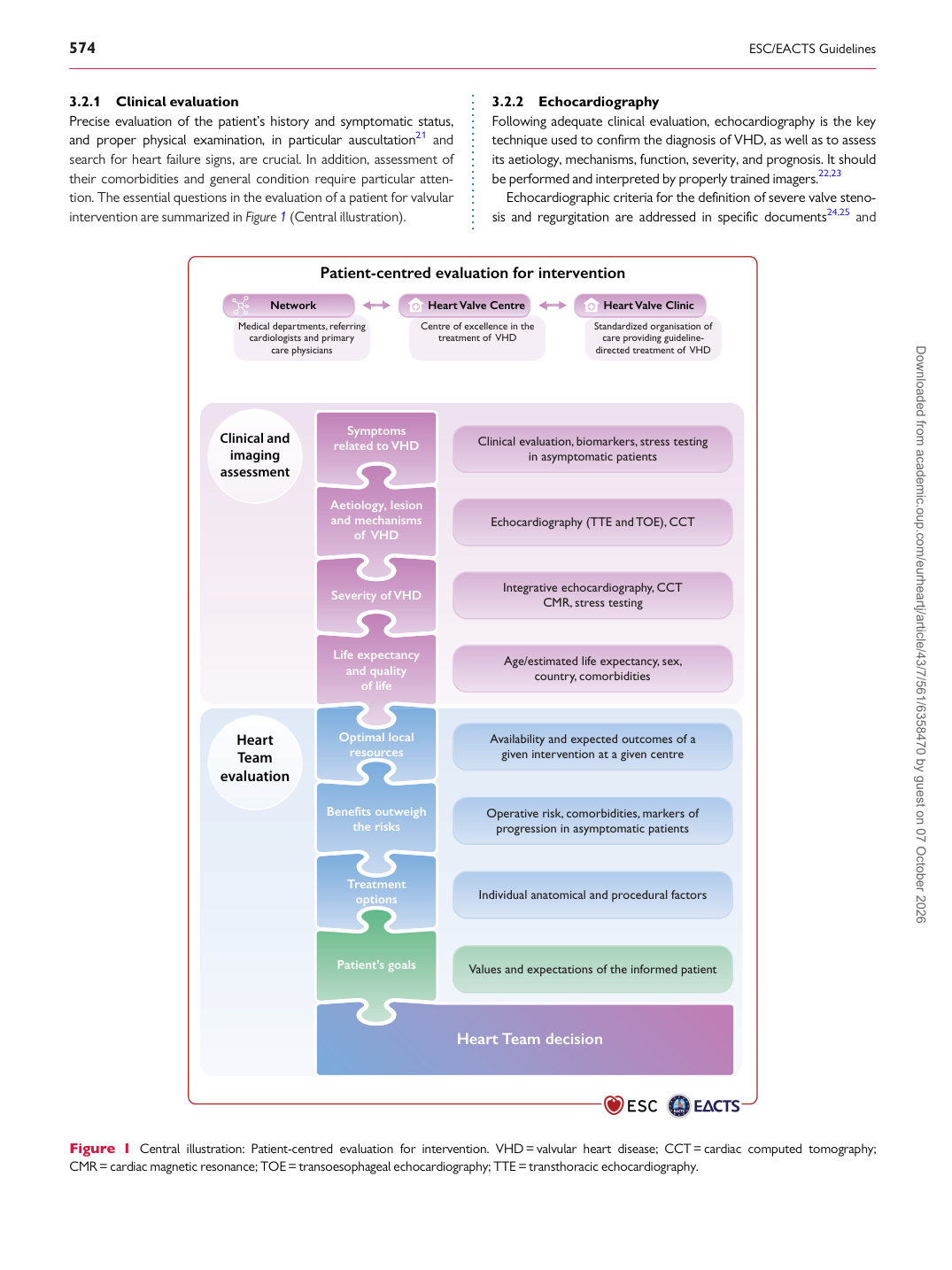
...................... 3.2.1 Clinical evaluation Precise evaluation of the patient’s history and symptomatic status, and proper physical examination, in particular auscultation21 and search for heart failure signs, are crucial. In addition, assessment of their comorbidities and general condition require particular attention. The essential questions in the evaluation of a patient for valvular intervention are summarized in Figure 1 (Central illustration). 3.2.2 Echocardiography Following adequate clinical evaluation, echocardiography is the key technique used to confirm the diagnosis of VHD, as well as to assess its aetiology, mechanisms, function, severity, and prognosis. It should be performed and interpreted by properly trained imagers.22,23

Echocardiographic criteria for the definition of severe valve stenosis and regurgitation are addressed in specific documents24,25 and

Heart Valve Centre Centre of excellence in the

treatment of VHD Heart Valve Clinic

Standardized organisation of care providing guidelinedirected treatment of VHD

Network Medical departments, referring

cardiologists and primary

care physicians

Aetiology, lesion and mechanisms

of VHD

Severity of VHD

Symptoms related to VHD

Life expectancy

and quality

of life

Optimal local

resources

Benefits outweigh

the risks

Treatment

options

Patient’s goals Individual anatomical and procedural factors

Echocardiography (TTE and TOE), CCT

Patient-centred evaluation for intervention

Integrative echocardiography, CCT

CMR, stress testing

Clinical evaluation, biomarkers, stress testing

in asymptomatic patients

Age/estimated life expectancy, sex,

country, comorbidities

Operative risk, comorbidities, markers of

progression in asymptomatic patients

Values and expectations of the informed patient

Heart Team decision

Availability and expected outcomes of a

given intervention at a given centre

Clinical and imaging assessment

Heart Team evaluation

Figure 1 Central illustration: Patient-centred evaluation for intervention. VHD= valvular heart disease; CCT = cardiac computed tomography; CMR = cardiac magnetic resonance; TOE= transoesophageal echocardiography; TTE = transthoracic echocardiography. Downloaded from academic.oup.com/eurheartj/article/43/7/561/6358470 by guest on 07 October 2026