p.37 抽出テキスト
............................................. These unfavourable effects on clinical outcomes have been demonstrated in asymptomatic subjects without overt CVD, in patients with acute and previous myocardial infarction, in patients with acute and previous stroke, and in patients with other clinical manifestations of CVD.223

The diagnosis of ischaemic HF positions individuals at very high CV risk, and justifies recommendations as for secondary prevention therapeutic strategies. Additionally, for patients with symptomatic HFrEF, several drugs are recommended to reduce the risk of CV morbidity and mortality (see section 6.2).

3.4.4. Cancer In patients with cancer, there is an overlap between cancer and ASCVD risk factors, with shared biological mechanisms and genetic predispositions. Prevention and treatment of these is therefore beneficial in reducing both CVD as well as cancer risk. Moreover, the rates of the extent of CVD risk depend on both the CVD toxicity of treatments and patient-related factors. Owing to recent improvements in clinical outcomes for many patients with cancer, CVD mortality may ultimately exceed those from most forms of cancer recurrence.224,225

The rapidly expanding variety of novel anticancer drugs/adjuvant therapies has demonstrated a wide range of both early and late CVD side-effects, including cardiomyopathy, LV dysfunction, HF, hypertension, CAD, arrhythmias, and other injuries. Therefore, effective strategies for the prediction and prevention of CVD toxicities are critically important. The latency and severity of radiotherapy cardiotoxicity, as well as accelerated atherosclerosis and cerebral vascular disease, is related to multiple factors, including the dose (total per fraction), the volume of the heart irradiated, concomitant

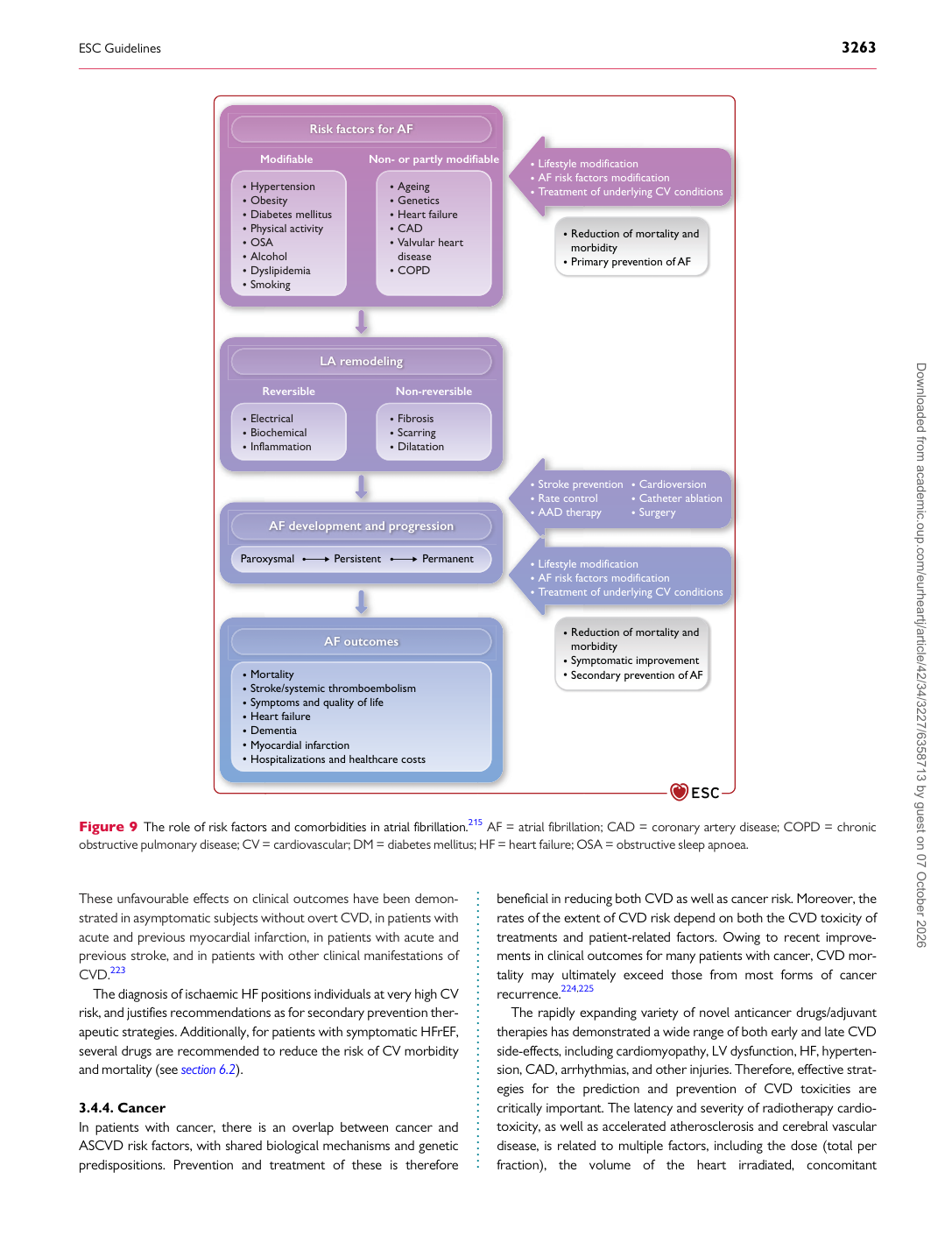
Risk factors for AF

Hypertension Obesity Diabetes mellitus Physical activity OSA Alcohol Dyslipidemia Smoking Lifestyle modification AF risk factors modification Treatment of underlying CV conditions

Reduction of mortality and morbidity Primary prevention of AF

Reduction of mortality and morbidity Symptomatic improvement Secondary prevention of AF

Modifiable

Ageing Genetics Heart failure CAD Valvular heart disease COPD

Lifestyle modification AF risk factors modification Treatment of underlying CV conditions

Stroke prevention Rate control AAD therapy Cardioversion Catheter ablation Surgery

Non- or partly modifiable

LA remodeling

Electrical Biochemical Inflammation

Reversible

Fibrosis Scarring Dilatation

Non-reversible

AF outcomes

Mortality Stroke/systemic thromboembolism Symptoms and quality of life Heart failure Dementia Myocardial infarction Hospitalizations and healthcare costs

AF development and progression

Paroxysmal Persistent Permanent

Figure 9 The role of risk factors and comorbidities in atrial fibrillation.215 AF = atrial fibrillation; CAD = coronary artery disease; COPD = chronic obstructive pulmonary disease; CV = cardiovascular; DM = diabetes mellitus; HF = heart failure; OSA = obstructive sleep apnoea. Downloaded from academic.oup.com/eurheartj/article/42/34/3227/6358713 by guest on 07 October 2026