p.18 抽出テキスト
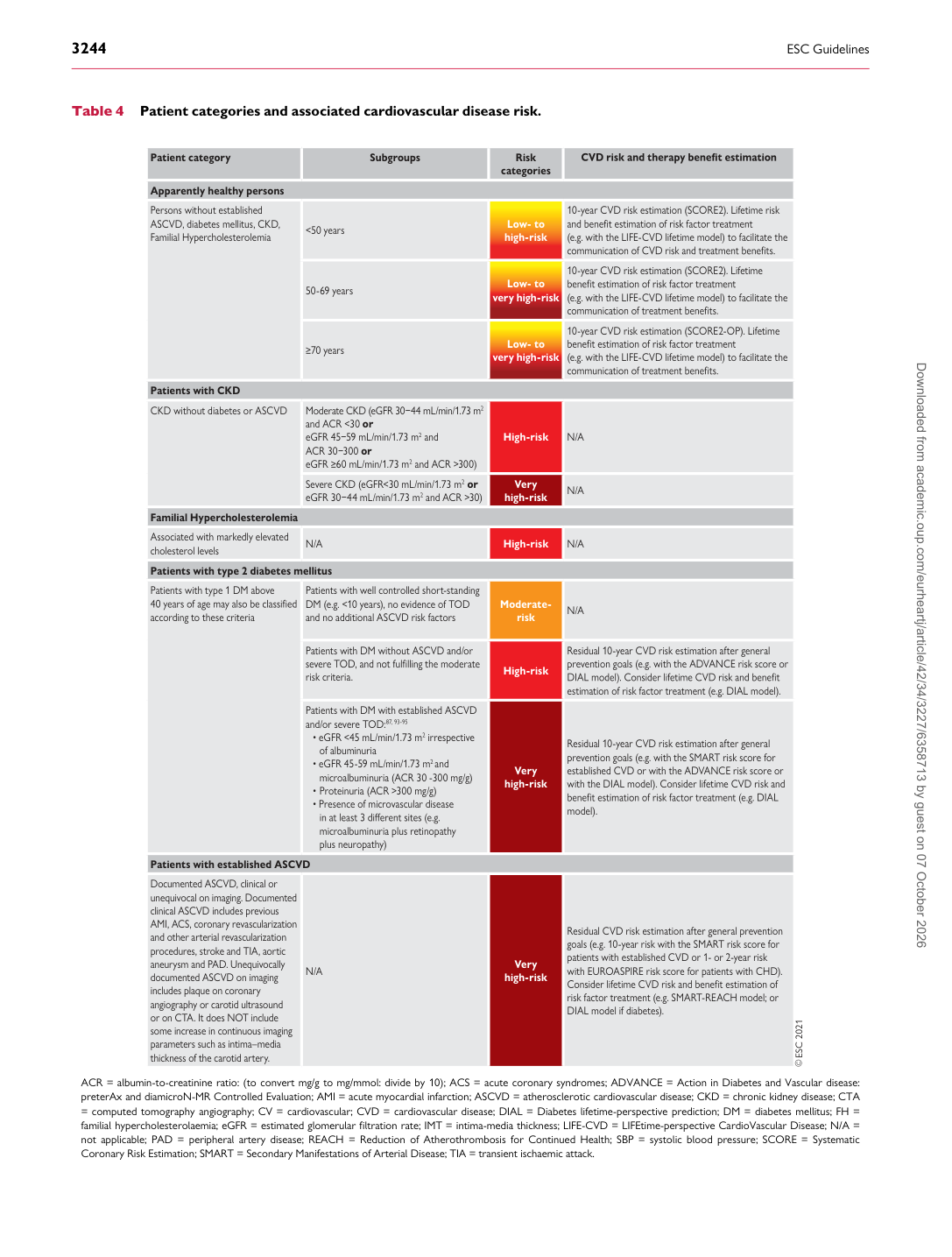
Table 4 Patient categories and associated cardiovascular disease risk.

Patient category Subgroups Risk categories Apparently healthy persons Persons without established ASCVD, diabetes mellitus, CKD, Familial Hypercholesterolemia <50 years Low- to high-risk 10-year CVD risk estimation (SCORE2). Lifetime risk (e.g. with the LIFE-CVD lifetime model) to facilitate the

50-69 years Low- to very high-risk 10-year CVD risk estimation (SCORE2). Lifetime (e.g. with the LIFE-CVD lifetime model) to facilitate the

≥70 years Low- to very high-risk 10-year CVD risk estimation (SCORE2-OP). Lifetime (e.g. with the LIFE-CVD lifetime model) to facilitate the

Patients with CKD CKD without diabetes or ASCVD Moderate CKD (eGFR 30−44 mL/min/1.73 m2 and ACR <30 or eGFR 45−59 mL/min/1.73 m2 and ACR 30−300 or eGFR ≥60 mL/min/1.73 m2 and ACR >300) High-risk N/A

Severe CKD (eGFR<30 mL/min/1.73 m2 or eGFR 30−44 mL/min/1.73 m2 and ACR >30) Very high-risk N/A

Familial Hypercholesterolemia Associated with markedly elevated cholesterol levels N/A High-risk N/A Patients with type 2 diabetes mellitus Patients with type 1 DM above

according to these criteria Patients with well controlled short-standing DM (e.g. <10 years), no evidence of TOD and no additional ASCVD risk factors Moderate-

risk N/A

Patients with DM without ASCVD and/or risk criteria. High-risk Residual 10-year CVD risk estimation after general prevention goals (e.g. with the ADVANCE risk score or

estimation of risk factor treatment (e.g. DIAL model).

Patients with DM with established ASCVD and/or severe TOD:87, 93-95 • eGFR <45 mL/min/1.73 m2 irrespective of albuminuria • eGFR 45-59 mL/min/1.73 m2 and microalbuminuria (ACR 30 -300 mg/g) • Proteinuria (ACR >300 mg/g) • Presence of microvascular disease microalbuminuria plus retinopathy plus neuropathy) Very high-risk Residual 10-year CVD risk estimation after general prevention goals (e.g. with the SMART risk score for established CVD or with the ADVANCE risk score or with the DIAL model). Consider lifetime CVD risk and

model).

Patients with established ASCVD Documented ASCVD, clinical or unequivocal on imaging. Documented clinical ASCVD includes previous AMI, ACS, coronary revascularization and other arterial revascularization procedures, stroke and TIA, aortic aneurysm and PAD. Unequivocally documented ASCVD on imaging includes plaque on coronary angiography or carotid ultrasound or on CTA. It does NOT include some increase in continuous imaging parameters such as intima–media thickness of the carotid artery. N/A Very high-risk Residual CVD risk estimation after general prevention goals (e.g. 10-year risk with the SMART risk score for patients with established CVD or 1- or 2-year risk with EUROASPIRE risk score for patients with CHD).

risk factor treatment (e.g. SMART-REACH model; or DIAL model if diabetes).

ACR = albumin-to-creatinine ratio: (to convert mg/g to mg/mmol: divide by 10); ACS = acute coronary syndromes; ADVANCE = Action in Diabetes and Vascular disease: preterAx and diamicroN-MR Controlled Evaluation; AMI = acute myocardial infarction; ASCVD = atherosclerotic cardiovascular disease; CKD = chronic kidney disease; CTA = computed tomography angiography; CV = cardiovascular; CVD = cardiovascular disease; DIAL = Diabetes lifetime-perspective prediction; DM = diabetes mellitus; FH = familial hypercholesterolaemia; eGFR = estimated glomerular filtration rate; IMT = intima-media thickness; LIFE-CVD = LIFEtime-perspective CardioVascular Disease; N/A = not applicable; PAD = peripheral artery disease; REACH = Reduction of Atherothrombosis for Continued Health; SBP = systolic blood pressure; SCORE = Systematic Coronary Risk Estimation; SMART = Secondary Manifestations of Arterial Disease; TIA = transient ischaemic attack.

ESC 2021 Downloaded from academic.oup.com/eurheartj/article/42/34/3227/6358713 by guest on 07 October 2026