p.9 抽出テキスト
2.3.2 New recommendations in 2021

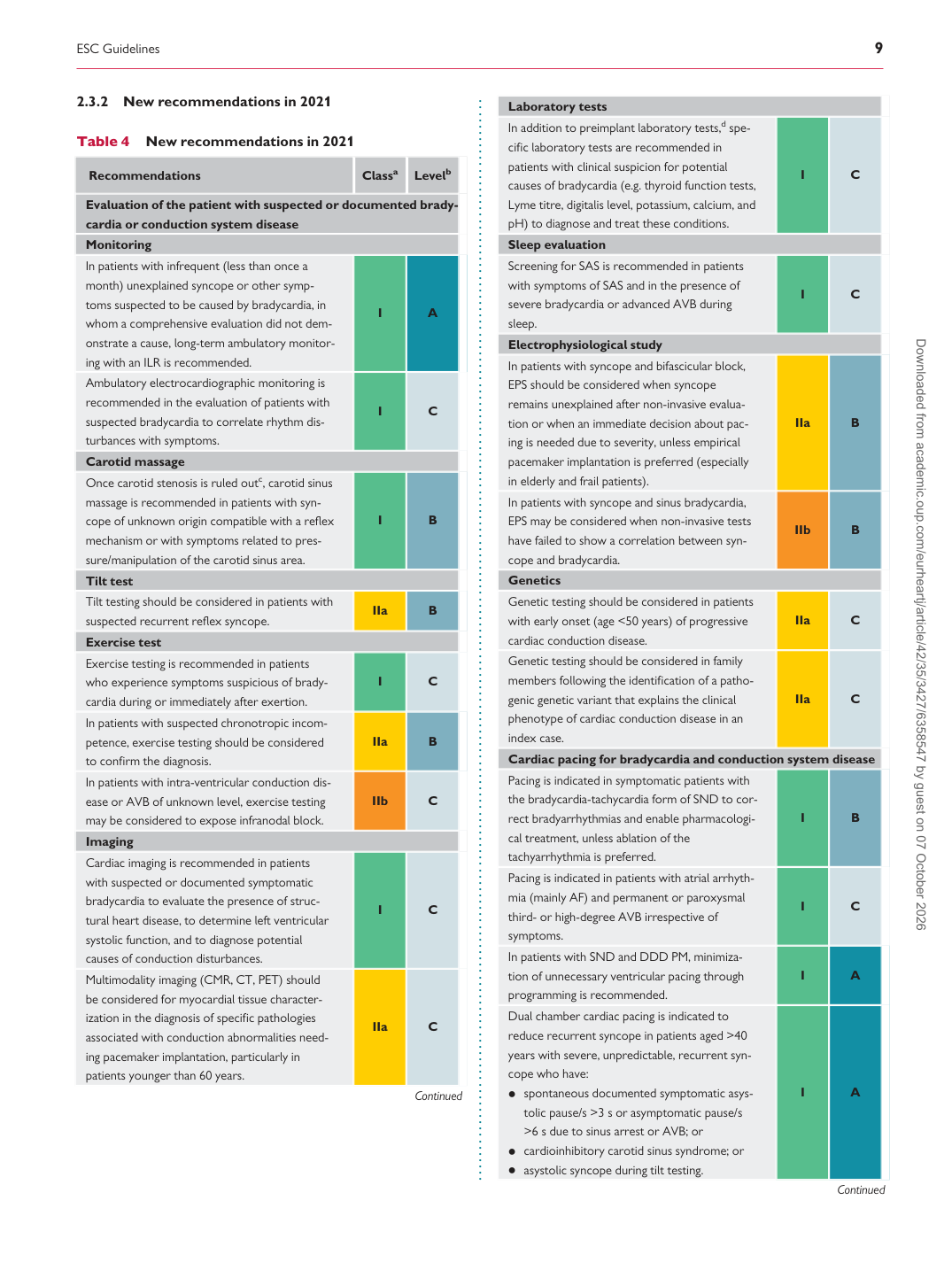
Table 4 New recommendations in 2021

Recommendations Classa Levelb

Evaluation of the patient with suspected or documented bradycardia or conduction system disease Monitoring In patients with infrequent (less than once a month) unexplained syncope or other symptoms suspected to be caused by bradycardia, in whom a comprehensive evaluation did not demonstrate a cause, long-term ambulatory monitoring with an ILR is recommended. I A Ambulatory electrocardiographic monitoring is recommended in the evaluation of patients with suspected bradycardia to correlate rhythm disturbances with symptoms. I C Carotid massage Once carotid stenosis is ruled outc, carotid sinus massage is recommended in patients with syncope of unknown origin compatible with a reflex mechanism or with symptoms related to pressure/manipulation of the carotid sinus area. I B Tilt test Tilt testing should be considered in patients with suspected recurrent reflex syncope. IIa B Exercise test Exercise testing is recommended in patients who experience symptoms suspicious of bradycardia during or immediately after exertion. I C In patients with suspected chronotropic incompetence, exercise testing should be considered to confirm the diagnosis. IIa B In patients with intra-ventricular conduction disease or AVB of unknown level, exercise testing may be considered to expose infranodal block. IIb C Imaging Cardiac imaging is recommended in patients with suspected or documented symptomatic bradycardia to evaluate the presence of structural heart disease, to determine left ventricular systolic function, and to diagnose potential causes of conduction disturbances. I C Multimodality imaging (CMR, CT, PET) should be considered for myocardial tissue characterization in the diagnosis of specific pathologies associated with conduction abnormalities needing pacemaker implantation, particularly in patients younger than 60 years. IIa C

Continued Laboratory tests

In addition to preimplant laboratory tests,d specific laboratory tests are recommended in patients with clinical suspicion for potential causes of bradycardia (e.g. thyroid function tests, Lyme titre, digitalis level, potassium, calcium, and pH) to diagnose and treat these conditions. I C Sleep evaluation Screening for SAS is recommended in patients with symptoms of SAS and in the presence of severe bradycardia or advanced AVB during sleep. I C Electrophysiological study In patients with syncope and bifascicular block, EPS should be considered when syncope remains unexplained after non-invasive evaluation or when an immediate decision about pacing is needed due to severity, unless empirical pacemaker implantation is preferred (especially in elderly and frail patients). IIa B In patients with syncope and sinus bradycardia, EPS may be considered when non-invasive tests have failed to show a correlation between syncope and bradycardia. IIb B Genetics Genetic testing should be considered in patients with early onset (age <50 years) of progressive cardiac conduction disease. IIa C Genetic testing should be considered in family members following the identification of a pathogenic genetic variant that explains the clinical phenotype of cardiac conduction disease in an index case. IIa C Cardiac pacing for bradycardia and conduction system disease Pacing is indicated in symptomatic patients with the bradycardia-tachycardia form of SND to correct bradyarrhythmias and enable pharmacological treatment, unless ablation of the tachyarrhythmia is preferred. I B Pacing is indicated in patients with atrial arrhythmia (mainly AF) and permanent or paroxysmal third- or high-degree AVB irrespective of symptoms. I C In patients with SND and DDD PM, minimization of unnecessary ventricular pacing through programming is recommended. I A Dual chamber cardiac pacing is indicated to reduce recurrent syncope in patients aged >40

years with severe, unpredictable, recurrent syncope who have: • spontaneous documented symptomatic asys-

tolic pause/s >3 s or asymptomatic pause/s >6 s due to sinus arrest or AVB; or • cardioinhibitory carotid sinus syndrome; or • asystolic syncope during tilt testing. I A

Continued ............................................................................................................................................................................ Downloaded from academic.oup.com/eurheartj/article/42/35/3427/6358547 by guest on 07 October 2026