p.67 抽出テキスト
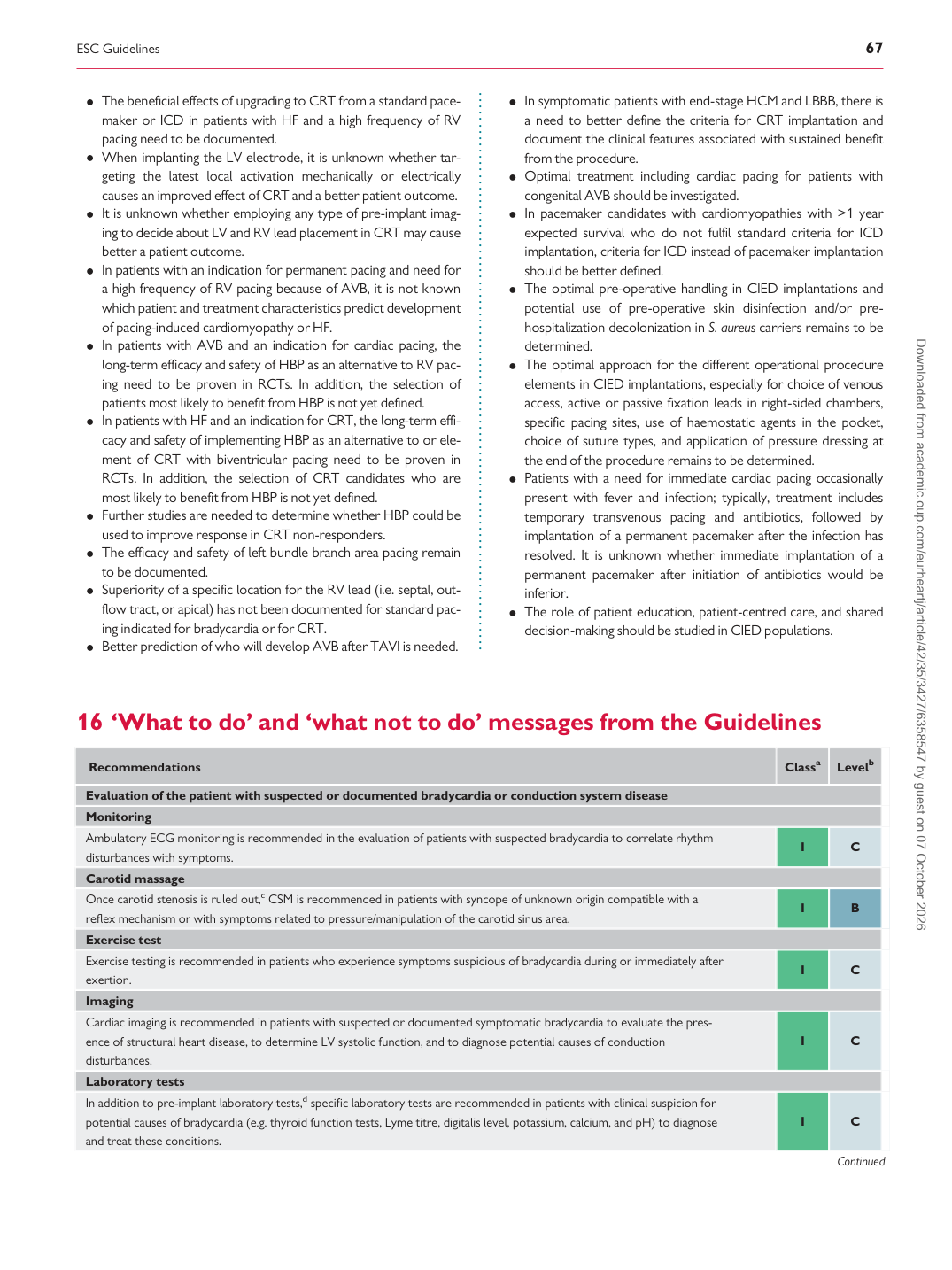
......................................................................................... • The beneficial effects of upgrading to CRT from a standard pacemaker or ICD in patients with HF and a high frequency of RV pacing need to be documented. • When implanting the LV electrode, it is unknown whether targeting the latest local activation mechanically or electrically causes an improved effect of CRT and a better patient outcome. • It is unknown whether employing any type of pre-implant imaging to decide about LV and RV lead placement in CRT may cause better a patient outcome. • In patients with an indication for permanent pacing and need for a high frequency of RV pacing because of AVB, it is not known which patient and treatment characteristics predict development of pacing-induced cardiomyopathy or HF. • In patients with AVB and an indication for cardiac pacing, the long-term efficacy and safety of HBP as an alternative to RV pacing need to be proven in RCTs. In addition, the selection of patients most likely to benefit from HBP is not yet defined. • In patients with HF and an indication for CRT, the long-term efficacy and safety of implementing HBP as an alternative to or element of CRT with biventricular pacing need to be proven in RCTs. In addition, the selection of CRT candidates who are most likely to benefit from HBP is not yet defined. • Further studies are needed to determine whether HBP could be used to improve response in CRT non-responders. • The efficacy and safety of left bundle branch area pacing remain to be documented. • Superiority of a specific location for the RV lead (i.e. septal, outflow tract, or apical) has not been documented for standard pacing indicated for bradycardia or for CRT. • Better prediction of who will develop AVB after TAVI is needed. • In symptomatic patients with end-stage HCM and LBBB, there is a need to better define the criteria for CRT implantation and document the clinical features associated with sustained benefit from the procedure. • Optimal treatment including cardiac pacing for patients with congenital AVB should be investigated. • In pacemaker candidates with cardiomyopathies with >1 year expected survival who do not fulfil standard criteria for ICD implantation, criteria for ICD instead of pacemaker implantation should be better defined. • The optimal pre-operative handling in CIED implantations and potential use of pre-operative skin disinfection and/or prehospitalization decolonization in S. aureus carriers remains to be determined. • The optimal approach for the different operational procedure elements in CIED implantations, especially for choice of venous access, active or passive fixation leads in right-sided chambers, specific pacing sites, use of haemostatic agents in the pocket, choice of suture types, and application of pressure dressing at the end of the procedure remains to be determined. • Patients with a need for immediate cardiac pacing occasionally present with fever and infection; typically, treatment includes temporary transvenous pacing and antibiotics, followed by implantation of a permanent pacemaker after the infection has resolved. It is unknown whether immediate implantation of a permanent pacemaker after initiation of antibiotics would be inferior. • The role of patient education, patient-centred care, and shared decision-making should be studied in CIED populations.

16 ‘What to do’ and ‘what not to do’ messages from the Guidelines

............ ............ Recommendations Classa Levelb Evaluation of the patient with suspected or documented bradycardia or conduction system disease Monitoring Ambulatory ECG monitoring is recommended in the evaluation of patients with suspected bradycardia to correlate rhythm disturbances with symptoms. I C Carotid massage Once carotid stenosis is ruled out,c CSM is recommended in patients with syncope of unknown origin compatible with a reflex mechanism or with symptoms related to pressure/manipulation of the carotid sinus area. I B Exercise test Exercise testing is recommended in patients who experience symptoms suspicious of bradycardia during or immediately after exertion. I C Imaging Cardiac imaging is recommended in patients with suspected or documented symptomatic bradycardia to evaluate the presence of structural heart disease, to determine LV systolic function, and to diagnose potential causes of conduction disturbances. I C Laboratory tests In addition to pre-implant laboratory tests,d specific laboratory tests are recommended in patients with clinical suspicion for potential causes of bradycardia (e.g. thyroid function tests, Lyme titre, digitalis level, potassium, calcium, and pH) to diagnose and treat these conditions. I C

Continued Downloaded from academic.oup.com/eurheartj/article/42/35/3427/6358547 by guest on 07 October 2026