p.30 抽出テキスト
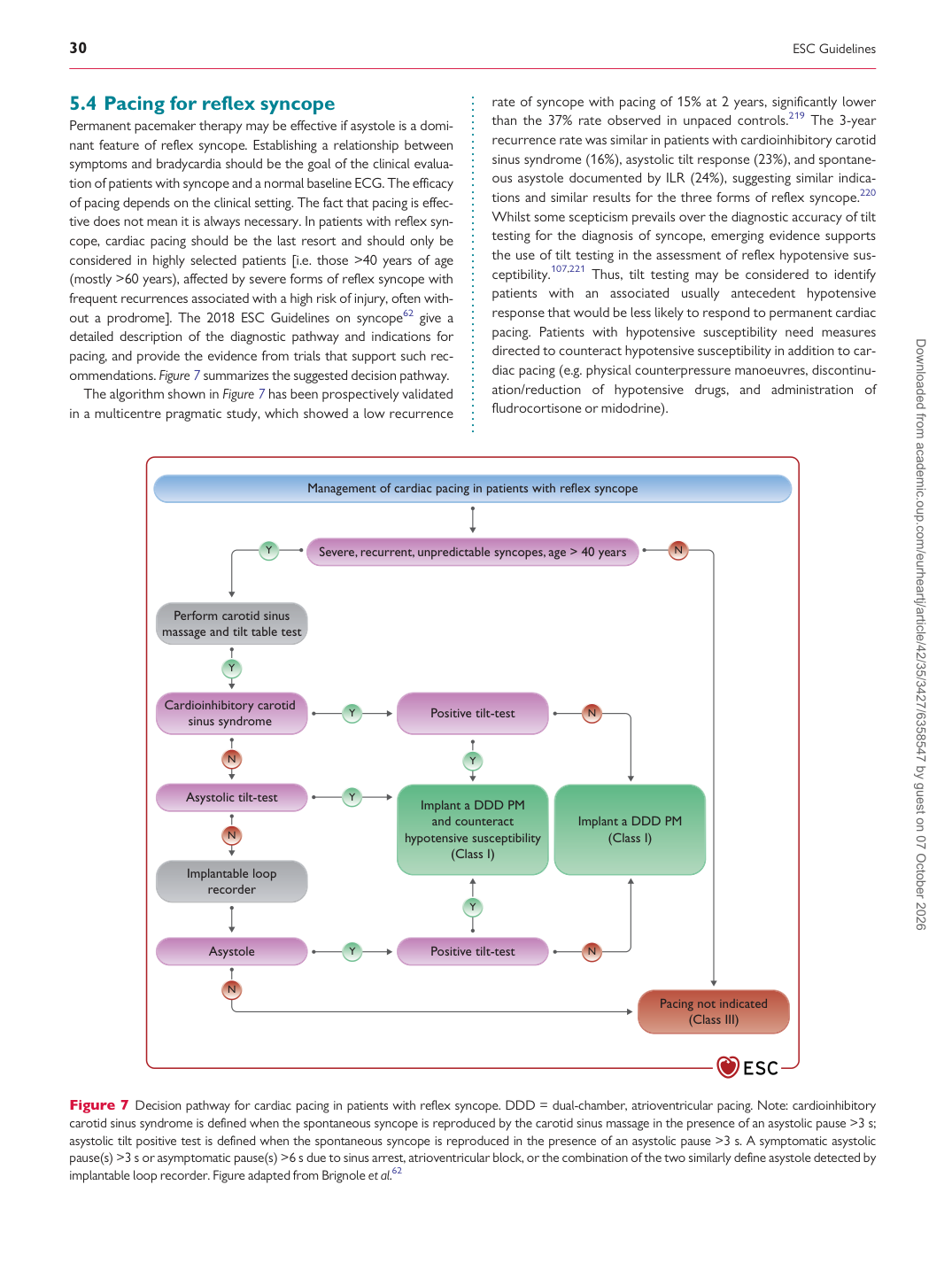
...................................................... 5.4 Pacing for reflex syncope Permanent pacemaker therapy may be effective if asystole is a dominant feature of reflex syncope. Establishing a relationship between symptoms and bradycardia should be the goal of the clinical evaluation of patients with syncope and a normal baseline ECG. The efficacy of pacing depends on the clinical setting. The fact that pacing is effective does not mean it is always necessary. In patients with reflex syncope, cardiac pacing should be the last resort and should only be considered in highly selected patients [i.e. those >40 years of age (mostly >60 years), affected by severe forms of reflex syncope with frequent recurrences associated with a high risk of injury, often without a prodrome]. The 2018 ESC Guidelines on syncope62 give a detailed description of the diagnostic pathway and indications for pacing, and provide the evidence from trials that support such recommendations. Figure 7 summarizes the suggested decision pathway.

The algorithm shown in Figure 7 has been prospectively validated in a multicentre pragmatic study, which showed a low recurrence rate of syncope with pacing of 15% at 2 years, significantly lower than the 37% rate observed in unpaced controls.219 The 3-year recurrence rate was similar in patients with cardioinhibitory carotid sinus syndrome (16%), asystolic tilt response (23%), and spontaneous asystole documented by ILR (24%), suggesting similar indications and similar results for the three forms of reflex syncope.220

Whilst some scepticism prevails over the diagnostic accuracy of tilt testing for the diagnosis of syncope, emerging evidence supports the use of tilt testing in the assessment of reflex hypotensive susceptibility.107,221 Thus, tilt testing may be considered to identify patients with an associated usually antecedent hypotensive response that would be less likely to respond to permanent cardiac pacing. Patients with hypotensive susceptibility need measures directed to counteract hypotensive susceptibility in addition to cardiac pacing (e.g. physical counterpressure manoeuvres, discontinuation/reduction of hypotensive drugs, and administration of fludrocortisone or midodrine).

Management of cardiac pacing in patients with reflex syncope

Severe, recurrent, unpredictable syncopes, age > 40 years

Cardioinhibitory carotid

sinus syndrome

Perform carotid sinus massage and tilt table test

Pacing not indicated

(Class III)

N Y

Y

Positive tilt-test

Y

Y

Asystolic tilt-test

Implantable loop

recorder

Asystole Positive tilt-test

N

N

N Y Implant a DDD PM

and counteract hypotensive susceptibility

(Class I)

Y

Y Implant a DDD PM

(Class I)

N

N

Figure 7 Decision pathway for cardiac pacing in patients with reflex syncope. DDD = dual-chamber, atrioventricular pacing. Note: cardioinhibitory carotid sinus syndrome is defined when the spontaneous syncope is reproduced by the carotid sinus massage in the presence of an asystolic pause >3 s; asystolic tilt positive test is defined when the spontaneous syncope is reproduced in the presence of an asystolic pause >3 s. A symptomatic asystolic pause(s) >3 s or asymptomatic pause(s) >6 s due to sinus arrest, atrioventricular block, or the combination of the two similarly define asystole detected by implantable loop recorder. Figure adapted from Brignole et al.62 Downloaded from academic.oup.com/eurheartj/article/42/35/3427/6358547 by guest on 07 October 2026