p.3 抽出テキスト
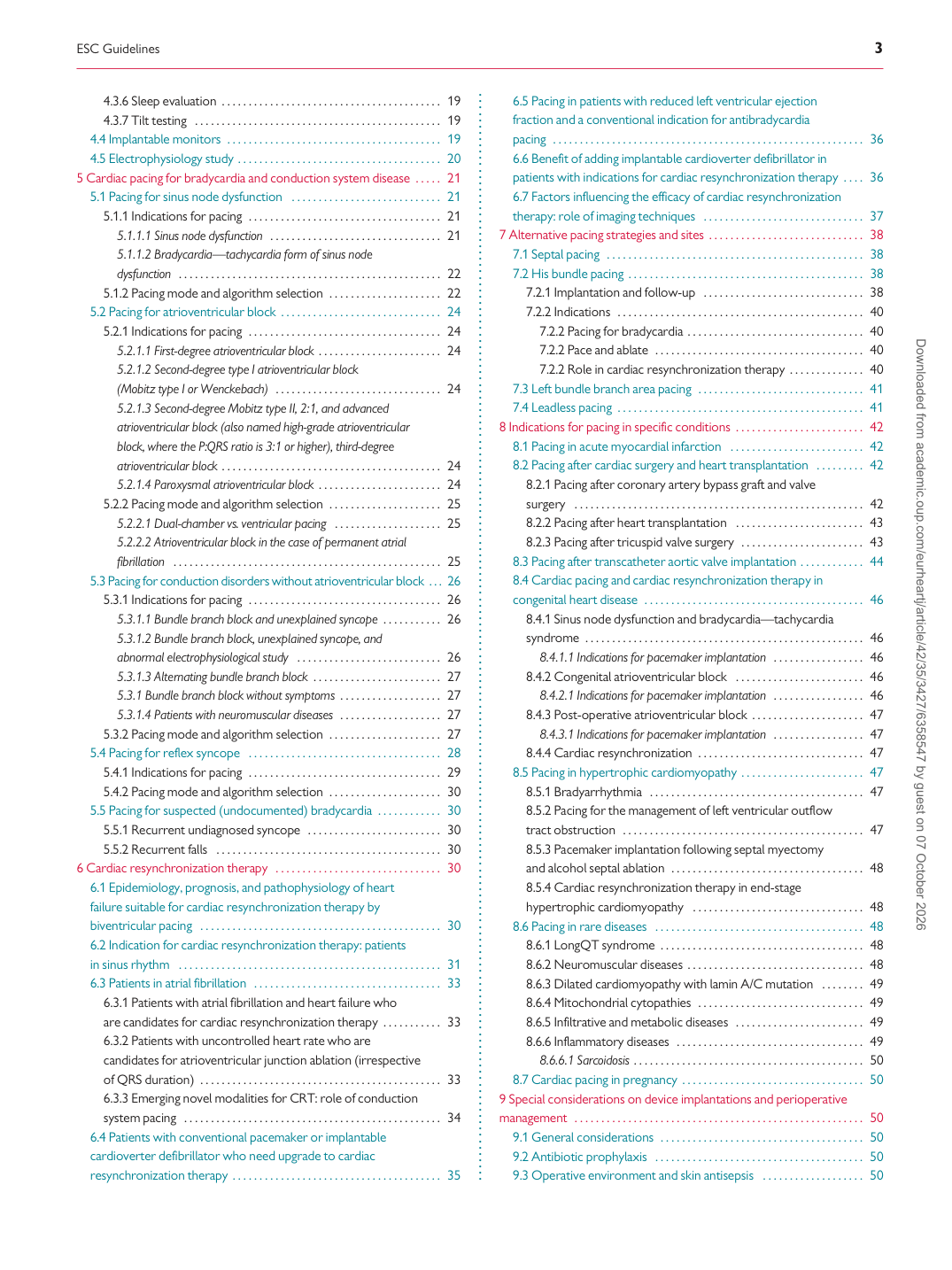
............................................................................................................................................................................. 4.3.6 Sleep evaluation . . . . . . . . . . . . . . . . . . . . . . . . . . . . . . . . . . . . . . . . . 19 4.3.7 Tilt testing . . . . . . . . . . . . . . . . . . . . . . . . . . . . . . . . . . . . . . . . . . . . . . 19 4.4 Implantable monitors . . . . . . . . . . . . . . . . . . . . . . . . . . . . . . . . . . . . . . . . 19 4.5 Electrophysiology study . . . . . . . . . . . . . . . . . . . . . . . . . . . . . . . . . . . . . . 20 5 Cardiac pacing for bradycardia and conduction system disease . . . . . 21 5.1 Pacing for sinus node dysfunction . . . . . . . . . . . . . . . . . . . . . . . . . . . . 21 5.1.1 Indications for pacing . . . . . . . . . . . . . . . . . . . . . . . . . . . . . . . . . . . . 21 5.1.1.1 Sinus node dysfunction . . . . . . . . . . . . . . . . . . . . . . . . . . . . . . . . 21 5.1.1.2 Bradycardia—tachycardia form of sinus node dysfunction . . . . . . . . . . . . . . . . . . . . . . . . . . . . . . . . . . . . . . . . . . . . . . . . . 22 5.1.2 Pacing mode and algorithm selection . . . . . . . . . . . . . . . . . . . . . 22 5.2 Pacing for atrioventricular block . . . . . . . . . . . . . . . . . . . . . . . . . . . . . . 24 5.2.1 Indications for pacing . . . . . . . . . . . . . . . . . . . . . . . . . . . . . . . . . . . . 24 5.2.1.1 First-degree atrioventricular block . . . . . . . . . . . . . . . . . . . . . . . 24 5.2.1.2 Second-degree type I atrioventricular block (Mobitz type I or Wenckebach) . . . . . . . . . . . . . . . . . . . . . . . . . . . . . . . 24 5.2.1.3 Second-degree Mobitz type II, 2:1, and advanced atrioventricular block (also named high-grade atrioventricular block, where the P:QRS ratio is 3:1 or higher), third-degree atrioventricular block . . . . . . . . . . . . . . . . . . . . . . . . . . . . . . . . . . . . . . . . . 24 5.2.1.4 Paroxysmal atrioventricular block . . . . . . . . . . . . . . . . . . . . . . . 24 5.2.2 Pacing mode and algorithm selection . . . . . . . . . . . . . . . . . . . . . 25 5.2.2.1 Dual-chamber vs. ventricular pacing . . . . . . . . . . . . . . . . . . . . 25 5.2.2.2 Atrioventricular block in the case of permanent atrial fibrillation . . . . . . . . . . . . . . . . . . . . . . . . . . . . . . . . . . . . . . . . . . . . . . . . . . 25 5.3 Pacing for conduction disorders without atrioventricular block . . . 26 5.3.1 Indications for pacing . . . . . . . . . . . . . . . . . . . . . . . . . . . . . . . . . . . . 26 5.3.1.1 Bundle branch block and unexplained syncope . . . . . . . . . . . 26 5.3.1.2 Bundle branch block, unexplained syncope, and abnormal electrophysiological study . . . . . . . . . . . . . . . . . . . . . . . . . . . 26 5.3.1.3 Alternating bundle branch block . . . . . . . . . . . . . . . . . . . . . . . . 27 5.3.1 Bundle branch block without symptoms . . . . . . . . . . . . . . . . . . . 27 5.3.1.4 Patients with neuromuscular diseases . . . . . . . . . . . . . . . . . . . 27 5.3.2 Pacing mode and algorithm selection . . . . . . . . . . . . . . . . . . . . . 27 5.4 Pacing for reflex syncope . . . . . . . . . . . . . . . . . . . . . . . . . . . . . . . . . . . . 28 5.4.1 Indications for pacing . . . . . . . . . . . . . . . . . . . . . . . . . . . . . . . . . . . . 29 5.4.2 Pacing mode and algorithm selection . . . . . . . . . . . . . . . . . . . . . 30 5.5 Pacing for suspected (undocumented) bradycardia . . . . . . . . . . . . 30 5.5.1 Recurrent undiagnosed syncope . . . . . . . . . . . . . . . . . . . . . . . . . 30 5.5.2 Recurrent falls . . . . . . . . . . . . . . . . . . . . . . . . . . . . . . . . . . . . . . . . . . 30 6 Cardiac resynchronization therapy . . . . . . . . . . . . . . . . . . . . . . . . . . . . . . . 30 6.1 Epidemiology, prognosis, and pathophysiology of heart failure suitable for cardiac resynchronization therapy by biventricular pacing . . . . . . . . . . . . . . . . . . . . . . . . . . . . . . . . . . . . . . . . . . . . . 30 6.2 Indication for cardiac resynchronization therapy: patients in sinus rhythm . . . . . . . . . . . . . . . . . . . . . . . . . . . . . . . . . . . . . . . . . . . . . . . . . 31 6.3 Patients in atrial fibrillation . . . . . . . . . . . . . . . . . . . . . . . . . . . . . . . . . . . 33 6.3.1 Patients with atrial fibrillation and heart failure who are candidates for cardiac resynchronization therapy . . . . . . . . . . . 33 6.3.2 Patients with uncontrolled heart rate who are candidates for atrioventricular junction ablation (irrespective of QRS duration) . . . . . . . . . . . . . . . . . . . . . . . . . . . . . . . . . . . . . . . . . . . . . 33 6.3.3 Emerging novel modalities for CRT: role of conduction system pacing . . . . . . . . . . . . . . . . . . . . . . . . . . . . . . . . . . . . . . . . . . . . . . . . 34 6.4 Patients with conventional pacemaker or implantable cardioverter defibrillator who need upgrade to cardiac resynchronization therapy . . . . . . . . . . . . . . . . . . . . . . . . . . . . . . . . . . . . . . . 35 6.5 Pacing in patients with reduced left ventricular ejection fraction and a conventional indication for antibradycardia pacing . . . . . . . . . . . . . . . . . . . . . . . . . . . . . . . . . . . . . . . . . . . . . . . . . . . . . . . . . . 36 6.6 Benefit of adding implantable cardioverter defibrillator in patients with indications for cardiac resynchronization therapy . . . . 36 6.7 Factors influencing the efficacy of cardiac resynchronization therapy: role of imaging techniques . . . . . . . . . . . . . . . . . . . . . . . . . . . . . . 37 7 Alternative pacing strategies and sites . . . . . . . . . . . . . . . . . . . . . . . . . . . . . 38 7.1 Septal pacing . . . . . . . . . . . . . . . . . . . . . . . . . . . . . . . . . . . . . . . . . . . . . . . . 38 7.2 His bundle pacing . . . . . . . . . . . . . . . . . . . . . . . . . . . . . . . . . . . . . . . . . . . . 38 7.2.1 Implantation and follow-up . . . . . . . . . . . . . . . . . . . . . . . . . . . . . . 38 7.2.2 Indications . . . . . . . . . . . . . . . . . . . . . . . . . . . . . . . . . . . . . . . . . . . . . . 40 7.2.2 Pacing for bradycardia . . . . . . . . . . . . . . . . . . . . . . . . . . . . . . . . . 40 7.2.2 Pace and ablate . . . . . . . . . . . . . . . . . . . . . . . . . . . . . . . . . . . . . . . 40 7.2.2 Role in cardiac resynchronization therapy . . . . . . . . . . . . . . 40 7.3 Left bundle branch area pacing . . . . . . . . . . . . . . . . . . . . . . . . . . . . . . . 41 7.4 Leadless pacing . . . . . . . . . . . . . . . . . . . . . . . . . . . . . . . . . . . . . . . . . . . . . . 41 8 Indications for pacing in specific conditions . . . . . . . . . . . . . . . . . . . . . . . . 42 8.1 Pacing in acute myocardial infarction . . . . . . . . . . . . . . . . . . . . . . . . . 42 8.2 Pacing after cardiac surgery and heart transplantation . . . . . . . . . 42 8.2.1 Pacing after coronary artery bypass graft and valve surgery . . . . . . . . . . . . . . . . . . . . . . . . . . . . . . . . . . . . . . . . . . . . . . . . . . . . . . 42 8.2.2 Pacing after heart transplantation . . . . . . . . . . . . . . . . . . . . . . . . 43 8.2.3 Pacing after tricuspid valve surgery . . . . . . . . . . . . . . . . . . . . . . . 43 8.3 Pacing after transcatheter aortic valve implantation . . . . . . . . . . . . 44 8.4 Cardiac pacing and cardiac resynchronization therapy in congenital heart disease . . . . . . . . . . . . . . . . . . . . . . . . . . . . . . . . . . . . . . . . . 46

8.4.1 Sinus node dysfunction and bradycardia—tachycardia syndrome . . . . . . . . . . . . . . . . . . . . . . . . . . . . . . . . . . . . . . . . . . . . . . . . . . . . 46 8.4.1.1 Indications for pacemaker implantation . . . . . . . . . . . . . . . . . 46 8.4.2 Congenital atrioventricular block . . . . . . . . . . . . . . . . . . . . . . . . 46 8.4.2.1 Indications for pacemaker implantation . . . . . . . . . . . . . . . . . 46 8.4.3 Post-operative atrioventricular block . . . . . . . . . . . . . . . . . . . . . 47 8.4.3.1 Indications for pacemaker implantation . . . . . . . . . . . . . . . . . 47 8.4.4 Cardiac resynchronization . . . . . . . . . . . . . . . . . . . . . . . . . . . . . . . 47 8.5 Pacing in hypertrophic cardiomyopathy . . . . . . . . . . . . . . . . . . . . . . . 47 8.5.1 Bradyarrhythmia . . . . . . . . . . . . . . . . . . . . . . . . . . . . . . . . . . . . . . . . 47 8.5.2 Pacing for the management of left ventricular outflow tract obstruction . . . . . . . . . . . . . . . . . . . . . . . . . . . . . . . . . . . . . . . . . . . . . 47 8.5.3 Pacemaker implantation following septal myectomy and alcohol septal ablation . . . . . . . . . . . . . . . . . . . . . . . . . . . . . . . . . . . . 48 8.5.4 Cardiac resynchronization therapy in end-stage hypertrophic cardiomyopathy . . . . . . . . . . . . . . . . . . . . . . . . . . . . . . . . 48 8.6 Pacing in rare diseases . . . . . . . . . . . . . . . . . . . . . . . . . . . . . . . . . . . . . . . 48 8.6.1 LongQT syndrome . . . . . . . . . . . . . . . . . . . . . . . . . . . . . . . . . . . . . . 48 8.6.2 Neuromuscular diseases . . . . . . . . . . . . . . . . . . . . . . . . . . . . . . . . . 48 8.6.3 Dilated cardiomyopathy with lamin A/C mutation . . . . . . . . 49 8.6.4 Mitochondrial cytopathies . . . . . . . . . . . . . . . . . . . . . . . . . . . . . . . 49 8.6.5 Infiltrative and metabolic diseases . . . . . . . . . . . . . . . . . . . . . . . . 49 8.6.6 Inflammatory diseases . . . . . . . . . . . . . . . . . . . . . . . . . . . . . . . . . . . 49 8.6.6.1 Sarcoidosis . . . . . . . . . . . . . . . . . . . . . . . . . . . . . . . . . . . . . . . . . . . 50 8.7 Cardiac pacing in pregnancy . . . . . . . . . . . . . . . . . . . . . . . . . . . . . . . . . . 50 9 Special considerations on device implantations and perioperative management . . . . . . . . . . . . . . . . . . . . . . . . . . . . . . . . . . . . . . . . . . . . . . . . . . . . . . 50

9.1 General considerations . . . . . . . . . . . . . . . . . . . . . . . . . . . . . . . . . . . . . . 50 9.2 Antibiotic prophylaxis . . . . . . . . . . . . . . . . . . . . . . . . . . . . . . . . . . . . . . . 50 9.3 Operative environment and skin antisepsis . . . . . . . . . . . . . . . . . . . 50 Downloaded from academic.oup.com/eurheartj/article/42/35/3427/6358547 by guest on 07 October 2026