p.25 抽出テキスト
...................... proposed, specifically aimed at reducing atrial tachyarrhythmias, and its efficacy in reducing the progression to permanent AF was validated in an RCT.162,164

In this trial,164 the primary composite outcome at 2 years (death, cardiovascular hospitalizations, or permanent AF) was significantly reduced in patients with a device combining ATP and algorithms for minimizing RV pacing [36% relative risk reduction compared with conventional DDD(R)]. The positive effect on the primary endpoint was due to a lower rate of progression to permanent AF. A post-hoc analysis indicated that this form of atrial ATP was an independent predictor of permanent or persistent AF reduction.162,164,165 In CHD, where re-entrant atrial arrhythmias are very common, use of DDD(R) pacemakers with atrial ATP may be considered (see section 8 on pacing in CHD).

SND

Persistent or paroxysmal

DDD(R)a

Optimal pacing mode in sinus node dysfunction and atrio-ventricular block

Y N

Sinus rhythm: DDD + AVM AF: VVI + rate hysteresis

DDDR + AVM

Single chamber AAI(R)a VVI(R)a

Any reason to avoid 2 leadsb

Significant comorbidity

Default option DDD + AVM DDD(R)a

+ AVM

Single chamber

AAIR Single chamber

AAI

VVIR VVI VVI + rate

hysteresis DDD VVIR

VVI(R)a VDD

VVI VDD

VVI + rate hysteresis

Chronotropic incompetence? Persistent or

paroxysmal

no SND AF

AV block SND

Paroxysmal Persistent Persistent Paroxysmal

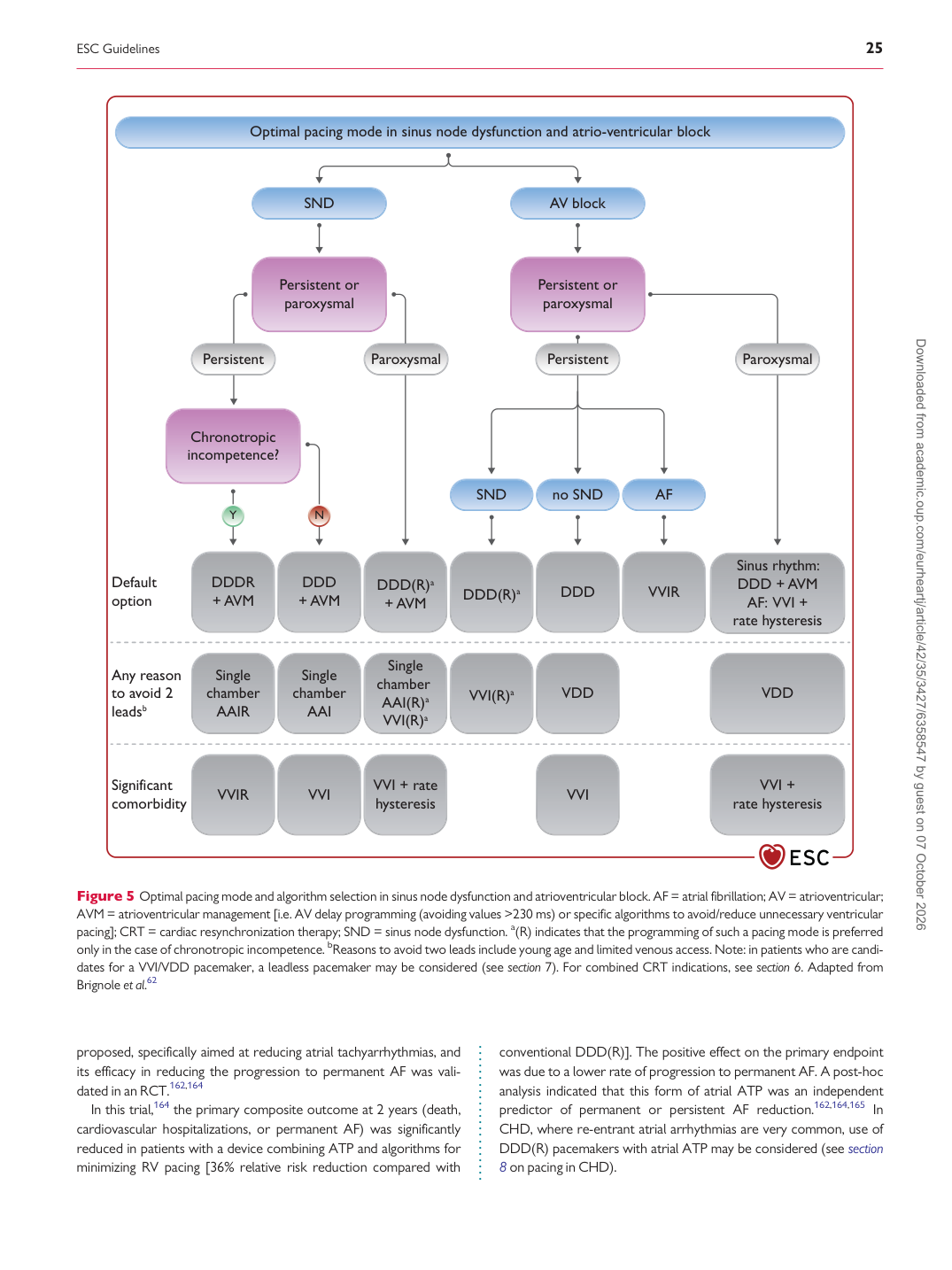
Figure 5 Optimal pacing mode and algorithm selection in sinus node dysfunction and atrioventricular block. AF = atrial fibrillation; AV = atrioventricular; AVM = atrioventricular management [i.e. AV delay programming (avoiding values >230 ms) or specific algorithms to avoid/reduce unnecessary ventricular pacing]; CRT = cardiac resynchronization therapy; SND = sinus node dysfunction. a(R) indicates that the programming of such a pacing mode is preferred only in the case of chronotropic incompetence. bReasons to avoid two leads include young age and limited venous access. Note: in patients who are candidates for a VVI/VDD pacemaker, a leadless pacemaker may be considered (see section 7). For combined CRT indications, see section 6. Adapted from Brignole et al.62 Downloaded from academic.oup.com/eurheartj/article/42/35/3427/6358547 by guest on 07 October 2026