p.17 抽出テキスト
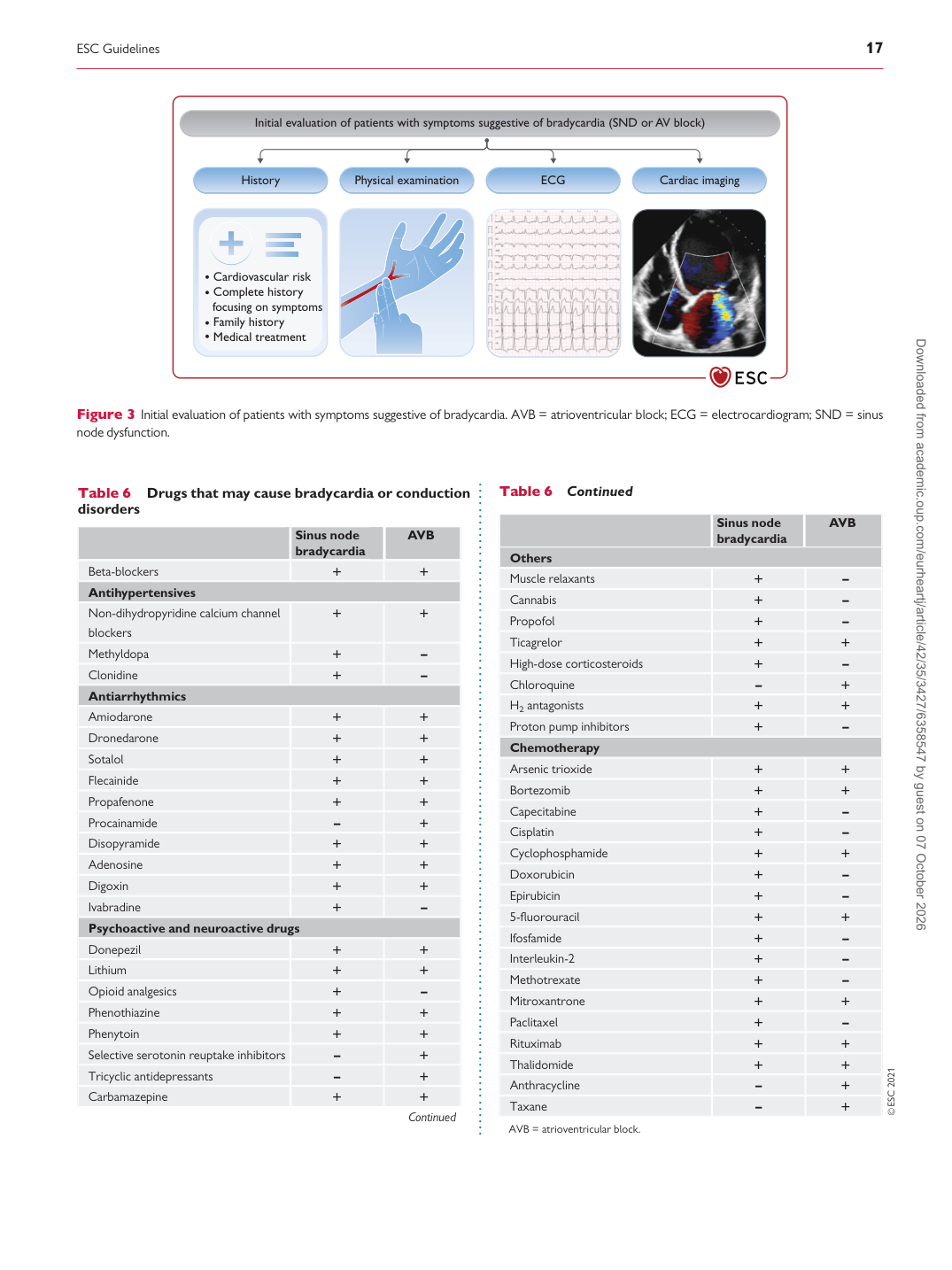
Initial evaluation of patients with symptoms suggestive of bradycardia (SND or AV block)

History Physical examination Cardiac imaging ECG

Cardiovascular risk Complete history focusing on symptoms Family history Medical treatment

Figure 3 Initial evaluation of patients with symptoms suggestive of bradycardia. AVB = atrioventricular block; ECG = electrocardiogram; SND = sinus node dysfunction.

Table 6 Drugs that may cause bradycardia or conduction disorders

Sinus node bradycardia AVB

Beta-blockers 1 1 Antihypertensives Non-dihydropyridine calcium channel blockers 1 1 Methyldopa 1 – Clonidine 1 – Antiarrhythmics Amiodarone 1 1 Dronedarone 1 1 Sotalol 1 1 Flecainide 1 1 Propafenone 1 1 Procainamide – 1 Disopyramide 1 1 Adenosine 1 1 Digoxin 1 1 Ivabradine 1 – Psychoactive and neuroactive drugs Donepezil 1 1 Lithium 1 1 Opioid analgesics 1 – Phenothiazine 1 1 Phenytoin 1 1 Selective serotonin reuptake inhibitors – 1 Tricyclic antidepressants – 1 Carbamazepine 1 1

Continued ESC 2021

Table 6 Continued

Sinus node bradycardia AVB

Others Muscle relaxants 1 – Cannabis 1 – Propofol 1 – Ticagrelor 1 1 High-dose corticosteroids 1 – Chloroquine – 1 H2 antagonists 1 1 Proton pump inhibitors 1 – Chemotherapy Arsenic trioxide 1 1 Bortezomib 1 1 Capecitabine 1 – Cisplatin 1 – Cyclophosphamide 1 1 Doxorubicin 1 – Epirubicin 1 – 5-fluorouracil 1 1 Ifosfamide 1 – Interleukin-2 1 – Methotrexate 1 – Mitroxantrone 1 1 Paclitaxel 1 – Rituximab 1 1 Thalidomide 1 1 Anthracycline – 1 Taxane – 1

AVB = atrioventricular block. ........................................................................................................ Downloaded from academic.oup.com/eurheartj/article/42/35/3427/6358547 by guest on 07 October 2026