p.76 抽出テキスト
Management of patients receiving potential cardiotoxic treatments

Baseline risk assessment including clinical assessment, ECG, resting echocardiogram and

cardiac biomarkers (NP, troponin)

Pre-existing heart failure or high-risk

cardiovascular disease

Medium- and high-risk patientb

Increasedc surveillance with ECG

and cardiac biomarkers

during treatment

Reassessment at 3 months and 12 months after completion of cancer therapy Low-risk patientb

Standard surveillanced

Before cardiotoxic cancer treatmenta

After cardiotoxic cancer treatmenta

During cardiotoxic cancer treatmenta

Reassessment at 12 months after completion of cancer therapy

Surveillance every 5 years following therapies with established cardiotoxicity (e.g. high-dose anthracycline chemotherapy)e

Follow-up by heart failure or cardio-oncology team for new heart failure or left ventricular systolic dysfunction

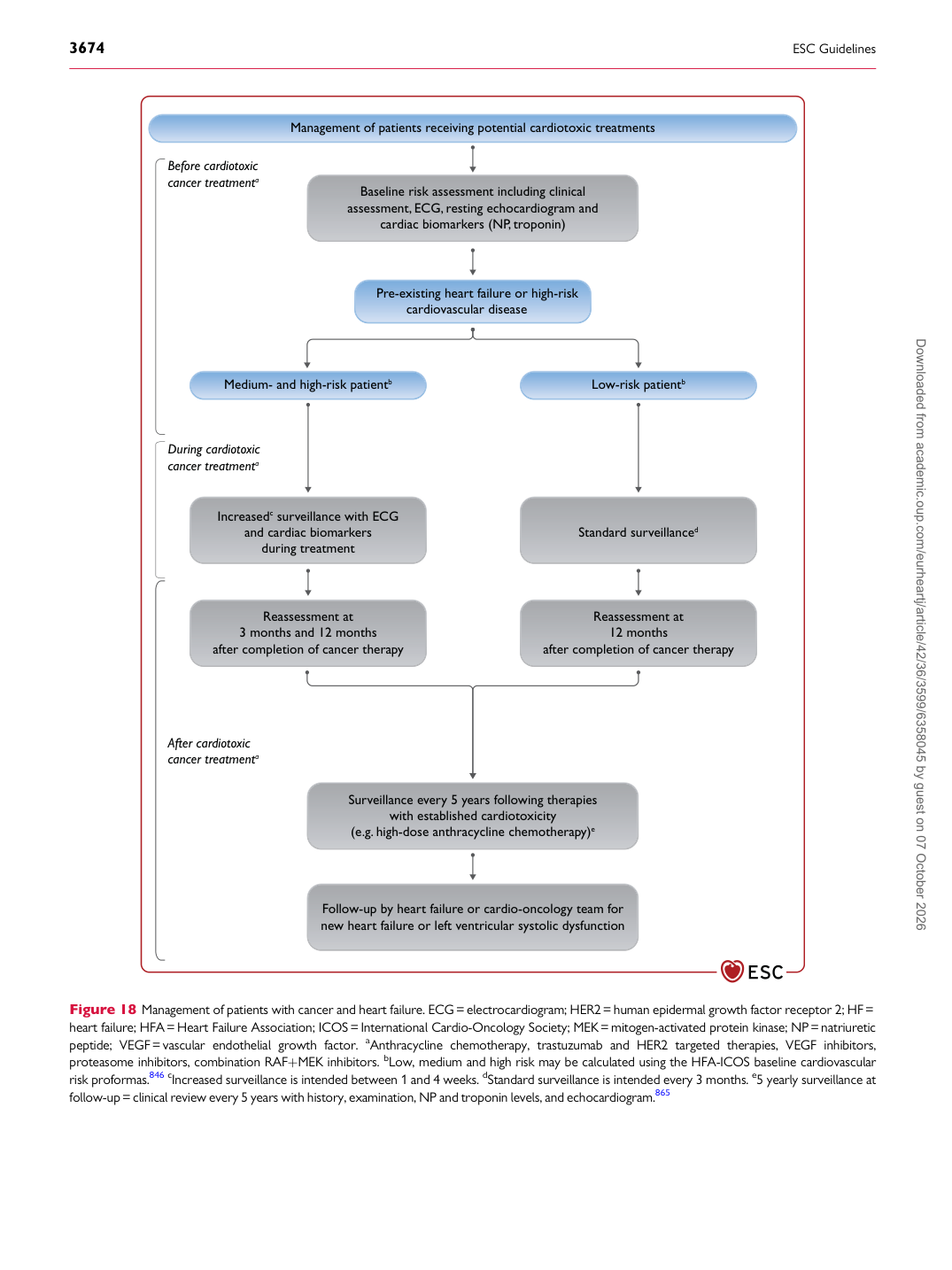
Figure 18 Management of patients with cancer and heart failure. ECG= electrocardiogram; HER2= human epidermal growth factor receptor 2; HF= heart failure; HFA= Heart Failure Association; ICOS= International Cardio-Oncology Society; MEK= mitogen-activated protein kinase; NP=natriuretic peptide; VEGF= vascular endothelial growth factor. aAnthracycline chemotherapy, trastuzumab and HER2 targeted therapies, VEGF inhibitors, proteasome inhibitors, combination RAFþMEK inhibitors. bLow, medium and high risk may be calculated using the HFA-ICOS baseline cardiovascular risk proformas.846 cIncreased surveillance is intended between 1 and 4 weeks. dStandard surveillance is intended every 3 months. e5 yearly surveillance at follow-up= clinical review every 5 years with history, examination, NP and troponin levels, and echocardiogram.865 Downloaded from academic.oup.com/eurheartj/article/42/36/3599/6358045 by guest on 07 October 2026