p.50 抽出テキスト
................. metabolism leading to organ dysfunction.437,453 Of note, hypoperfusion is not always accompanied by hypotension, as BP may be preserved by compensatory vasoconstriction (with/without pressor agents), albeit at the cost of impaired tissue perfusion and oxygenation.426,427,450,454 Management of cardiogenic shock should start as early as possible. Early identification and treatment of the underlying cause, concomitant with haemodynamic stabilization and management of organ dysfunction, are key components of its management (Figure 10, Supplementary text 11.1; Supplementary Figure 2).

N

Management of patients with acute decompensated heart failure

Congestion/Fluid overload

Y Hypoperfusion

Medical therapy optimization

(Class I)

Loop diureticsa

(Class I) Loop diureticsa (Class I)

and consider inotropes (Class IIb)

Congestion relief Hypoperfusion and

congestion relief

N

Increase diuretic doses (Class I) and/or combine

diuretics (Class IIa) Consider vasopressors

(Class IIb) (i.e. norepinephrine)

Diuretic resistance or end-stage renal failure Persistent hypoperfusion

Organ damage N N

Y

Renal replacement

therapy (Class IIa)

OR

Consider palliative care MCS (Class IIa)

AND/OR Renal replacement

therapy (Class IIa)

OR

Consider palliative care

N Y

Y Y

N

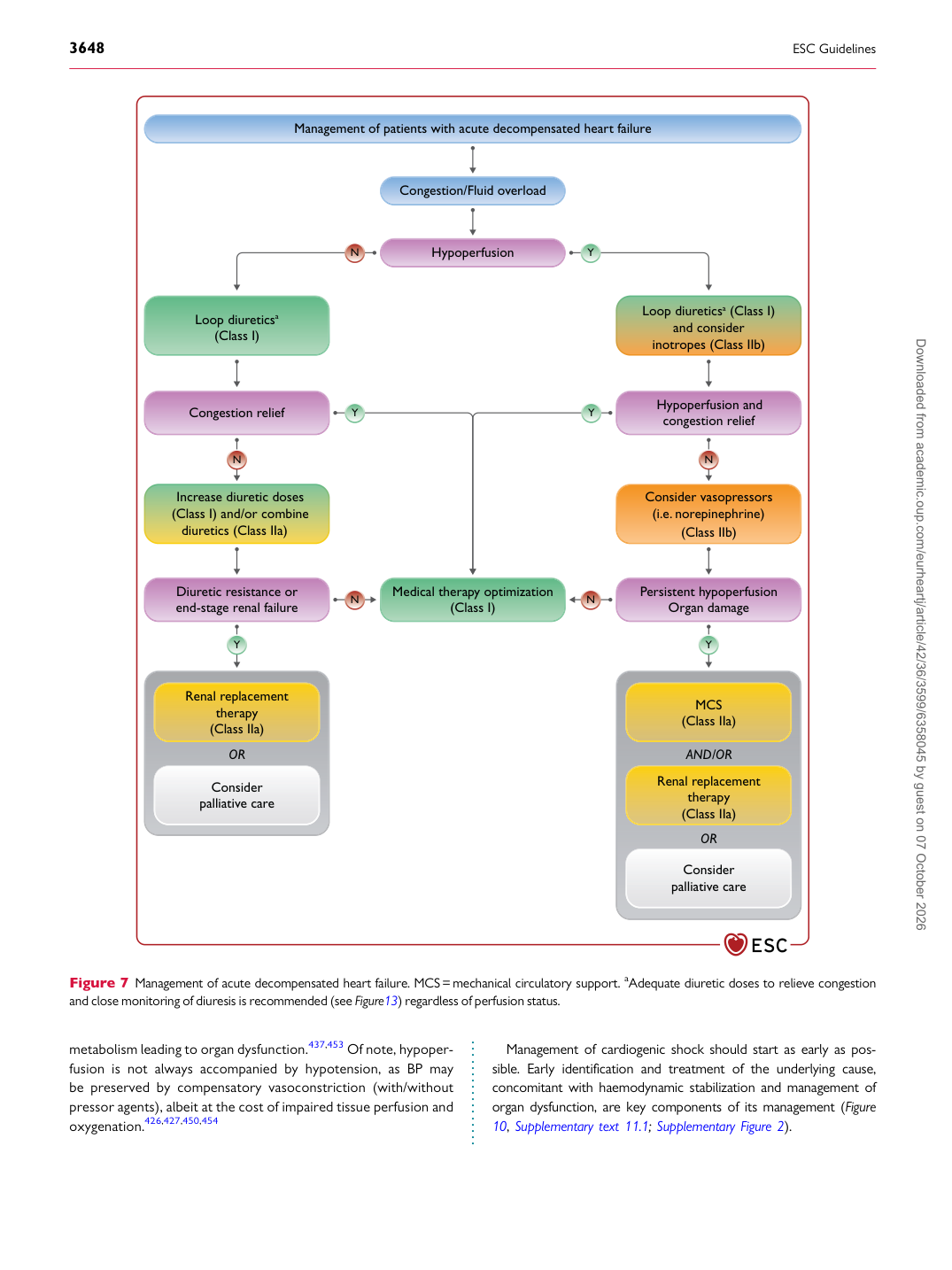
Figure 7 Management of acute decompensated heart failure. MCS= mechanical circulatory support. aAdequate diuretic doses to relieve congestion and close monitoring of diuresis is recommended (see Figure13) regardless of perfusion status. Downloaded from academic.oup.com/eurheartj/article/42/36/3599/6358045 by guest on 07 October 2026