p.43 抽出テキスト
Any of these characteristics

Very limited life expectancy and/or poor QOL conditions that may impair follow-up and/or worsened prognosis after advanced HF therapies (HT/LT-MCS)a

N

Triage of patients with advanced heart failure and appropriate timing of referral

>1 admission or unplanned visit to HF clinic within last 12 months Prior inotropic use Intolerant to beta-blocker or RASi/ARNI LVEF <20% Worsening RV function Worsening renal function Worsening liver function Ventricular arrhythmias/ICD shocks Need for escalating diuretic doses for persistent congestion SBP <90 mmHg and/or signs of peripheral hypoperfusion Y

N

NYHA III–IV despite optimal medical therapy (including ICD/CRT when indicated) NYHA class II

Manage in local HF service

Refer to or discuss with

advanced HF centre Re-evaluation every

3–6 months Palliative care

Y

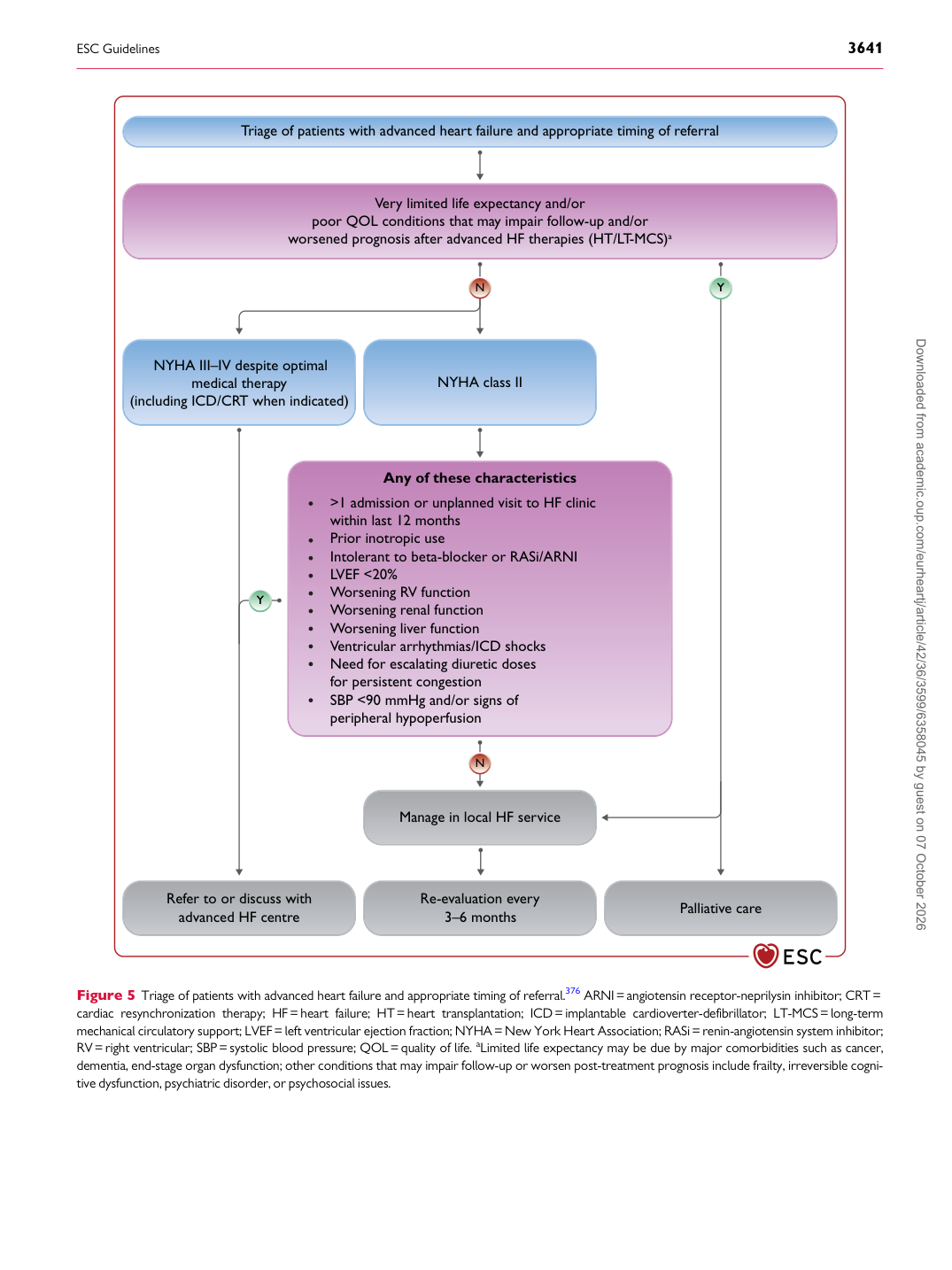
Figure 5 Triage of patients with advanced heart failure and appropriate timing of referral.376 ARNI= angiotensin receptor-neprilysin inhibitor; CRT= cardiac resynchronization therapy; HF= heart failure; HT= heart transplantation; ICD= implantable cardioverter-defibrillator; LT-MCS= long-term mechanical circulatory support; LVEF= left ventricular ejection fraction; NYHA= New York Heart Association; RASi= renin-angiotensin system inhibitor; RV= right ventricular; SBP= systolic blood pressure; QOL= quality of life. aLimited life expectancy may be due by major comorbidities such as cancer, dementia, end-stage organ dysfunction; other conditions that may impair follow-up or worsen post-treatment prognosis include frailty, irreversible cognitive dysfunction, psychiatric disorder, or psychosocial issues. Downloaded from academic.oup.com/eurheartj/article/42/36/3599/6358045 by guest on 07 October 2026