p.40 抽出テキスト
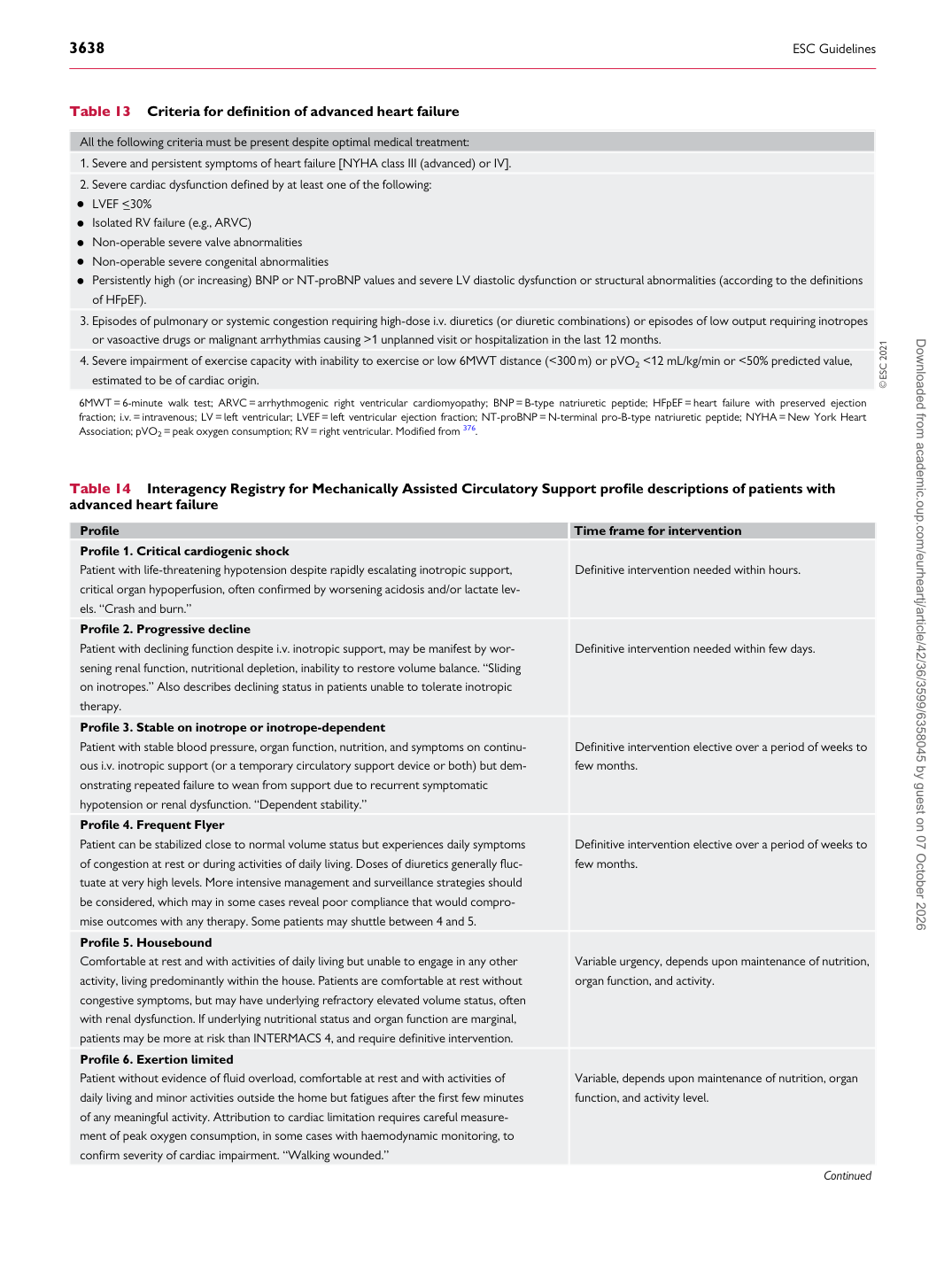
Table 13 Criteria for definition of advanced heart failure

All the following criteria must be present despite optimal medical treatment: 1. Severe and persistent symptoms of heart failure [NYHA class III (advanced) or IV]. 2. Severe cardiac dysfunction defined by at least one of the following: • LVEF <_30% • Isolated RV failure (e.g., ARVC) • Non-operable severe valve abnormalities • Non-operable severe congenital abnormalities • Persistently high (or increasing) BNP or NT-proBNP values and severe LV diastolic dysfunction or structural abnormalities (according to the definitions

of HFpEF). 3. Episodes of pulmonary or systemic congestion requiring high-dose i.v. diuretics (or diuretic combinations) or episodes of low output requiring inotropes or vasoactive drugs or malignant arrhythmias causing >1 unplanned visit or hospitalization in the last 12 months. 4. Severe impairment of exercise capacity with inability to exercise or low 6MWT distance (<300 m) or pVO2 <12 mL/kg/min or <50% predicted value,

estimated to be of cardiac origin. 6MWT = 6-minute walk test; ARVC = arrhythmogenic right ventricular cardiomyopathy; BNP = B-type natriuretic peptide; HFpEF = heart failure with preserved ejection fraction; i.v. = intravenous; LV = left ventricular; LVEF = left ventricular ejection fraction; NT-proBNP = N-terminal pro-B-type natriuretic peptide; NYHA = New York Heart Association; pVO2 = peak oxygen consumption; RV = right ventricular. Modified from 376. ESC 2021

Table 14 Interagency Registry for Mechanically Assisted Circulatory Support profile descriptions of patients with advanced heart failure

Profile Time frame for intervention Profile 1. Critical cardiogenic shock Patient with life-threatening hypotension despite rapidly escalating inotropic support, critical organ hypoperfusion, often confirmed by worsening acidosis and/or lactate levels. “Crash and burn.” Definitive intervention needed within hours. Profile 2. Progressive decline Patient with declining function despite i.v. inotropic support, may be manifest by worsening renal function, nutritional depletion, inability to restore volume balance. “Sliding on inotropes.” Also describes declining status in patients unable to tolerate inotropic therapy. Definitive intervention needed within few days. Profile 3. Stable on inotrope or inotrope-dependent Patient with stable blood pressure, organ function, nutrition, and symptoms on continuous i.v. inotropic support (or a temporary circulatory support device or both) but demonstrating repeated failure to wean from support due to recurrent symptomatic hypotension or renal dysfunction. “Dependent stability.” Definitive intervention elective over a period of weeks to

few months.

Profile 4. Frequent Flyer Patient can be stabilized close to normal volume status but experiences daily symptoms of congestion at rest or during activities of daily living. Doses of diuretics generally fluctuate at very high levels. More intensive management and surveillance strategies should be considered, which may in some cases reveal poor compliance that would compromise outcomes with any therapy. Some patients may shuttle between 4 and 5. Definitive intervention elective over a period of weeks to

few months.

Profile 5. Housebound Comfortable at rest and with activities of daily living but unable to engage in any other activity, living predominantly within the house. Patients are comfortable at rest without congestive symptoms, but may have underlying refractory elevated volume status, often with renal dysfunction. If underlying nutritional status and organ function are marginal, patients may be more at risk than INTERMACS 4, and require definitive intervention. Variable urgency, depends upon maintenance of nutrition, organ function, and activity. Profile 6. Exertion limited Patient without evidence of fluid overload, comfortable at rest and with activities of daily living and minor activities outside the home but fatigues after the first few minutes of any meaningful activity. Attribution to cardiac limitation requires careful measurement of peak oxygen consumption, in some cases with haemodynamic monitoring, to confirm severity of cardiac impairment. “Walking wounded.” Variable, depends upon maintenance of nutrition, organ function, and activity level.

Continued Downloaded from academic.oup.com/eurheartj/article/42/36/3599/6358045 by guest on 07 October 2026