p.36 抽出テキスト
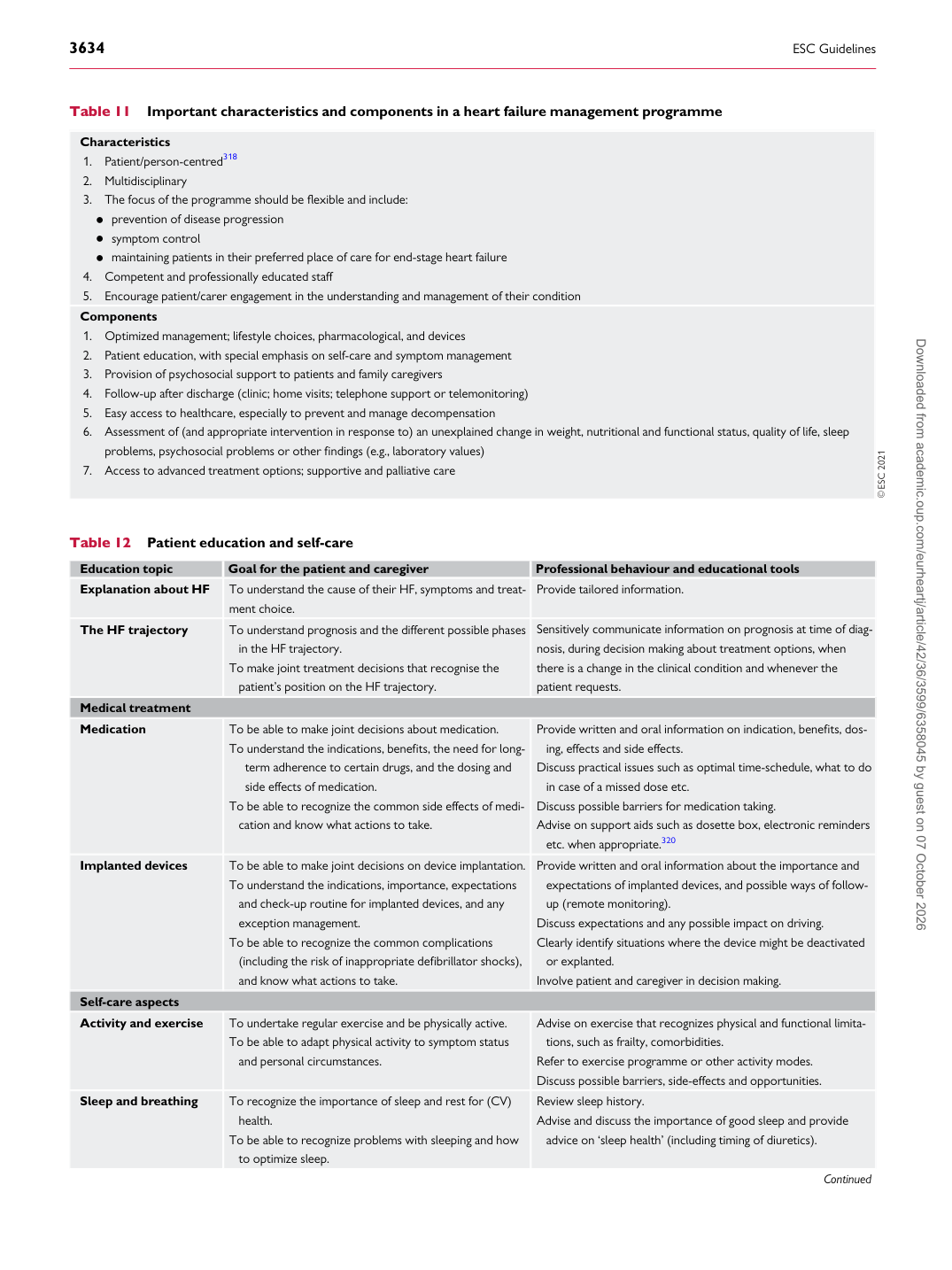
Table 11 Important characteristics and components in a heart failure management programme

Characteristics 1. Patient/person-centred318

2 Multidisciplinary

3. The focus of the programme should be flexible and include: • prevention of disease progression • symptom control • maintaining patients in their preferred place of care for end-stage heart failure 4. Competent and professionally educated staff 5. Encourage patient/carer engagement in the understanding and management of their condition Components

1 Optimized management; lifestyle choices, pharmacological, and devices

2. Patient education, with special emphasis on self-care and symptom management 3. Provision of psychosocial support to patients and family caregivers

4 Follow-up after discharge (clinic; home visits; telephone support or telemonitoring)

5. Easy access to healthcare, especially to prevent and manage decompensation 6. Assessment of (and appropriate intervention in response to) an unexplained change in weight, nutritional and functional status, quality of life, sleep

problems, psychosocial problems or other findings (e.g., laboratory values)

7 Access to advanced treatment options; supportive and palliative care

Table 12 Patient education and self-care

Education topic Goal for the patient and caregiver Professional behaviour and educational tools Explanation about HF To understand the cause of their HF, symptoms and treatment choice. Provide tailored information. The HF trajectory To understand prognosis and the different possible phases

in the HF trajectory. To make joint treatment decisions that recognise the

patient’s position on the HF trajectory. Sensitively communicate information on prognosis at time of diag-

nosis, during decision making about treatment options, when there is a change in the clinical condition and whenever the patient requests.

Medical treatment Medication To be able to make joint decisions about medication. To understand the indications, benefits, the need for long-

term adherence to certain drugs, and the dosing and side effects of medication. To be able to recognize the common side effects of medi-

cation and know what actions to take. Provide written and oral information on indication, benefits, dos-

ing, effects and side effects. Discuss practical issues such as optimal time-schedule, what to do in case of a missed dose etc. Discuss possible barriers for medication taking. Advise on support aids such as dosette box, electronic reminders

etc. when appropriate.320

Implanted devices To be able to make joint decisions on device implantation. To understand the indications, importance, expectations

and check-up routine for implanted devices, and any exception management. To be able to recognize the common complications

(including the risk of inappropriate defibrillator shocks), and know what actions to take. Provide written and oral information about the importance and

expectations of implanted devices, and possible ways of followup (remote monitoring). Discuss expectations and any possible impact on driving. Clearly identify situations where the device might be deactivated

or explanted. Involve patient and caregiver in decision making.

Self-care aspects Activity and exercise To undertake regular exercise and be physically active.

To be able to adapt physical activity to symptom status

and personal circumstances. Advise on exercise that recognizes physical and functional limita-

tions, such as frailty, comorbidities. Refer to exercise programme or other activity modes. Discuss possible barriers, side-effects and opportunities.

Sleep and breathing To recognize the importance of sleep and rest for (CV)

health. To be able to recognize problems with sleeping and how

to optimize sleep. Review sleep history.

Advise and discuss the importance of good sleep and provide

advice on ‘sleep health’ (including timing of diuretics).

Continued ESC 2021 Downloaded from academic.oup.com/eurheartj/article/42/36/3599/6358045 by guest on 07 October 2026