p.26 抽出テキスト
Diuretics

SR with LBBB ≥ 150 ms

To reduce mortality - for all patients

To reduce HF hospitalization/mortality - for selected patients

Volume overload

ACE-I/ARNI BB MRA SGLT2i

Exercise rehabilitation

To reduce HF hospitalization and improve QOL - for all patients

For selected advanced HF patients

CRT-P/D

Atrial fibrillation Anticoagulation

MCS as BTT/BTC

Aortic stenosis

SAVR/TAVI Mitral regurgitation

TEE MV Repair Heart rate SR>70 bpm

Ivabradine Black Race

Hydralazine/ISDN ACE-I/ARNI intolerance

ARB

Atrial fibrillation Digoxin Coronary artery disease

CABG Iron deficiency

Ferric carboxymaltose

ICD

Ischaemic aetiology

Heart transplantation Long-term MCS as DT

Multi-professional disease management

Non-ischaemic aetiology

SR with LBBB 130–149 ms or non LBBB ≥ 150 ms

CRT-P/D

Management of HFrEF

ICD

PVI

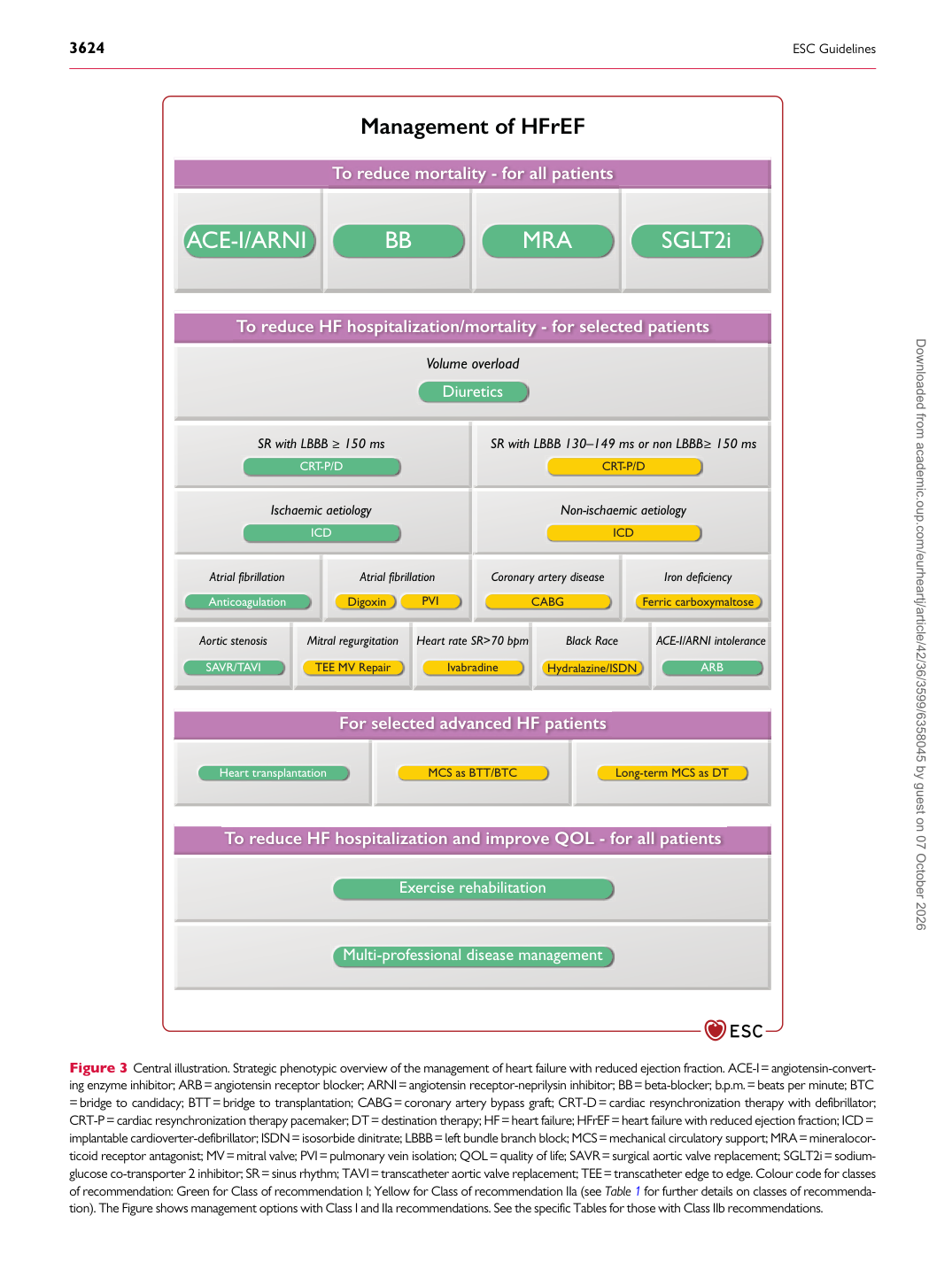
Figure 3 Central illustration. Strategic phenotypic overview of the management of heart failure with reduced ejection fraction. ACE-I=angiotensin-converting enzyme inhibitor; ARB=angiotensin receptor blocker; ARNI=angiotensin receptor-neprilysin inhibitor; BB=beta-blocker; b.p.m.=beats per minute; BTC =bridge to candidacy; BTT=bridge to transplantation; CABG=coronary artery bypass graft; CRT-D= cardiac resynchronization therapy with defibrillator; CRT-P=cardiac resynchronization therapy pacemaker; DT=destination therapy; HF=heart failure; HFrEF=heart failure with reduced ejection fraction; ICD= implantable cardioverter-defibrillator; ISDN=isosorbide dinitrate; LBBB=left bundle branch block; MCS=mechanical circulatory support; MRA=mineralocorticoid receptor antagonist; MV=mitral valve; PVI=pulmonary vein isolation; QOL=quality of life; SAVR=surgical aortic valve replacement; SGLT2i=sodiumglucose co-transporter 2 inhibitor; SR=sinus rhythm; TAVI=transcatheter aortic valve replacement; TEE=transcatheter edge to edge. Colour code for classes of recommendation: Green for Class of recommendation I; Yellow for Class of recommendation IIa (see Table 1 for further details on classes of recommendation). The Figure shows management options with Class I and IIa recommendations. See the specific Tables for those with Class IIb recommendations. Downloaded from academic.oup.com/eurheartj/article/42/36/3599/6358045 by guest on 07 October 2026