p.11 抽出テキスト
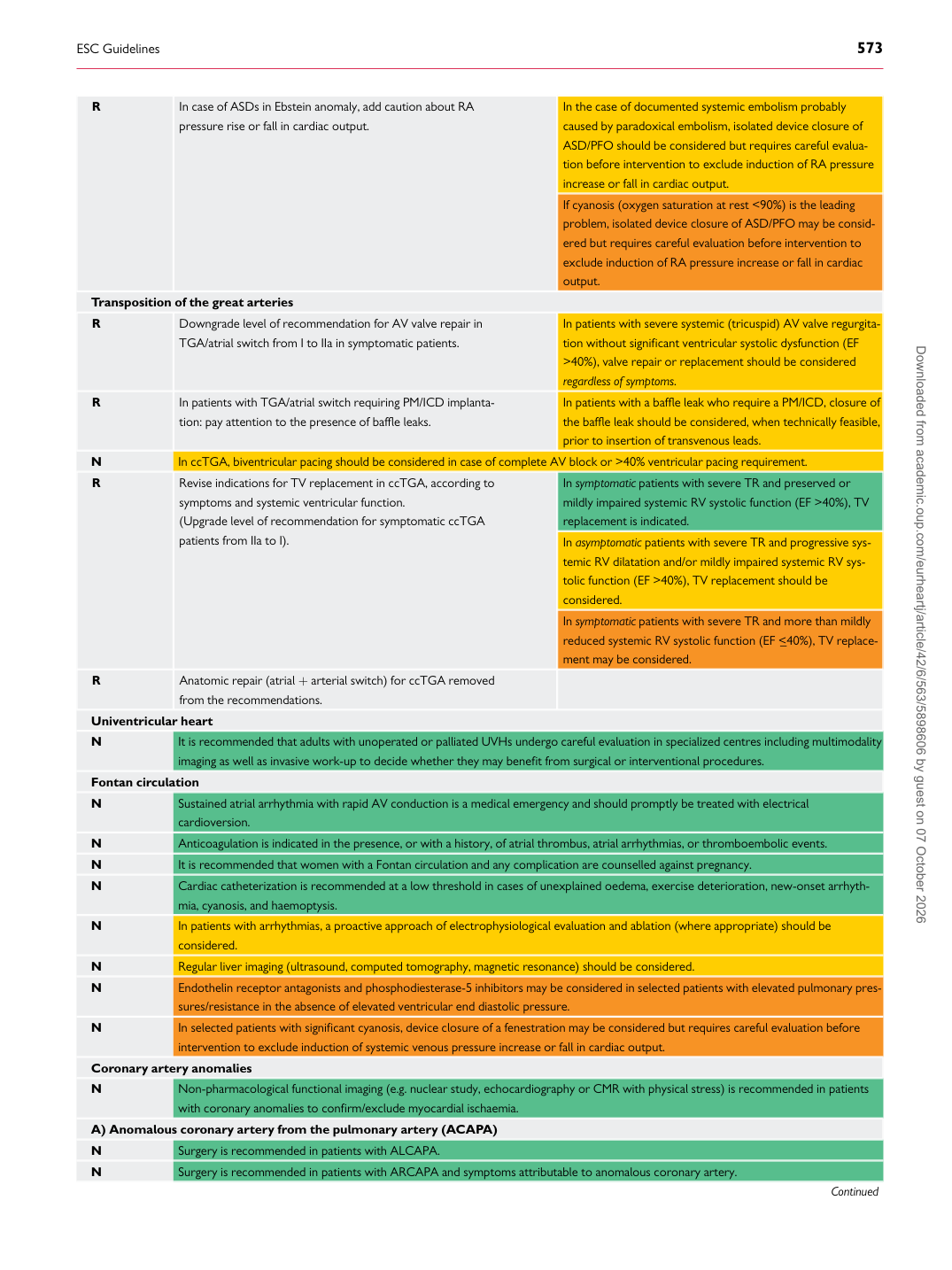
R In case of ASDs in Ebstein anomaly, add caution about RA

pressure rise or fall in cardiac output. In the case of documented systemic embolism probably

caused by paradoxical embolism, isolated device closure of ASD/PFO should be considered but requires careful evaluation before intervention to exclude induction of RA pressure increase or fall in cardiac output. If cyanosis (oxygen saturation at rest <90%) is the leading problem, isolated device closure of ASD/PFO may be considered but requires careful evaluation before intervention to exclude induction of RA pressure increase or fall in cardiac output.

Transposition of the great arteries R Downgrade level of recommendation for AV valve repair in

TGA/atrial switch from I to IIa in symptomatic patients. In patients with severe systemic (tricuspid) AV valve regurgita-

tion without significant ventricular systolic dysfunction (EF >40%), valve repair or replacement should be considered regardless of symptoms.

R In patients with TGA/atrial switch requiring PM/ICD implanta-

tion: pay attention to the presence of baffle leaks. In patients with a baffle leak who require a PM/ICD, closure of

the baffle leak should be considered, when technically feasible, prior to insertion of transvenous leads.

N In ccTGA, biventricular pacing should be considered in case of complete AV block or >40% ventricular pacing requirement. R Revise indications for TV replacement in ccTGA, according to

symptoms and systemic ventricular function. (Upgrade level of recommendation for symptomatic ccTGA patients from IIa to I). In symptomatic patients with severe TR and preserved or

mildly impaired systemic RV systolic function (EF >40%), TV replacement is indicated. In asymptomatic patients with severe TR and progressive systemic RV dilatation and/or mildly impaired systemic RV systolic function (EF >40%), TV replacement should be considered. In symptomatic patients with severe TR and more than mildly reduced systemic RV systolic function (EF <_40%), TV replacement may be considered.

R Anatomic repair (atrial þ arterial switch) for ccTGA removed

from the recommendations.

Univentricular heart N It is recommended that adults with unoperated or palliated UVHs undergo careful evaluation in specialized centres including multimodality

imaging as well as invasive work-up to decide whether they may benefit from surgical or interventional procedures.

Fontan circulation N Sustained atrial arrhythmia with rapid AV conduction is a medical emergency and should promptly be treated with electrical cardioversion. N Anticoagulation is indicated in the presence, or with a history, of atrial thrombus, atrial arrhythmias, or thromboembolic events. N It is recommended that women with a Fontan circulation and any complication are counselled against pregnancy. N Cardiac catheterization is recommended at a low threshold in cases of unexplained oedema, exercise deterioration, new-onset arrhyth-

mia, cyanosis, and haemoptysis.

N In patients with arrhythmias, a proactive approach of electrophysiological evaluation and ablation (where appropriate) should be

considered.

N Regular liver imaging (ultrasound, computed tomography, magnetic resonance) should be considered. N Endothelin receptor antagonists and phosphodiesterase-5 inhibitors may be considered in selected patients with elevated pulmonary pressures/resistance in the absence of elevated ventricular end diastolic pressure. N In selected patients with significant cyanosis, device closure of a fenestration may be considered but requires careful evaluation before

intervention to exclude induction of systemic venous pressure increase or fall in cardiac output.

Coronary artery anomalies N Non-pharmacological functional imaging (e.g. nuclear study, echocardiography or CMR with physical stress) is recommended in patients with coronary anomalies to confirm/exclude myocardial ischaemia. A) Anomalous coronary artery from the pulmonary artery (ACAPA) N Surgery is recommended in patients with ALCAPA. N Surgery is recommended in patients with ARCAPA and symptoms attributable to anomalous coronary artery.

Continued Downloaded from academic.oup.com/eurheartj/article/42/6/563/5898606 by guest on 07 October 2026