p.36 抽出テキスト
©ESC 2019

Intensity of lipid lowering treatment

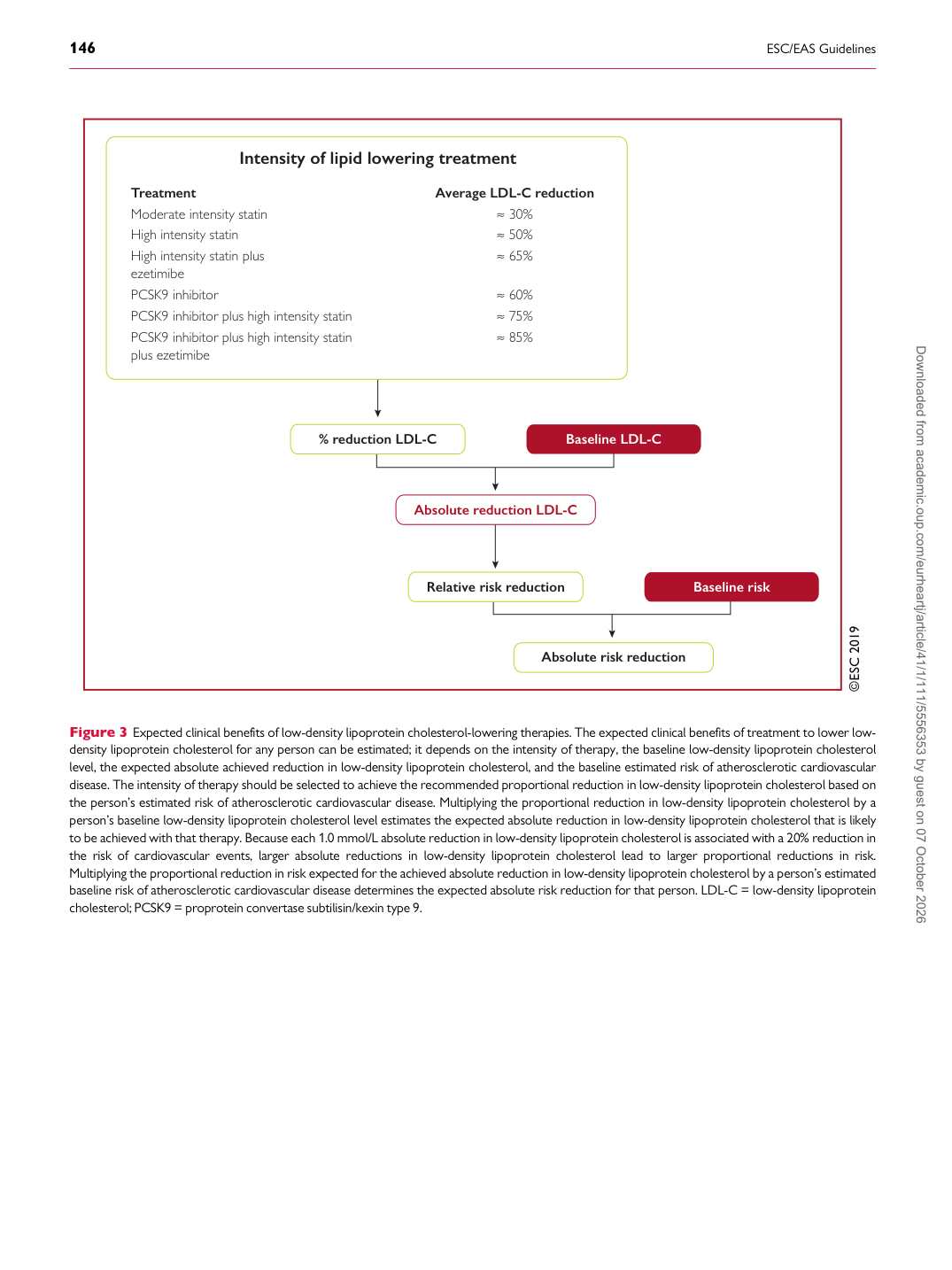
Treatment Average LDL-C reduction Moderate intensity statin ≈ 30% High intensity statin ≈ 50% High intensity statin plus ≈ 65% ezetimibe PCSK9 inhibitor ≈ 60% PCSK9 inhibitor plus high intensity statin ≈ 75% PCSK9 inhibitor plus high intensity statin ≈ 85% plus ezetimibe

% reduction LDL-C Baseline LDL-C

Absolute reduction LDL-C

Relative risk reduction Baseline risk

Absolute risk reduction

Figure 3 Expected clinical benefits of low-density lipoprotein cholesterol-lowering therapies. The expected clinical benefits of treatment to lower lowdensity lipoprotein cholesterol for any person can be estimated; it depends on the intensity of therapy, the baseline low-density lipoprotein cholesterol level, the expected absolute achieved reduction in low-density lipoprotein cholesterol, and the baseline estimated risk of atherosclerotic cardiovascular disease. The intensity of therapy should be selected to achieve the recommended proportional reduction in low-density lipoprotein cholesterol based on the person’s estimated risk of atherosclerotic cardiovascular disease. Multiplying the proportional reduction in low-density lipoprotein cholesterol by a person’s baseline low-density lipoprotein cholesterol level estimates the expected absolute reduction in low-density lipoprotein cholesterol that is likely to be achieved with that therapy. Because each 1.0 mmol/L absolute reduction in low-density lipoprotein cholesterol is associated with a 20% reduction in the risk of cardiovascular events, larger absolute reductions in low-density lipoprotein cholesterol lead to larger proportional reductions in risk. Multiplying the proportional reduction in risk expected for the achieved absolute reduction in low-density lipoprotein cholesterol by a person’s estimated baseline risk of atherosclerotic cardiovascular disease determines the expected absolute risk reduction for that person. LDL-C = low-density lipoprotein cholesterol; PCSK9 = proprotein convertase subtilisin/kexin type 9. Downloaded from academic.oup.com/eurheartj/article/41/1/111/5556353 by guest on 07 October 2026