p.53 抽出テキスト
....................................................................... 9.1.5 Access and referrals to a syncope unit Referral can be direct from family practitioners, EDs, in-hospital and out-hospital services, or self-referral from the patient. Fast-track access with a separate waiting list and scheduled follow-up visits is recommended. In particular, patients at low/intermediate risk admitted to the ED should benefit from such fast-track facilities (so-called protected discharge or advanced access with an appointment for early assessment) to reduce hospitalization rates, directly from the ED or after a short stay in the short observation unit of the ED (see section 4.1.2).

9.1.6 Outcomes and quality indicators The EHRA Task Force63 has developed the following preliminary quality indicators, based on consensus, as a rough guide for practitioners:

(1) Absolute rate of undiagnosed TLOC should be reduced by 20%; (2) Less than 20% of low-/intermediate-risk TLOC patients should be admitted from the ED; (3) The syncope unit should have a 20% reduction in costs relative to usual practice and improved outcomes (i.e. <5% readmissions for syncope and <20% of paced patients with recurrence at 1 year). 9.2 The clinical nurse specialist in the

syncope unit 9.2.1 Definition The syncope unit clinical nurse specialist is defined as an experienced practitioner who has sufficient knowledge of history features and physical findings to recognize all major forms of TLOC, as well as syndromes of orthostatic intolerance. The clinical nurse specialist should work in close collaboration with the syncope specialist. The core competencies of the clinical nurse specialist include a specialized clinical focus, patient advocacy, education and training, auditing, research, and inter- and intradisciplinary consultations.

9.2.2 Role and skills of the clinical nurse specialist The clinical nurse specialist should be skilled in the performance and interpretation of structured history taking, 12-lead ECG and routine blood test results, tilt testing, active stand tests, autonomic function tests, ECG monitoring (Holter and/or external loop recorder), ABPM, ILR monitoring, and subsequent triaging of patients and monitoring responses to therapy. Other skills will depend on the service model, e.g. pacemaker interrogation. The clinical nurse specialist may have responsibility for follow-up clinics for cardiovascular risk factor management, autonomic function testing and monitoring, management (including education in PCM) of VVS and OH, and follow-up

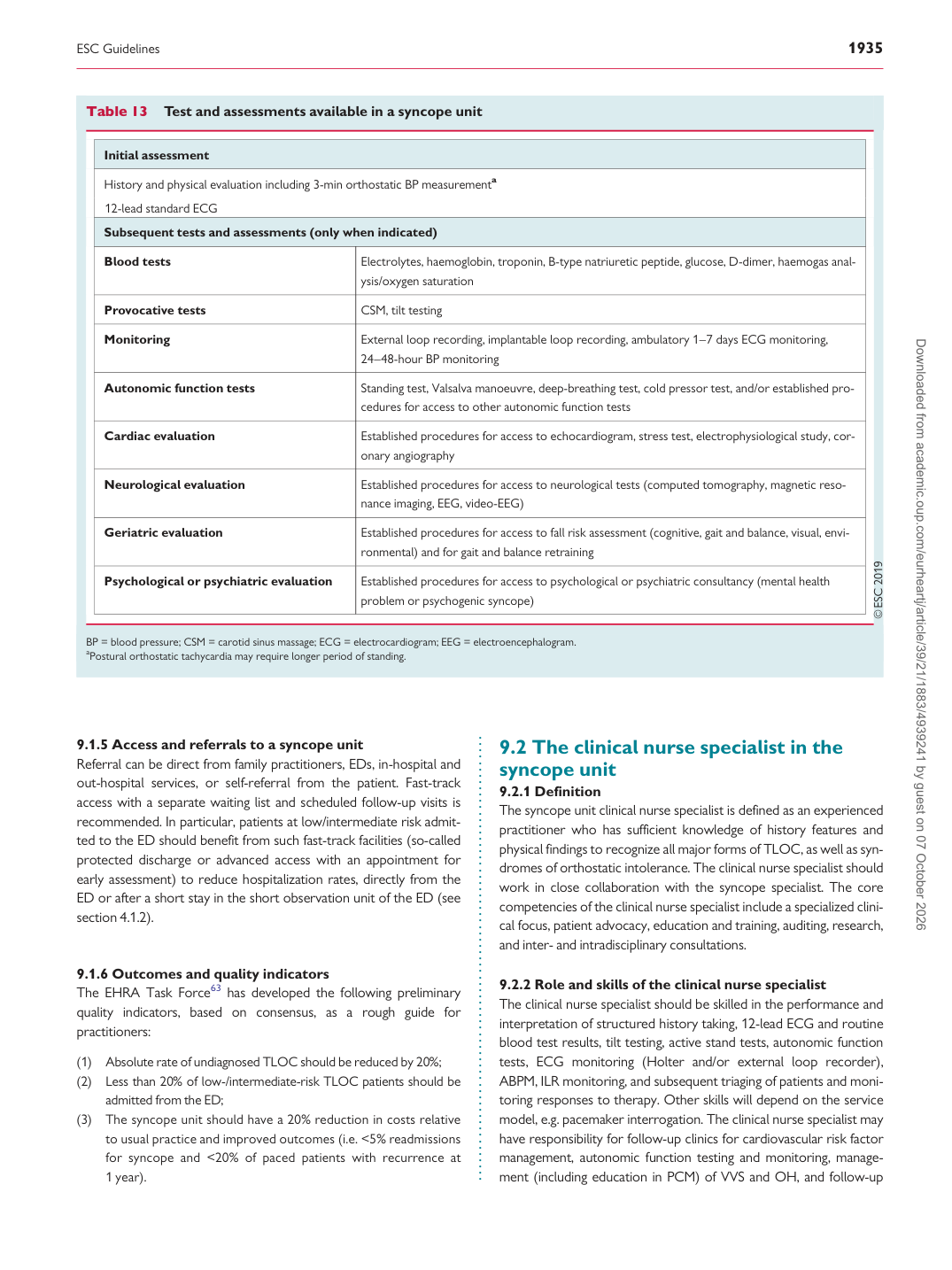
Table 13 Test and assessments available in a syncope unit

Initial assessment History and physical evaluation including 3-min orthostatic BP measurementa 12-lead standard ECG Subsequent tests and assessments (only when indicated)

Blood tests Electrolytes, haemoglobin, troponin, B-type natriuretic peptide, glucose, D-dimer, haemogas analysis/oxygen saturation

Provocative tests CSM, tilt testing

Monitoring External loop recording, implantable loop recording, ambulatory 1–7 days ECG monitoring,

24–48-hour BP monitoring

Autonomic function tests Standing test, Valsalva manoeuvre, deep-breathing test, cold pressor test, and/or established procedures for access to other autonomic function tests

Cardiac evaluation Established procedures for access to echocardiogram, stress test, electrophysiological study, cor-

onary angiography

Neurological evaluation Established procedures for access to neurological tests (computed tomography, magnetic resonance imaging, EEG, video-EEG)

Geriatric evaluation Established procedures for access to fall risk assessment (cognitive, gait and balance, visual, envi-

ronmental) and for gait and balance retraining

Psychological or psychiatric evaluation Established procedures for access to psychological or psychiatric consultancy (mental health

problem or psychogenic syncope)

BP = blood pressure; CSM = carotid sinus massage; ECG = electrocardiogram; EEG = electroencephalogram. aPostural orthostatic tachycardia may require longer period of standing. Downloaded from academic.oup.com/eurheartj/article/39/21/1883/4939241 by guest on 07 October 2026