p.51 抽出テキスト
............ interested in establishing a syncope unit in their hospital so that they can meet the standards proposed by the ESC, the EHRA, and the Heart Rhythm Society. The following is the context and evidence for recommendations regarding syncope units (Table 11). 9.1.1 Definition of a syncope unit A syncope unit is a facility featuring a standardized approach to the diagnosis and management of TLOC and related symptoms, with dedicated staff and access to appropriate diagnostics and therapies.

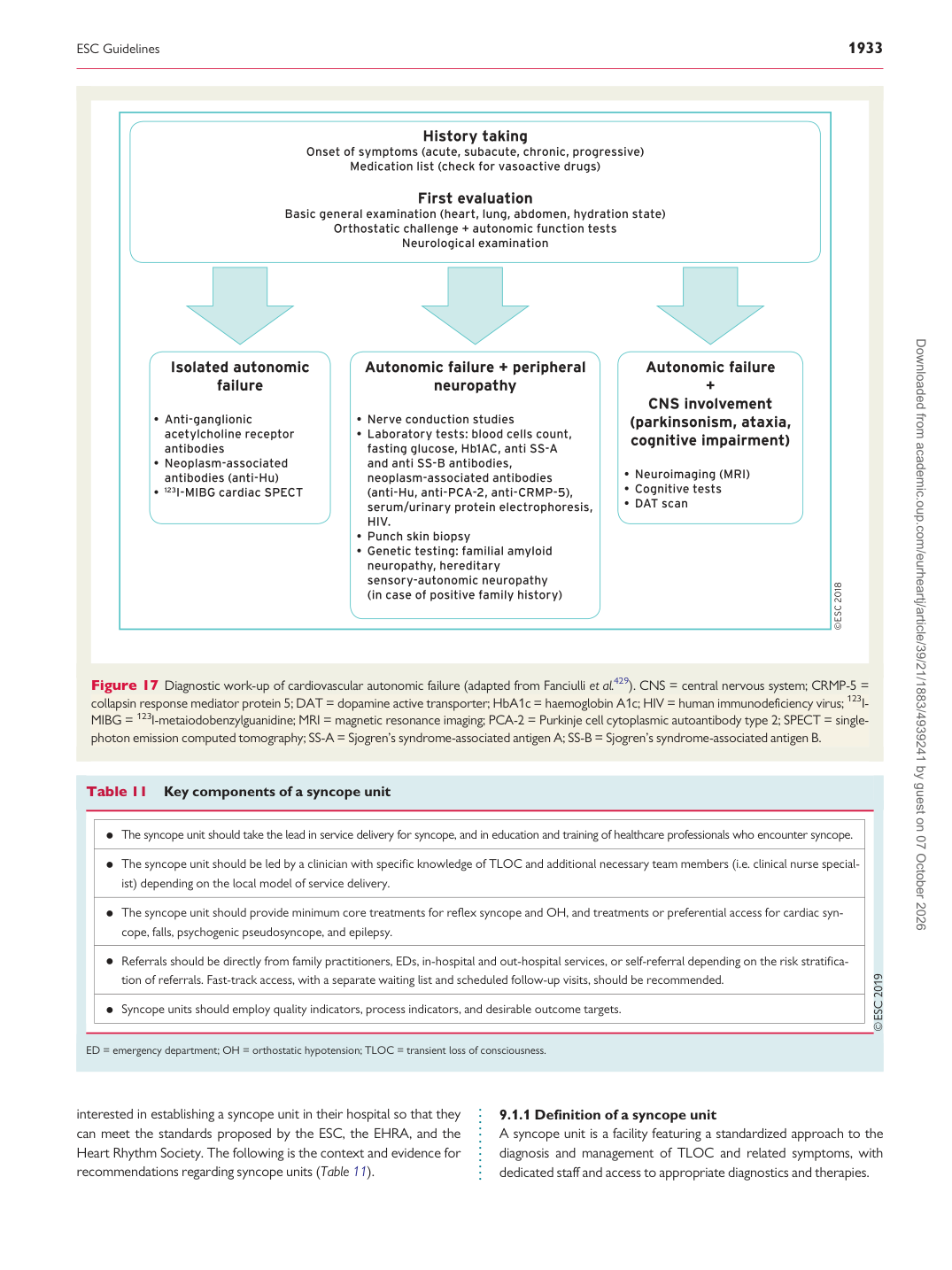
Figure 17 Diagnostic work-up of cardiovascular autonomic failure (adapted from Fanciulli et al.429). CNS = central nervous system; CRMP-5 = collapsin response mediator protein 5; DAT = dopamine active transporter; HbA1c = haemoglobin A1c; HIV = human immunodeficiency virus; 123I- MIBG = 123I-metaiodobenzylguanidine; MRI = magnetic resonance imaging; PCA-2 = Purkinje cell cytoplasmic autoantibody type 2; SPECT = singlephoton emission computed tomography; SS-A = Sjogren’s syndrome-associated antigen A; SS-B = Sjogren’s syndrome-associated antigen B.

Table 11 Key components of a syncope unit

• The syncope unit should take the lead in service delivery for syncope, and in education and training of healthcare professionals who encounter syncope. • The syncope unit should be led by a clinician with specific knowledge of TLOC and additional necessary team members (i.e. clinical nurse special-

ist) depending on the local model of service delivery. • The syncope unit should provide minimum core treatments for reflex syncope and OH, and treatments or preferential access for cardiac syncope, falls, psychogenic pseudosyncope, and epilepsy. • Referrals should be directly from family practitioners, EDs, in-hospital and out-hospital services, or self-referral depending on the risk stratifica-

tion of referrals. Fast-track access, with a separate waiting list and scheduled follow-up visits, should be recommended. • Syncope units should employ quality indicators, process indicators, and desirable outcome targets.

ED = emergency department; OH = orthostatic hypotension; TLOC = transient loss of consciousness. Downloaded from academic.oup.com/eurheartj/article/39/21/1883/4939241 by guest on 07 October 2026