p.41 抽出テキスト
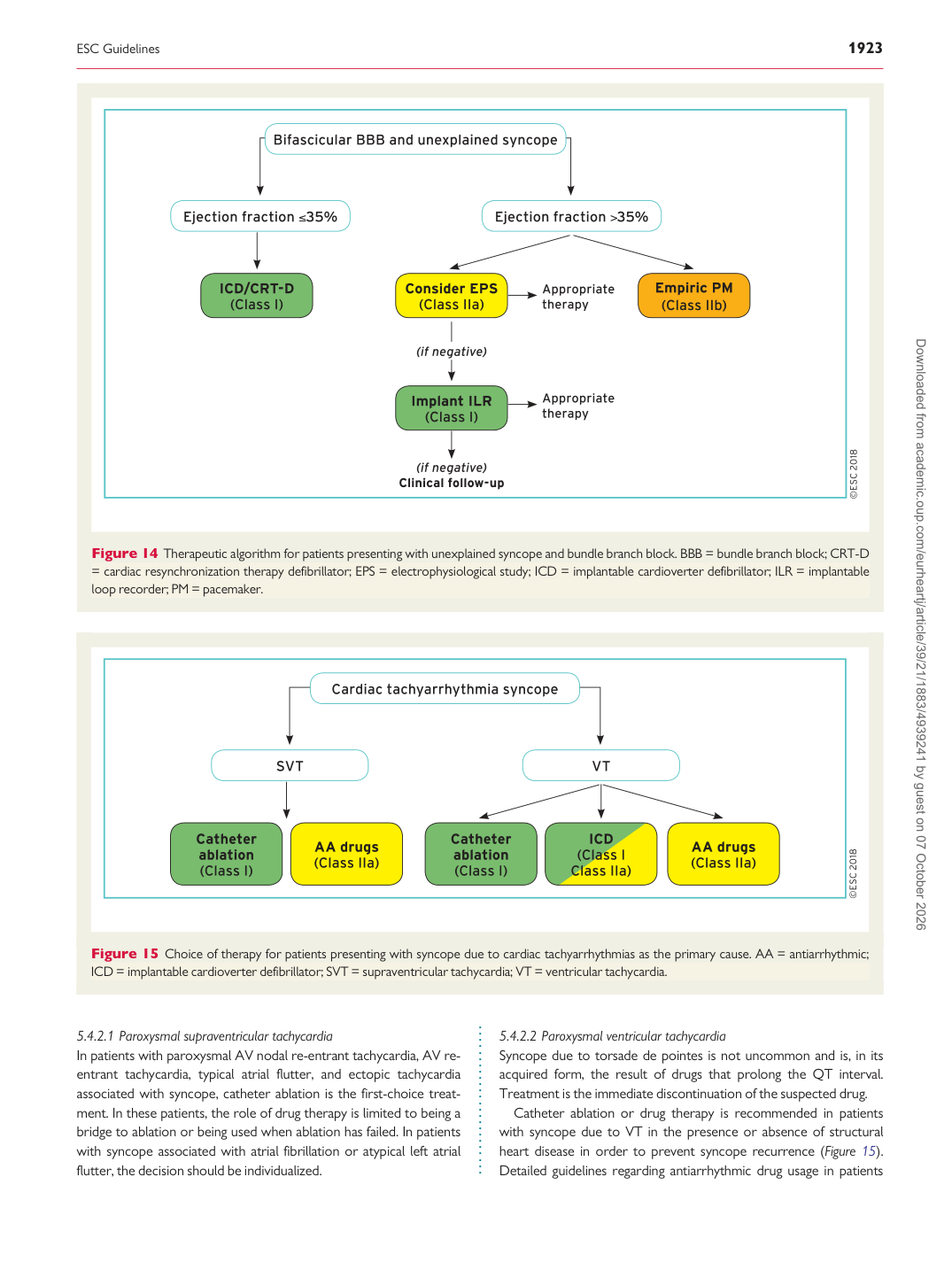
........................ 5.4.2.1 Paroxysmal supraventricular tachycardia In patients with paroxysmal AV nodal re-entrant tachycardia, AV reentrant tachycardia, typical atrial flutter, and ectopic tachycardia associated with syncope, catheter ablation is the first-choice treatment. In these patients, the role of drug therapy is limited to being a bridge to ablation or being used when ablation has failed. In patients with syncope associated with atrial fibrillation or atypical left atrial flutter, the decision should be individualized. 5.4.2.2 Paroxysmal ventricular tachycardia Syncope due to torsade de pointes is not uncommon and is, in its acquired form, the result of drugs that prolong the QT interval. Treatment is the immediate discontinuation of the suspected drug.

Catheter ablation or drug therapy is recommended in patients with syncope due to VT in the presence or absence of structural heart disease in order to prevent syncope recurrence (Figure 15). Detailed guidelines regarding antiarrhythmic drug usage in patients

Figure 14 Therapeutic algorithm for patients presenting with unexplained syncope and bundle branch block. BBB = bundle branch block; CRT-D = cardiac resynchronization therapy defibrillator; EPS = electrophysiological study; ICD = implantable cardioverter defibrillator; ILR = implantable loop recorder; PM = pacemaker.

Figure 15 Choice of therapy for patients presenting with syncope due to cardiac tachyarrhythmias as the primary cause. AA = antiarrhythmic; ICD = implantable cardioverter defibrillator; SVT = supraventricular tachycardia; VT = ventricular tachycardia. Downloaded from academic.oup.com/eurheartj/article/39/21/1883/4939241 by guest on 07 October 2026