p.38 抽出テキスト
............................................................................................... The principal treatment strategy in drug-induced autonomic failure is eliminating the offending agent. The quality of evidence is moderate. Longer-term future RCTs are likely to have an important impact on determining the net risk2benefit ratio of the withdrawal of culprit medications.

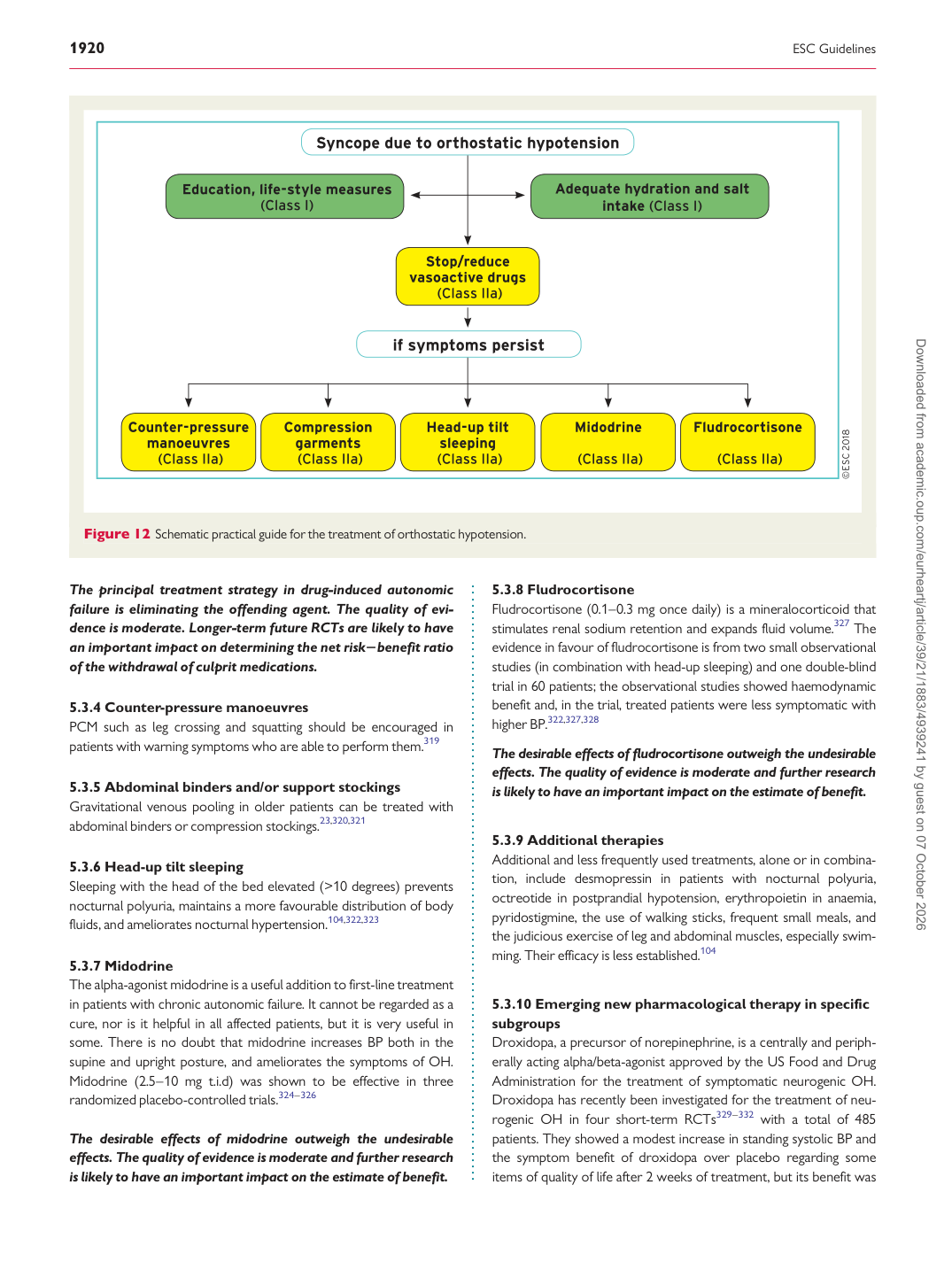
5.3.4 Counter-pressure manoeuvres PCM such as leg crossing and squatting should be encouraged in patients with warning symptoms who are able to perform them.319

5.3.5 Abdominal binders and/or support stockings Gravitational venous pooling in older patients can be treated with abdominal binders or compression stockings.23,320,321

5.3.6 Head-up tilt sleeping Sleeping with the head of the bed elevated (>10 degrees) prevents nocturnal polyuria, maintains a more favourable distribution of body fluids, and ameliorates nocturnal hypertension.104,322,323

5.3.7 Midodrine The alpha-agonist midodrine is a useful addition to first-line treatment in patients with chronic autonomic failure. It cannot be regarded as a cure, nor is it helpful in all affected patients, but it is very useful in some. There is no doubt that midodrine increases BP both in the supine and upright posture, and ameliorates the symptoms of OH. Midodrine (2.5–10 mg t.i.d) was shown to be effective in three randomized placebo-controlled trials.324–326

The desirable effects of midodrine outweigh the undesirable effects. The quality of evidence is moderate and further research is likely to have an important impact on the estimate of benefit. 5.3.8 Fludrocortisone Fludrocortisone (0.1–0.3 mg once daily) is a mineralocorticoid that stimulates renal sodium retention and expands fluid volume.327 The evidence in favour of fludrocortisone is from two small observational studies (in combination with head-up sleeping) and one double-blind trial in 60 patients; the observational studies showed haemodynamic benefit and, in the trial, treated patients were less symptomatic with higher BP.322,327,328

The desirable effects of fludrocortisone outweigh the undesirable effects. The quality of evidence is moderate and further research is likely to have an important impact on the estimate of benefit.

5.3.9 Additional therapies Additional and less frequently used treatments, alone or in combination, include desmopressin in patients with nocturnal polyuria, octreotide in postprandial hypotension, erythropoietin in anaemia, pyridostigmine, the use of walking sticks, frequent small meals, and the judicious exercise of leg and abdominal muscles, especially swimming. Their efficacy is less established.104

5.3.10 Emerging new pharmacological therapy in specific subgroups Droxidopa, a precursor of norepinephrine, is a centrally and peripherally acting alpha/beta-agonist approved by the US Food and Drug Administration for the treatment of symptomatic neurogenic OH. Droxidopa has recently been investigated for the treatment of neurogenic OH in four short-term RCTs329–332 with a total of 485 patients. They showed a modest increase in standing systolic BP and the symptom benefit of droxidopa over placebo regarding some items of quality of life after 2 weeks of treatment, but its benefit was

Figure 12 Schematic practical guide for the treatment of orthostatic hypotension. Downloaded from academic.oup.com/eurheartj/article/39/21/1883/4939241 by guest on 07 October 2026