p.3 抽出テキスト
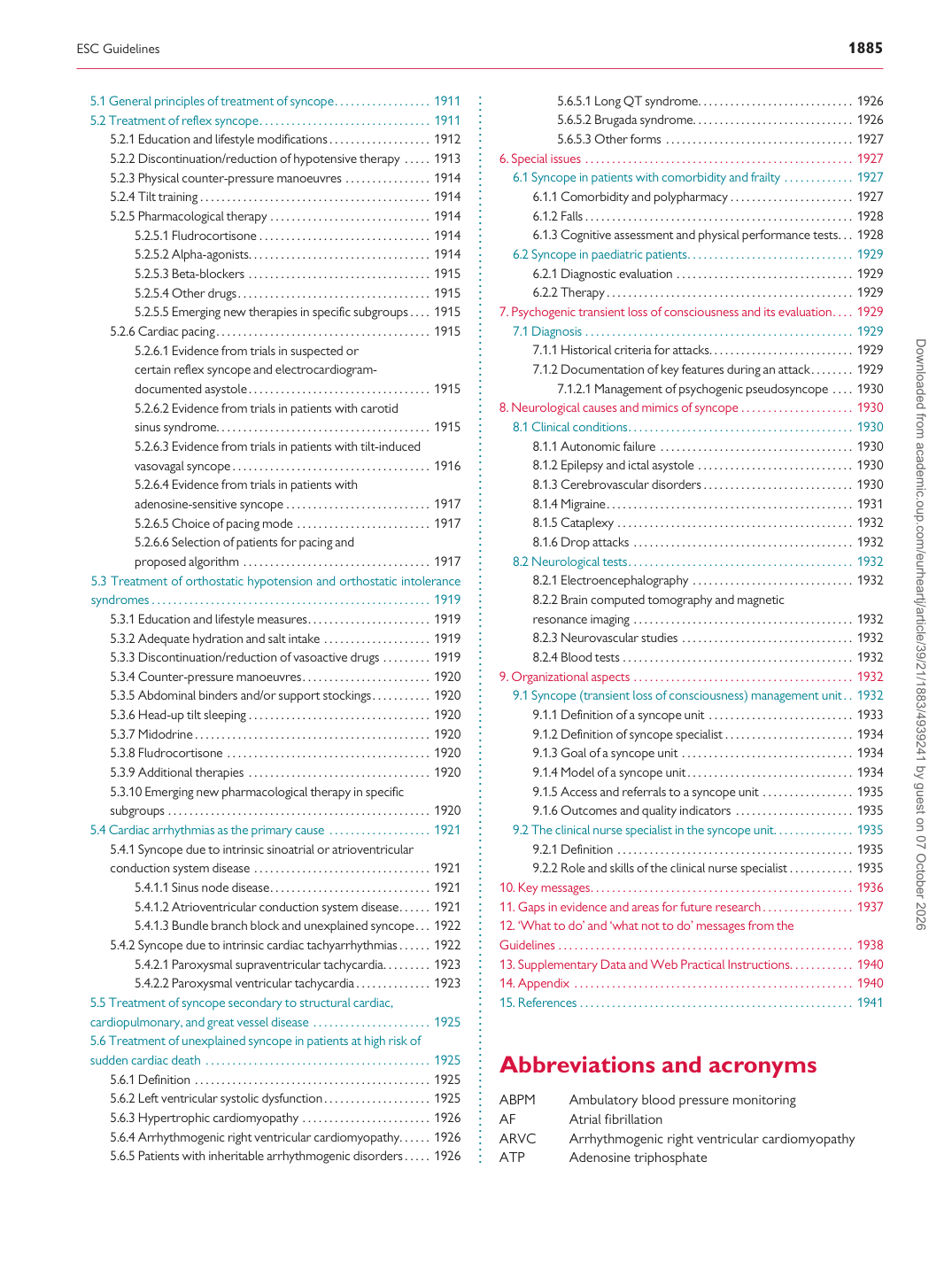
.......................................................................................................................................................................... 5.1 General principles of treatment of syncope. . . . . . . . . . . . . . . . . . 1911 5.2 Treatment of reflex syncope. . . . . . . . . . . . . . . . . . . . . . . . . . . . . . . . 1911 5.2.1 Education and lifestyle modifications. . . . . . . . . . . . . . . . . . . 1912 5.2.2 Discontinuation/reduction of hypotensive therapy . . . . . 1913 5.2.3 Physical counter-pressure manoeuvres . . . . . . . . . . . . . . . . 1914 5.2.4 Tilt training . . . . . . . . . . . . . . . . . . . . . . . . . . . . . . . . . . . . . . . . . . . 1914 5.2.5 Pharmacological therapy . . . . . . . . . . . . . . . . . . . . . . . . . . . . . . 1914 5.2.5.1 Fludrocortisone . . . . . . . . . . . . . . . . . . . . . . . . . . . . . . . . 1914 5.2.5.2 Alpha-agonists. . . . . . . . . . . . . . . . . . . . . . . . . . . . . . . . . . 1914 5.2.5.3 Beta-blockers . . . . . . . . . . . . . . . . . . . . . . . . . . . . . . . . . . 1915 5.2.5.4 Other drugs. . . . . . . . . . . . . . . . . . . . . . . . . . . . . . . . . . . . 1915 5.2.5.5 Emerging new therapies in specific subgroups . . . . 1915 5.2.6 Cardiac pacing. . . . . . . . . . . . . . . . . . . . . . . . . . . . . . . . . . . . . . . . 1915 5.2.6.1 Evidence from trials in suspected or certain reflex syncope and electrocardiogramdocumented asystole. . . . . . . . . . . . . . . . . . . . . . . . . . . . . . . . . . 1915 5.2.6.2 Evidence from trials in patients with carotid sinus syndrome. . . . . . . . . . . . . . . . . . . . . . . . . . . . . . . . . . . . . . . . 1915 5.2.6.3 Evidence from trials in patients with tilt-induced vasovagal syncope . . . . . . . . . . . . . . . . . . . . . . . . . . . . . . . . . . . . . 1916 5.2.6.4 Evidence from trials in patients with adenosine-sensitive syncope . . . . . . . . . . . . . . . . . . . . . . . . . . . 1917 5.2.6.5 Choice of pacing mode . . . . . . . . . . . . . . . . . . . . . . . . . 1917 5.2.6.6 Selection of patients for pacing and proposed algorithm . . . . . . . . . . . . . . . . . . . . . . . . . . . . . . . . . . . 1917 5.3 Treatment of orthostatic hypotension and orthostatic intolerance syndromes . . . . . . . . . . . . . . . . . . . . . . . . . . . . . . . . . . . . . . . . . . . . . . . . . . . . 1919

5.3.1 Education and lifestyle measures. . . . . . . . . . . . . . . . . . . . . . . 1919 5.3.2 Adequate hydration and salt intake . . . . . . . . . . . . . . . . . . . . 1919 5.3.3 Discontinuation/reduction of vasoactive drugs . . . . . . . . . 1919 5.3.4 Counter-pressure manoeuvres. . . . . . . . . . . . . . . . . . . . . . . . 1920 5.3.5 Abdominal binders and/or support stockings. . . . . . . . . . . 1920 5.3.6 Head-up tilt sleeping . . . . . . . . . . . . . . . . . . . . . . . . . . . . . . . . . . 1920 5.3.7 Midodrine . . . . . . . . . . . . . . . . . . . . . . . . . . . . . . . . . . . . . . . . . . . . 1920 5.3.8 Fludrocortisone . . . . . . . . . . . . . . . . . . . . . . . . . . . . . . . . . . . . . . 1920 5.3.9 Additional therapies . . . . . . . . . . . . . . . . . . . . . . . . . . . . . . . . . . 1920 5.3.10 Emerging new pharmacological therapy in specific subgroups . . . . . . . . . . . . . . . . . . . . . . . . . . . . . . . . . . . . . . . . . . . . . . . . . 1920 5.4 Cardiac arrhythmias as the primary cause . . . . . . . . . . . . . . . . . . . 1921 5.4.1 Syncope due to intrinsic sinoatrial or atrioventricular conduction system disease . . . . . . . . . . . . . . . . . . . . . . . . . . . . . . . . . 1921 5.4.1.1 Sinus node disease. . . . . . . . . . . . . . . . . . . . . . . . . . . . . . 1921 5.4.1.2 Atrioventricular conduction system disease. . . . . . 1921 5.4.1.3 Bundle branch block and unexplained syncope. . . 1922 5.4.2 Syncope due to intrinsic cardiac tachyarrhythmias . . . . . . 1922 5.4.2.1 Paroxysmal supraventricular tachycardia. . . . . . . . . 1923 5.4.2.2 Paroxysmal ventricular tachycardia . . . . . . . . . . . . . . 1923 5.5 Treatment of syncope secondary to structural cardiac, cardiopulmonary, and great vessel disease . . . . . . . . . . . . . . . . . . . . . . 1925 5.6 Treatment of unexplained syncope in patients at high risk of sudden cardiac death . . . . . . . . . . . . . . . . . . . . . . . . . . . . . . . . . . . . . . . . . . 1925

5.6.1 Definition . . . . . . . . . . . . . . . . . . . . . . . . . . . . . . . . . . . . . . . . . . . . 1925 5.6.2 Left ventricular systolic dysfunction. . . . . . . . . . . . . . . . . . . . 1925 5.6.3 Hypertrophic cardiomyopathy . . . . . . . . . . . . . . . . . . . . . . . . 1926 5.6.4 Arrhythmogenic right ventricular cardiomyopathy. . . . . . 1926 5.6.5 Patients with inheritable arrhythmogenic disorders. . . . . 1926 5.6.5.1 Long QT syndrome. . . . . . . . . . . . . . . . . . . . . . . . . . . . . 1926 5.6.5.2 Brugada syndrome. . . . . . . . . . . . . . . . . . . . . . . . . . . . . . 1926 5.6.5.3 Other forms . . . . . . . . . . . . . . . . . . . . . . . . . . . . . . . . . . . 1927 6. Special issues . . . . . . . . . . . . . . . . . . . . . . . . . . . . . . . . . . . . . . . . . . . . . . . . . . 1927 6.1 Syncope in patients with comorbidity and frailty . . . . . . . . . . . . . 1927 6.1.1 Comorbidity and polypharmacy . . . . . . . . . . . . . . . . . . . . . . . 1927 6.1.2 Falls . . . . . . . . . . . . . . . . . . . . . . . . . . . . . . . . . . . . . . . . . . . . . . . . . . 1928 6.1.3 Cognitive assessment and physical performance tests. . . 1928 6.2 Syncope in paediatric patients. . . . . . . . . . . . . . . . . . . . . . . . . . . . . . . 1929 6.2.1 Diagnostic evaluation . . . . . . . . . . . . . . . . . . . . . . . . . . . . . . . . . 1929 6.2.2 Therapy. . . . . . . . . . . . . . . . . . . . . . . . . . . . . . . . . . . . . . . . . . . . . . 1929 7. Psychogenic transient loss of consciousness and its evaluation. . . . 1929 7.1 Diagnosis . . . . . . . . . . . . . . . . . . . . . . . . . . . . . . . . . . . . . . . . . . . . . . . . . . 1929 7.1.1 Historical criteria for attacks. . . . . . . . . . . . . . . . . . . . . . . . . . . 1929 7.1.2 Documentation of key features during an attack. . . . . . . . 1929 7.1.2.1 Management of psychogenic pseudosyncope . . . . 1930 8. Neurological causes and mimics of syncope . . . . . . . . . . . . . . . . . . . . . 1930 8.1 Clinical conditions. . . . . . . . . . . . . . . . . . . . . . . . . . . . . . . . . . . . . . . . . . 1930 8.1.1 Autonomic failure . . . . . . . . . . . . . . . . . . . . . . . . . . . . . . . . . . . . 1930 8.1.2 Epilepsy and ictal asystole . . . . . . . . . . . . . . . . . . . . . . . . . . . . . 1930 8.1.3 Cerebrovascular disorders . . . . . . . . . . . . . . . . . . . . . . . . . . . . 1930 8.1.4 Migraine. . . . . . . . . . . . . . . . . . . . . . . . . . . . . . . . . . . . . . . . . . . . . . 1931 8.1.5 Cataplexy . . . . . . . . . . . . . . . . . . . . . . . . . . . . . . . . . . . . . . . . . . . . 1932 8.1.6 Drop attacks . . . . . . . . . . . . . . . . . . . . . . . . . . . . . . . . . . . . . . . . . 1932 8.2 Neurological tests. . . . . . . . . . . . . . . . . . . . . . . . . . . . . . . . . . . . . . . . . . 1932 8.2.1 Electroencephalography . . . . . . . . . . . . . . . . . . . . . . . . . . . . . . 1932 8.2.2 Brain computed tomography and magnetic resonance imaging . . . . . . . . . . . . . . . . . . . . . . . . . . . . . . . . . . . . . . . . . 1932 8.2.3 Neurovascular studies . . . . . . . . . . . . . . . . . . . . . . . . . . . . . . . . 1932 8.2.4 Blood tests . . . . . . . . . . . . . . . . . . . . . . . . . . . . . . . . . . . . . . . . . . . 1932 9. Organizational aspects . . . . . . . . . . . . . . . . . . . . . . . . . . . . . . . . . . . . . . . . . 1932 9.1 Syncope (transient loss of consciousness) management unit. . 1932 9.1.1 Definition of a syncope unit . . . . . . . . . . . . . . . . . . . . . . . . . . . 1933 9.1.2 Definition of syncope specialist . . . . . . . . . . . . . . . . . . . . . . . . 1934 9.1.3 Goal of a syncope unit . . . . . . . . . . . . . . . . . . . . . . . . . . . . . . . . 1934 9.1.4 Model of a syncope unit. . . . . . . . . . . . . . . . . . . . . . . . . . . . . . . 1934 9.1.5 Access and referrals to a syncope unit . . . . . . . . . . . . . . . . . 1935 9.1.6 Outcomes and quality indicators . . . . . . . . . . . . . . . . . . . . . . 1935 9.2 The clinical nurse specialist in the syncope unit. . . . . . . . . . . . . . . 1935 9.2.1 Definition . . . . . . . . . . . . . . . . . . . . . . . . . . . . . . . . . . . . . . . . . . . . 1935 9.2.2 Role and skills of the clinical nurse specialist . . . . . . . . . . . . 1935 10. Key messages. . . . . . . . . . . . . . . . . . . . . . . . . . . . . . . . . . . . . . . . . . . . . . . . . 1936 11. Gaps in evidence and areas for future research. . . . . . . . . . . . . . . . . 1937 12. ‘What to do’ and ‘what not to do’ messages from the Guidelines . . . . . . . . . . . . . . . . . . . . . . . . . . . . . . . . . . . . . . . . . . . . . . . . . . . . . . . 1938 13. Supplementary Data and Web Practical Instructions. . . . . . . . . . . . 1940 14. Appendix . . . . . . . . . . . . . . . . . . . . . . . . . . . . . . . . . . . . . . . . . . . . . . . . . . . . 1940 15. References . . . . . . . . . . . . . . . . . . . . . . . . . . . . . . . . . . . . . . . . . . . . . . . . . . . 1941

Abbreviations and acronyms

ABPM Ambulatory blood pressure monitoring AF Atrial fibrillation ARVC Arrhythmogenic right ventricular cardiomyopathy ATP Adenosine triphosphate Downloaded from academic.oup.com/eurheartj/article/39/21/1883/4939241 by guest on 07 October 2026