p.48 抽出テキスト
.................................................................. 12. Drugs during pregnancy and breastfeeding

12.1 General principles

This section summarizes all pertinent drugs and their potential use during pregnancy and breastfeeding. There are no uniform recommendations for the treatment of pregnant women yet. This also concerns the timing of treatment initiation and the selection of medications. Prescribing information for drugs on specific databases for pregnancy and lactation (for internet databases see section 12.3) should be consulted. As drug treatment in pregnancy concerns the mother and the foetus, optimum treatment of both must be targeted. Whether drug treatment is necessary is dependent on the urgency of the indication. The current background information and detailed discussion of the data for the following section of these Guidelines can be found in ESC CardioMed. In case of emergency, drugs that are not recommended by international agencies for use during pregnancy and breastfeeding should not be withheld from the mother. The potential risk of a drug and the possible benefit of the therapy must be weighed against each other. 12.1.1 Pharmacokinetics in pregnancy During pregnancy, profound physiological changes occur that potentially change the absorption, distribution, metabolism, and excretion of drugs.36 The following list provides a summary of these changes:

Cardiovascular system, lungs and blood:

• increases in plasma volume, CO, stroke volume, and heart rate • decreases in serum albumin concentration and serum colloid osmotic pressure • increases in coagulation factors and fibrinogen • compression of the inferior vena cava by the uterus • increase in tidal volume and minute ventilation. Liver, stomach, and intestines: • changes in oxidative liver enzymes, such as increased activity of cytochrome P450 enzymes e.g. CYP2D6 and CYP3A4 nausea and vomiting • delayed gastric emptying • prolonged small bowel transit time • gastrointestinal reflux. Kidneys: • increases in renal blood flow and glomerular filtration rate.

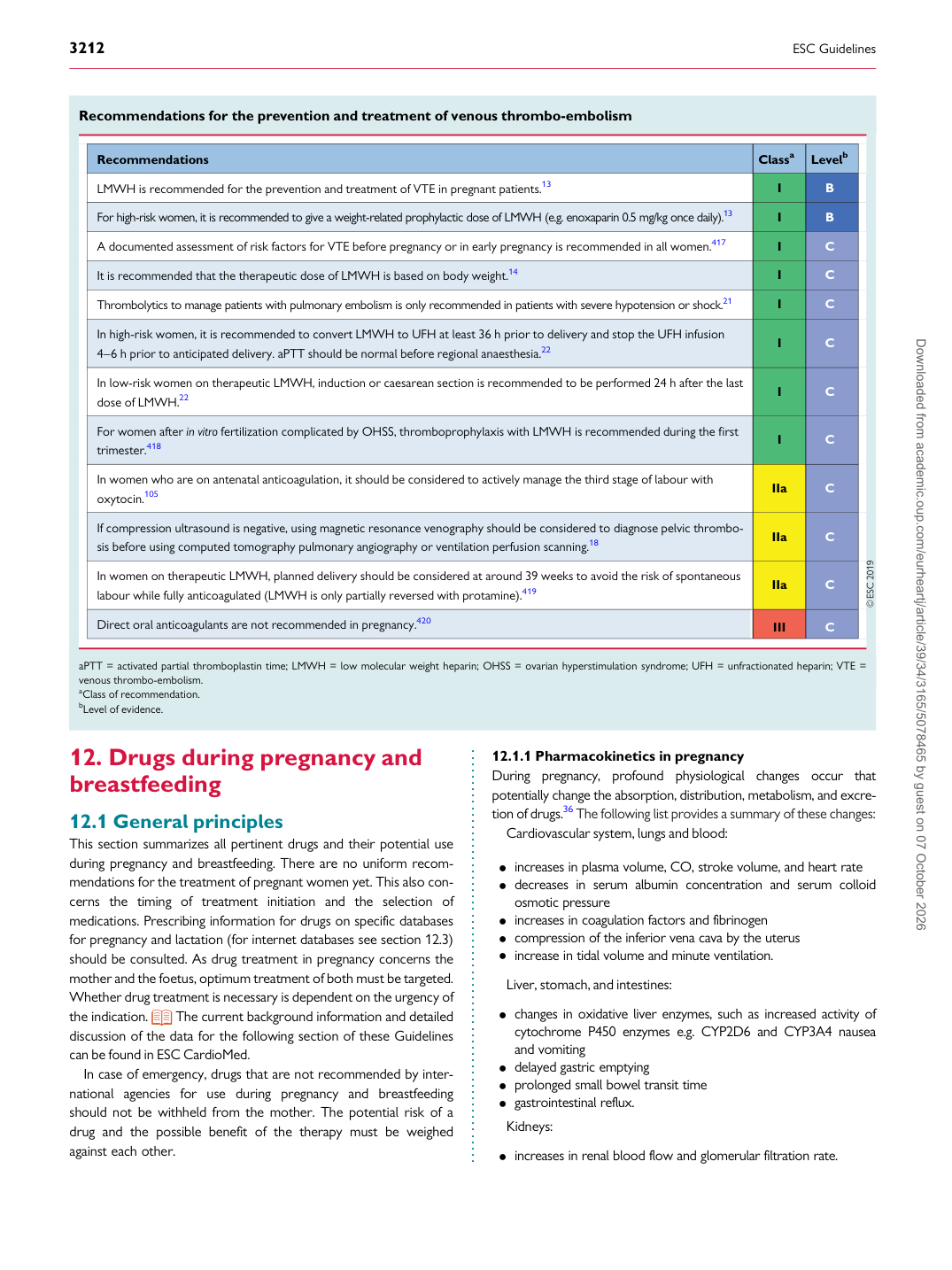
Recommendations for the prevention and treatment of venous thrombo-embolism

Recommendations Classa Levelb LMWH is recommended for the prevention and treatment of VTE in pregnant patients.13 I B For high-risk women, it is recommended to give a weight-related prophylactic dose of LMWH (e.g. enoxaparin 0.5 mg/kg once daily).13 I B A documented assessment of risk factors for VTE before pregnancy or in early pregnancy is recommended in all women.417 I C It is recommended that the therapeutic dose of LMWH is based on body weight.14 I C Thrombolytics to manage patients with pulmonary embolism is only recommended in patients with severe hypotension or shock.21 I C

In high-risk women, it is recommended to convert LMWH to UFH at least 36 h prior to delivery and stop the UFH infusion 4–6 h prior to anticipated delivery. aPTT should be normal before regional anaesthesia.22 I C

In low-risk women on therapeutic LMWH, induction or caesarean section is recommended to be performed 24 h after the last dose of LMWH.22 I C

For women after in vitro fertilization complicated by OHSS, thromboprophylaxis with LMWH is recommended during the first trimester.418 I C

In women who are on antenatal anticoagulation, it should be considered to actively manage the third stage of labour with oxytocin.105 IIa C

If compression ultrasound is negative, using magnetic resonance venography should be considered to diagnose pelvic thrombosis before using computed tomography pulmonary angiography or ventilation perfusion scanning.18 IIa C

In women on therapeutic LMWH, planned delivery should be considered at around 39 weeks to avoid the risk of spontaneous labour while fully anticoagulated (LMWH is only partially reversed with protamine).419 IIa C Direct oral anticoagulants are not recommended in pregnancy.420 III C

aPTT = activated partial thromboplastin time; LMWH = low molecular weight heparin; OHSS = ovarian hyperstimulation syndrome; UFH = unfractionated heparin; VTE = venous thrombo-embolism. aClass of recommendation. bLevel of evidence. Downloaded from academic.oup.com/eurheartj/article/39/34/3165/5078465 by guest on 07 October 2026