p.35 抽出テキスト
........................................................................... Patients may already be known to have DCM, or may present de novo during pregnancy. Distinguishing symptoms and signs of normal pregnancy from HF demands careful attention. Although PPCM and DCM are distinct disease entities, patients may share a genetic predisposition, and differentiation during pregnancy may be impossible.273–276,287

8.2.1 Prognosis and counselling Pregnancy is poorly tolerated in some women with pre-existing DCM, with the potential for significant deterioration in LV function.29 Predictors of maternal mortality are NYHA class III/IV and EF <40%.288 Highly adverse risk factors include EF <20%, MR, RV failure, AF, and/or hypotension. All patients with DCM planning pregnancy require appropriate counselling and joint multidisciplinary care, as there is a high-risk of irreversible deterioration in ventricular function, maternal mortality, and foetal loss. Pre-pregnancy management includes the modification of existing HF medications to avoid foetal harm. Angiotensin-converting enzyme (ACE) inhibitors, angiotensin receptor blockers (ARBs), angiotensin receptor neprilysin inhibitors (ARNIs), mineralocorticoid receptor antagonists (MRAs), and ivabradine are contraindicated and should be stopped prior to conception, with close clinical and echocardiographic monitoring. However, beta-blockers should be continued and switched to beta-1-selective blockers (see section 12). If EF falls, then further discussion should occur, reconsidering the safety of pregnancy. If contraindicated drugs have been inadvertently taken during the first trimester, they should be stopped, and the patient monitored closely with maternal echocardiography and foetal ultrasound.

8.3 Management of heart failure during

and after pregnancy Assessment and management of pregnant patients with DCM or PPCM depends upon the clinical setting. However, all require joint cardiac and obstetric care, serial echocardiograms, serum B-type natriuretic peptide, and foetal ultrasound.46

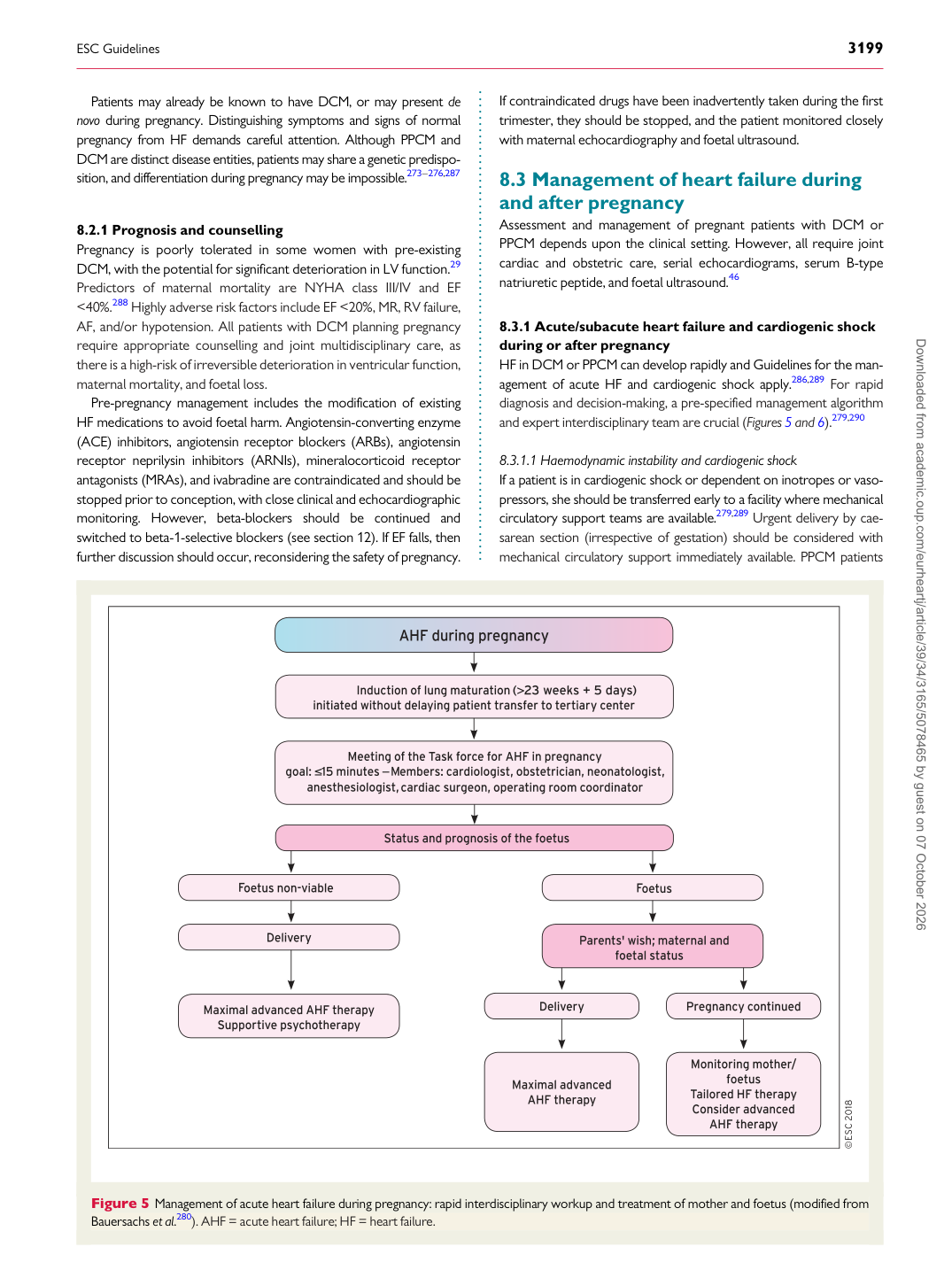
8.3.1 Acute/subacute heart failure and cardiogenic shock during or after pregnancy HF in DCM or PPCM can develop rapidly and Guidelines for the management of acute HF and cardiogenic shock apply.286,289 For rapid diagnosis and decision-making, a pre-specified management algorithm and expert interdisciplinary team are crucial (Figures 5 and 6).279,290

8.3.1.1 Haemodynamic instability and cardiogenic shock If a patient is in cardiogenic shock or dependent on inotropes or vasopressors, she should be transferred early to a facility where mechanical circulatory support teams are available.279,289 Urgent delivery by caesarean section (irrespective of gestation) should be considered with mechanical circulatory support immediately available. PPCM patients

Figure 5 Management of acute heart failure during pregnancy: rapid interdisciplinary workup and treatment of mother and foetus (modified from Bauersachs et al.280). AHF = acute heart failure; HF = heart failure. Downloaded from academic.oup.com/eurheartj/article/39/34/3165/5078465 by guest on 07 October 2026