p.24 抽出テキスト
..................................................................... non-pregnant patients.186 Foetal growth should be monitored when the mother is taking beta-blockers.

5.3.2 Interventions When progressive dilatation occurs during pregnancy, before the foetus is viable, surgical treatment with the foetus in utero should be considered. When the foetus is viable, caesarean delivery followed directly by aortic surgery is recommended (section 3). Caesarean section should be performed in a hospital in which cardiothoracic surgery and neonatal intensive care facilities are available. In patients with acute aortic complications during pregnancy, management includes medical therapy where appropriate, and surgical or catheter-based interventions where needed. Stanford type A aortic dissection occurring during pregnancy is a surgical emergency. Experienced cardiothoracic, cardiology, obstetric, and cardio-anaesthetic physicians must act rapidly to deliver the foetus (if viable) by caesarean section in a specialized cardiothoracic centre and proceed directly to repair of the dissection. If the baby is not viable, aortic surgery with the foetus in place should be performed. Although maternal outcome is good, foetal mortality is 20–30%.187 In the case of uncomplicated type B aortic dissection, conservative treatment with strict BP control using medication allowed during pregnancy is recommended.188 Thoracic endovascular aortic repair has recently been proposed as a new approach for complicated type B aortic dissection. Promising mid-term outcomes have been reported.189 However, the outcome of thoracic endovascular aortic repair during pregnancy is only described in a few cases,190 and it is not recommended in the case of genetic aortopathy.191–193

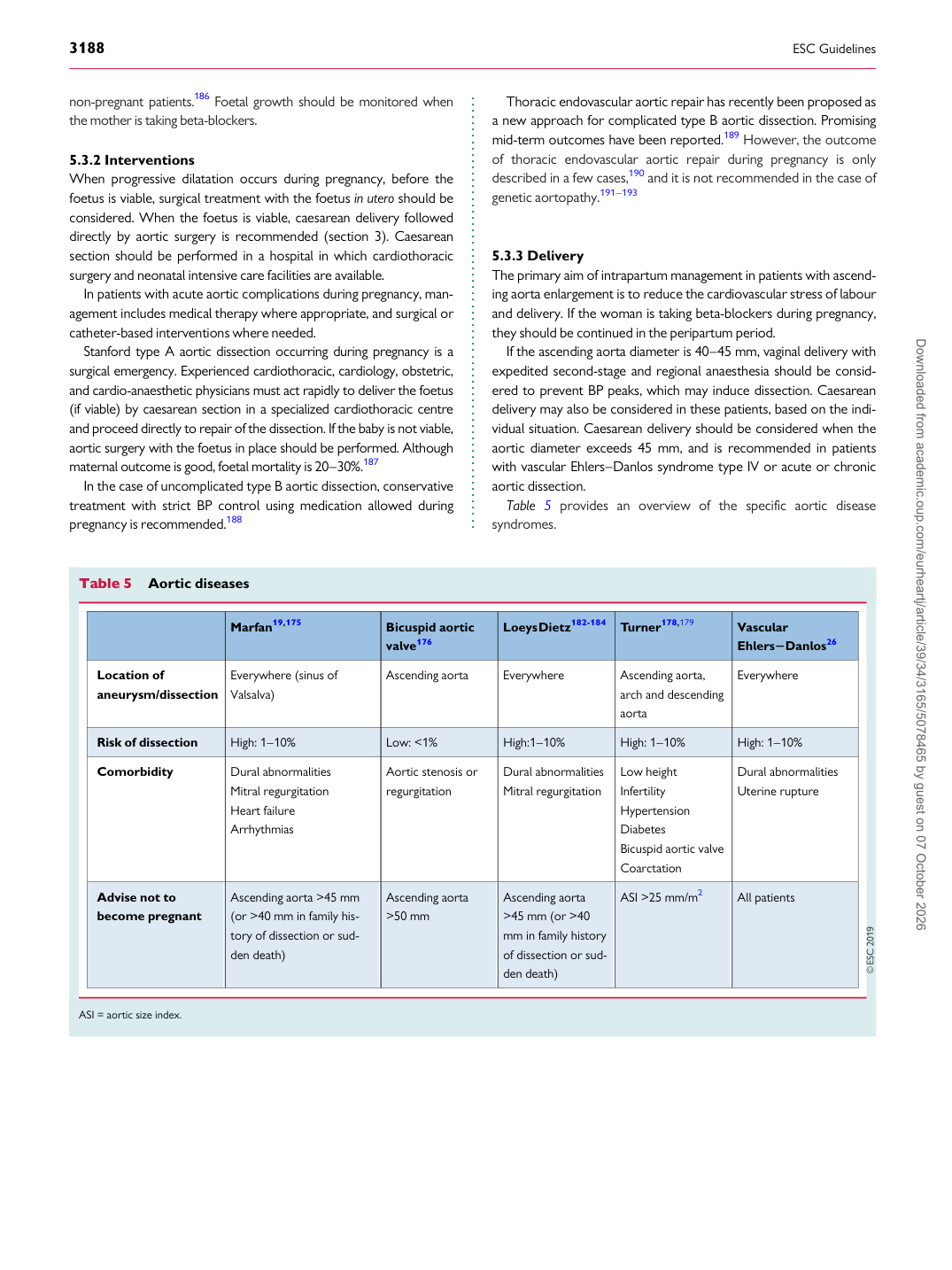
5.3.3 Delivery The primary aim of intrapartum management in patients with ascending aorta enlargement is to reduce the cardiovascular stress of labour and delivery. If the woman is taking beta-blockers during pregnancy, they should be continued in the peripartum period. If the ascending aorta diameter is 40–45 mm, vaginal delivery with expedited second-stage and regional anaesthesia should be considered to prevent BP peaks, which may induce dissection. Caesarean delivery may also be considered in these patients, based on the individual situation. Caesarean delivery should be considered when the aortic diameter exceeds 45 mm, and is recommended in patients with vascular Ehlers–Danlos syndrome type IV or acute or chronic aortic dissection. Table 5 provides an overview of the specific aortic disease syndromes.

Table 5 Aortic diseases

Marfan19,175 Bicuspid aortic

valve176 LoeysDietz182-184 Turner178,179 Vascular

Ehlers2Danlos26

Location of aneurysm/dissection Everywhere (sinus of Valsalva) Ascending aorta Everywhere Ascending aorta, arch and descending

aorta Everywhere

Risk of dissection High: 1–10% Low: <1% High:1–10% High: 1–10% High: 1–10%

Comorbidity Dural abnormalities

Mitral regurgitation Heart failure Arrhythmias Aortic stenosis or

regurgitation Dural abnormalities

Mitral regurgitation Low height

Infertility Hypertension Diabetes Bicuspid aortic valve Coarctation Dural abnormalities

Uterine rupture

Advise not to become pregnant Ascending aorta >45 mm

(or >40 mm in family history of dissection or sudden death) Ascending aorta

>50 mm Ascending aorta

>45 mm (or >40 mm in family history of dissection or sudden death) ASI >25 mm/m2 All patients

ASI = aortic size index. Downloaded from academic.oup.com/eurheartj/article/39/34/3165/5078465 by guest on 07 October 2026