p.42 抽出テキスト
Catheter ablation can be successfully performed in children of all ages, with acute success rates comparable to those reported in adults.281,282,420,421 Success rates are influenced by the presence of structural heart disease or ischemic heart disease and are highest in left-sided accessory pathways and lowest for AT. Complications were reported in 4% to 8% of the initial large series, with major complications in 0.9% to 3.2%, and complication rates were higher in patients weighing <15 kg.281,420–422 The implications of complications, including AV block requiring pacing, perforation, and coronary artery or mitral valve injury, are profound in young patients.423–425 In early series, death was reported in 0.12% of children with normal hearts and was associated with lower weight and increased number of ablation lesions.426 Increased institutional experience, advanced mapping techniques, and use of cryoablation have reduced the incidence of complications, as well as the radiation exposure associated with the procedure. Although most centers perform elective ablation for children weighing >12 kg to 15 kg, ablation in younger or smaller children is generally reserved for those with medically refractory

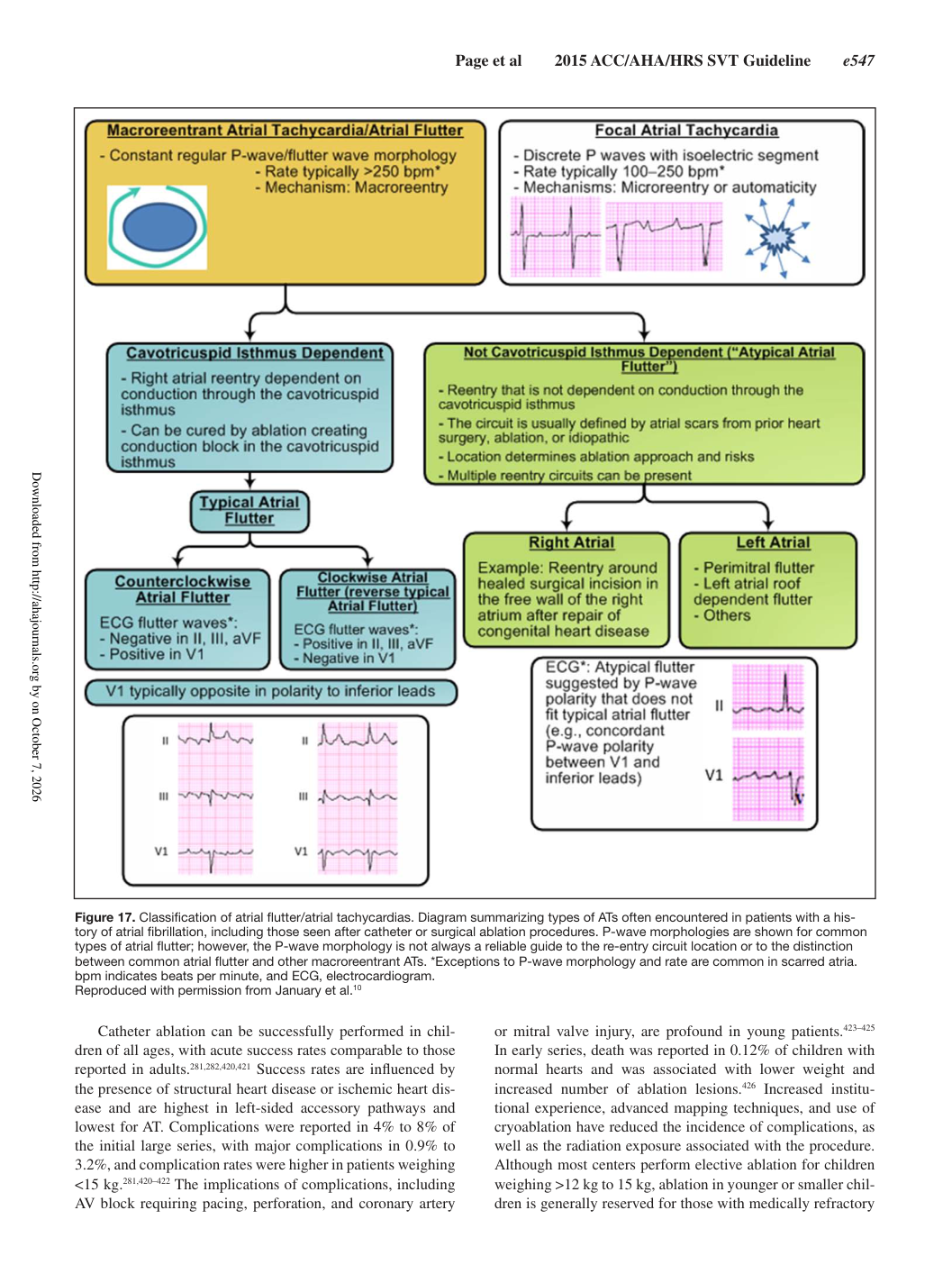
Figure 17. Classification of atrial flutter/atrial tachycardias. Diagram summarizing types of ATs often encountered in patients with a history of atrial fibrillation, including those seen after catheter or surgical ablation procedures. P-wave morphologies are shown for common types of atrial flutter; however, the P-wave morphology is not always a reliable guide to the re-entry circuit location or to the distinction between common atrial flutter and other macroreentrant ATs. *Exceptions to P-wave morphology and rate are common in scarred atria. bpm indicates beats per minute, and ECG, electrocardiogram. Reproduced with permission from January et al.10

Downloaded from http://ahajournals.org by on October 7, 2026